
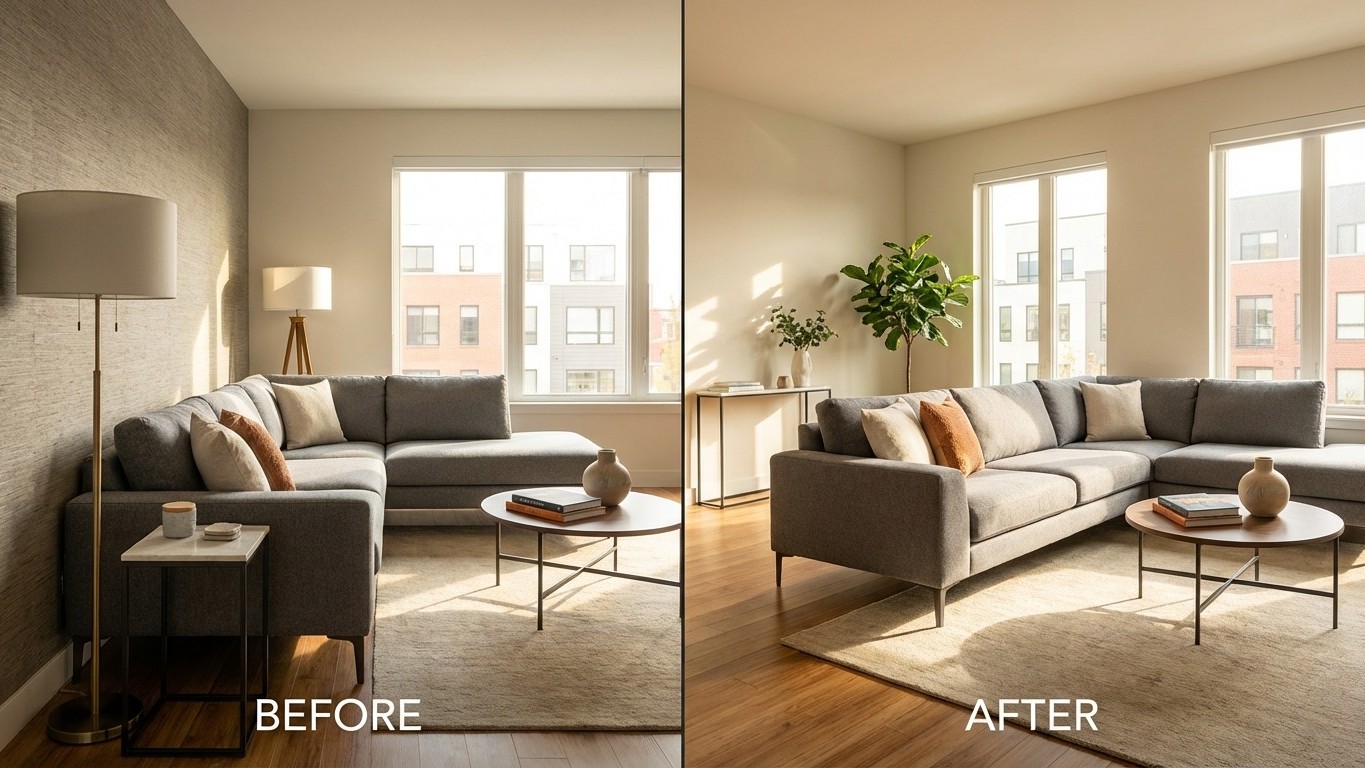
When most Homeowners arrange their living room, their first instinct is simple: push the sofa against the wall and call it a day. It seems logical—more floor space means a bigger-looking room, right? Wrong. Professional decorators are revealing a counterintuitive rule that transforms cramped spaces into visually expansive havens: pull your sofa away from the wall.
The Secret lies in choosing sofas and chairs with exposed legs that create the illusion of openness, as this floating design allows light and air to flow underneath and around Furniture. This streamlined approach makes furniture appear to float in space, dramatically opening up the visual field.
The Psychology Behind Floating Furniture
Interior designer Asma Florençon explains that floating furniture gives the impression of larger spaces by letting walls recede from the inhabited space, allowing different islands of functionality to coexist without visible divisions. This technique works through depth perception—pulling pieces off walls Actually-reveal-a-bored-dog”>Actually-a-lifesaver-for-hedgehogs-struggling-through-winter-nights”>Actually visually opens up a space, particularly effective with visually imposing items.
Even pulling furniture away from the wall by just a few inches creates spatial dimension, character, and a better focal point. The magic happens because while you might not see as much floor space, the room actually feels much less cramped.
Strategic Placement for Maximum Impact
Professional designers recommend shifting the sofa into wider areas of the room, which instantly creates a generous walkway behind the main seating zone while preserving natural traffic flow. This positioning takes advantage of the largest available space, even allowing for deeper, more comfortable seating options.
Interior Designers recommend leaving a small space between the sofa and wall, even in small rooms, to prevent the space from looking cramped. Even starting with just 12 inches of distance creates a more intentional, designed look while maintaining the security of being near a wall.
The key is understanding traffic flow. Ensure at least 30-36 inches of space for main walkways around or behind your sofa, and position it so it doesn’t block doorways or create awkward entry experiences.
Creating Zones and Enhancing Conversation
Placing the sofa in the middle of a room creates distinct zones, which can make a room feel larger and more organized—particularly useful in open-plan spaces where defining areas is essential. Floating furniture helps define areas without actual walls, creating divisions that clearly designate different functional spaces.
This placement promotes better flow and a more functional floor plan, allowing the space to breathe and feel more open while creating an intimate and conversational setting. The seating arrangement acts as a catalyst for conversations, with couches placed close enough to make the space feel more intimate and connected.
When to Break the Rules
In smaller living spaces where you simply don’t have enough room to float furniture away from walls, it’s perfectly fine to place a couch against the wall—just try to balance it with other floating elements throughout the room. For small living rooms with space restrictions, wall placement might be ideal, but for bigger rooms, furniture against walls often occupies limited area and creates dead space in the rest.
The transformation can be dramatic. Resisting the urge to push furniture against walls transforms a room from being stiff and boxy to warm and dimensional, letting each piece of furniture shine on its own and turning the space into an engaging, layered experience.
Professional decorators understand that when working with tight areas, going big and bold often makes the room feel bigger rather than more cramped than expected. The floating furniture rule works because it challenges our assumptions about space optimization, proving that sometimes the most counterintuitive design choices yield the most spectacular results.