
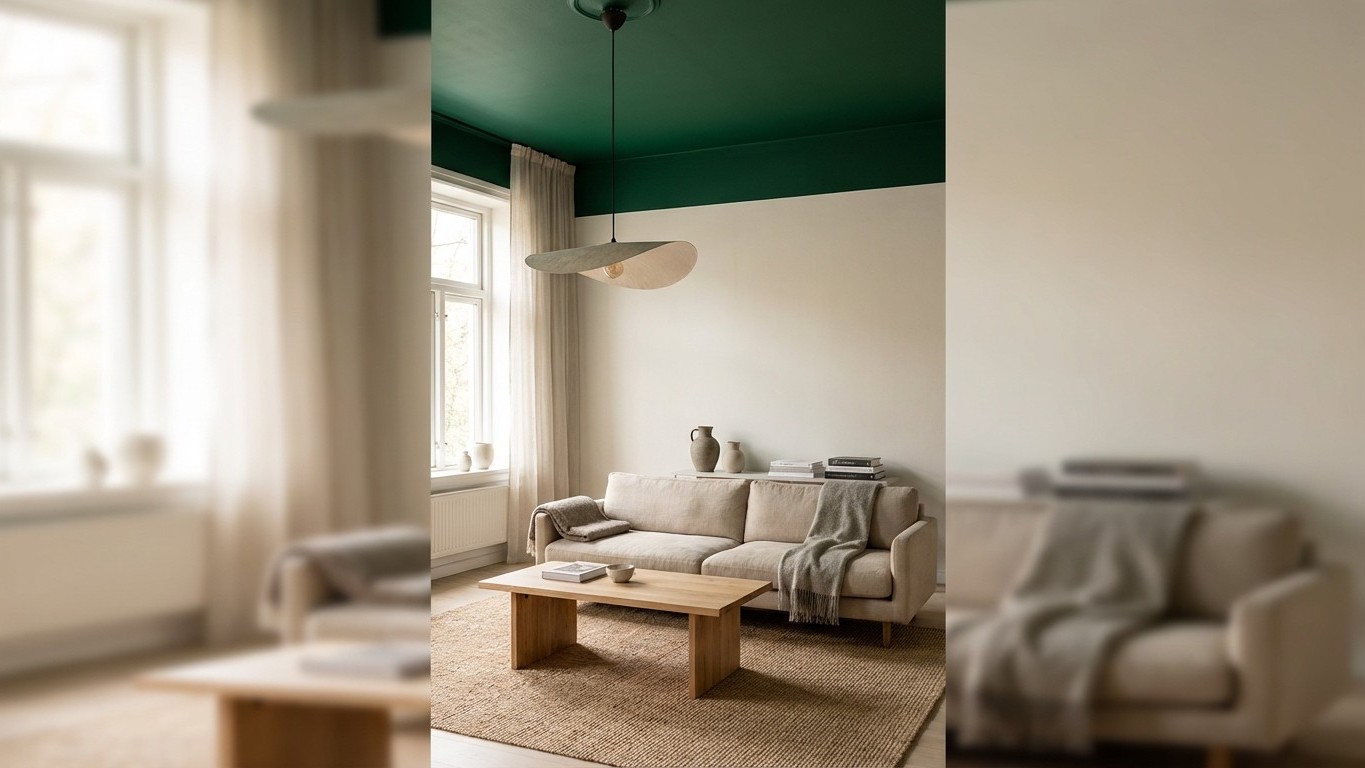
White ceilings. For decades they’ve hovered, blank and bright, over practically every living room, bedroom, and kitchen in America. The logic held: A white Ceiling reflects more light, makes a room feel taller, and keeps things “neutral.” But walk into a well-designed space, one with mood, with presence, and odds are, you’ll see anything but white above your head. Professional Transform-your-kitchen-or-bathroom-in-a-weekend-with-the-sensation-method”>Transform-narrow-entryways”>designers have been in on the secret for years: there’s an easier, more daring way to Transform a room’s entire atmosphere. The fastest, least expensive trick in their playbook? Painting the ceiling a color, sometimes deep, sometimes unexpected, but always more interesting than plain old white.
Key takeaways
- Why white ceilings ruled for decades and why their reign is ending
- How ceiling color changes room mood and perceived space
- Expert tips to try colorful ceilings without the risk
Why White Ceilings Became the Default : And Why That’s Changing
History gave us the stark ceiling for reasons of practicality more than style. Builders and landlords painted ceilings white to bounce light as far as possible, mask imperfections, and keep costs low. It made sense for apartment blocks and cookie-cutter suburbs built with speed in mind, less so for those who crave a space that feels genuinely inviting. Pierre Yovanovitch, a French interior designer known for his dramatic yet understated spaces, once commented that white can be too easy: “It erases the mood.”
Lately, the tide has turned. Social media teems with photos of dramatic blue bedrooms, cozy green living rooms, and powder rooms wrapped, top to bottom, in print or paint. The numbers say it’s not just a visual trend. Searches for “painted ceiling ideas” tripled in the past two years, according to home decor platforms. Interiors once designed to disappear are making statements, sometimes in velvety navy, sometimes in comforting cocoa or blush. Even major paint brands have joined in, curating ceiling color palettes that rival their wall selections.
Instant Ambiance: How Paint Changes Everything
Imagine this: You step into a dining room where the ceiling is a muted olive, paired with ivory walls and walnut trim. The space feels less like a holding cell and more like a retreat, subtle, layered, quietly memorable. That’s the power of color overhead. It’s not magic, it’s science. Deeper or warmer hues above can lower the perceived ceiling, making large rooms feel gathered and intimate. Soft pastels and barely-there blushes soften harsh light, giving off a warm glow even on gray days. Conversely, a cooler tone, think slate blue or smoky green, can counteract an overwhelmingly sunny space without the cost of new curtains or blinds.
Designers often approach ceilings the way they might an accessory: a finishing touch, a surprise, an opportunity. Years ago, a Nashville couple redid their attic guest room and skipped the white paint. They went for a dusty Terracotta instead, echoing the brick chimneys outside. The outcome wasn’t a “wow” in the TikTok sense but friends noticed, guests lingered and spent more time looking up. Proof, perhaps, that our eyes hunger for a break from blankness.
The Psychology of Looking Up: Color and Mood Above
Ceilings don’t just cap a room, they set a tone, consciously or not. In a pediatric clinic in Seattle, ceiling murals with gentle blues and soft yellows reduced anxiety in waiting kids. That project wasn’t about design for design’s sake but about emotion and comfort. Translate that idea into your own home: Sleep studies show that pale blues and lavenders overhead can foster calm, while earth tones, think sandy beige or sage green, nudge us to relax after work. Even a gloss sheen, reflecting back the room in subtle glimmers, can multiply light for after-dark coziness.
Still, bold doesn’t have to mean brash. One trend that’s stuck around since 2023: painting ceilings just a few shades lighter, or darker, than the walls for a “cocoon effect.” It works especially well in bedrooms, dens, or media rooms where tranquility trumps drama. For playful spaces, like kid zones or mudrooms, designers experiment with stripes or shapes above, drawing the eye upward and lifting the mood, no furniture swap needed.
Practical Tips For Painting Your Ceiling (Without Regret)
Tackling a colored ceiling sounds riskier than it is. Paint brands now publish “ceiling safe” colors, formulated to look great in both daylight and artificial light. If you’re not sure where to start, designers often echo a color from the rest of the house, say, the soft clay of a hallway vase, or pull from a rug or art piece you already love. A word of warning from the pros: test a patch and watch it all day. Colors shift wildly overhead, sometimes turning bluer or warmer than expected thanks to indirect light.
Wondering about finish? Flat or matte paint hides the most imperfections (and ceiling cracks rarely photograph well). If your space is dark, a satin or eggshell can reflect light, adding dimension without glare. And if the idea of an all-out color feels too bold, there’s a middle path that’s been gaining followers: paint only a border or medallion around a central light, echoing details from a bygone era. Quick, inexpensive, instantly personal.
Beyond Paint: Alternatives for an Overhead Makeover
Paint isn’t the only way to change your overhead perspective. Wallpapered ceilings, once a mainstay in Victorian homes, are reappearing in new homes from Austin to Atlanta. Tiny prints, lush botanicals, or even metallic hints can add depth and pattern, catching the light in ways white drywall never could. Some designers use textured plasters, wood beams, or stretched fabrics for even more visual intrigue, but for a quick switch, paint remains the nimblest weapon.
There’s an old superstition that painting your porch ceiling blue keeps mosquitoes away, a myth that persisted for generations in the American South. Ceiling color, it turns out, has always had more meaning than we realized. The difference now: we own the choice, not tradition.
What happens when we reclaim that sixth surface for color and texture? Maybe it’s the first step to treating our homes like living, evolving spaces, not finished products but evolving canvases. What would you paint above your head if no one expected white anymore?