
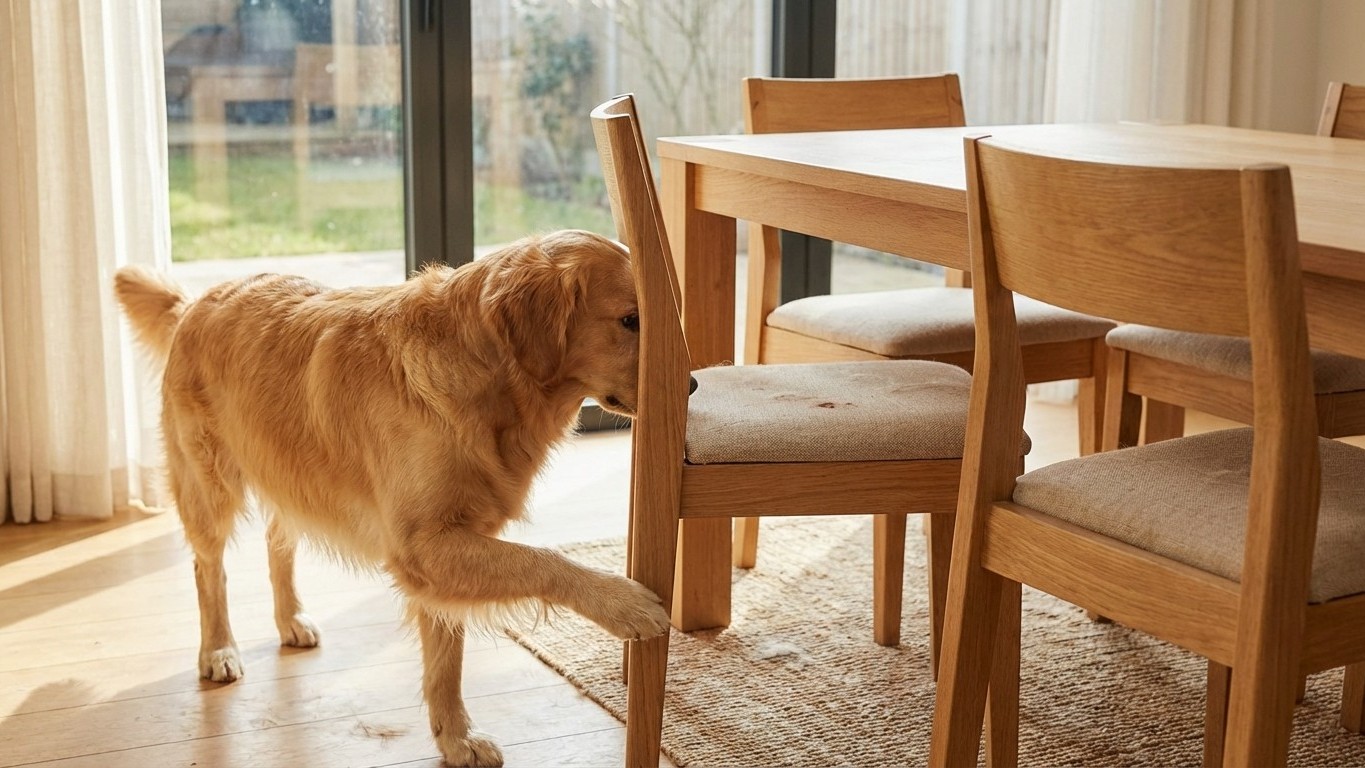
Picture this: a Sunday dinner, your guests arriving, and a trail of claw marks along the chair legs you bought six months ago. Or that moment you notice the upholstered seat cushion has absorbed every meal your dog watched with admiration — including a few drool sessions too many.
When you have pets, your furniture is likely to face more wear and tear than in a pet-free home.
Dining chairs are especially exposed, sitting right at dog-nose level, surrounded by food smells, paws, and restless energy.
The good news?
Life with pets is full of little messes, but choosing the right dining chair makes cleaning easier. Also, makes your home more quality.
This guide breaks down everything, from which materials actually hold up, to how chair legs survive the puppy phase, to the cleaning routine that takes five minutes instead of fifty.
Why Your Dog Is Your Dining Chairs’ Worst Critic
Dogs bring joy to our lives but also present challenges for furniture. Scratches, stains, shedding, and odors can wreak havoc on unsuitable fabrics.
Dining chairs sit in a uniquely vulnerable spot: low enough for dogs to rest their heads on seat cushions, with legs exposed to chewing, and fabric surfaces that catch every rogue hair and slobber mark.
Dogs can scratch furniture, usually while playing or to capture your attention.
Add to that the teething instinct:
dogs, especially puppies, may chew on wooden furniture out of boredom or teething.
Mud, drool, accidental scratches from excited claws —
the right fabric makes all the difference. Durable, easy-to-clean materials are the key to resisting the daily wear and tear of scratches, fur, and accidental messes from your furry pals.
The wrong choice, and you’ll be replacing chairs before the year is out. The right one, and your dining room stays functional and genuinely beautiful. For a broader view of how to approach every room in the house, the guide to pet friendly home design cat dog furniture covers the full picture.
The Best Materials for Dog-Resistant Dining Chairs
Frame First: Solid Wood, Metal, or Recycled Plastic?
Employ hardwood frames with rounded edges rather than soft woods like pine.
Hardwood, oak, beech, ash, resists chewing far better than softer alternatives.
Kiln-dried hardwood resists warping and wobbling better than softwoods or particleboard, especially when pets love to jump on and off.
The payoff goes beyond aesthetics: a solid frame means the chair doesn’t shift when your 60-pound dog leans into it looking for table scraps.
Metal frames are the other smart option.
Wooden chair and bed frame legs are begging to be chewed up by new puppies. Opting for metal or stainless steel prevents your pup from leaving teeth marks on every chair in your house.
Powder-coated steel goes even further:
carbon steel legs with a powder coating are rust-proof, with a sturdy structure and strong load-bearing capacity that resist rust and ensure stability.
Recycled plastic frames have gained traction too, completely immune to moisture and easy to wipe down, though they sacrifice the warmth of natural materials.
The Upholstery That Survives Dog Life
This is where most buyers go wrong. The wrong fabric and your chair looks aged in three months. The right one and it looks good for years.
Opt for materials like microfiber, leather, or performance fabrics that resist scratches, stains, and fur buildup.
Each of these works differently, so matching the material to your dog’s specific habits matters.
Microfiber is the consistent front-runner.
Microfiber is a popular choice among pet owners because it’s durable and affordable. This synthetic fabric is tightly woven, which makes it resistant to scratching and fur accumulation. You can also clean it with just a vacuum or damp cloth.
Scratching is not a problem with microfiber because of its loopless surface.
For droolers specifically,
the fibers in this fabric are so tightly woven together that they create a semi-stain-resistant surface, when something spills, the tightly knit fibers give you more time to wipe up a spill before it sinks in.
Leather and quality faux leather are worth serious consideration.
Leather is a classic choice for a pet-friendly sofa. It’s durable and scratches can usually be quite easily buffed out. It also ages beautifully, developing a patina over time. If your pets tend to shed, their fur won’t stick to leather in the same way as it would with other fabrics, making it an easy-to-clean option.
The caveat: not all leather is equal.
Choose genuine leather, as bonded leather can flake and fall apart easily.
For faux leather fans,
pet-friendly imitation leather is scratch-resistant. Also, very easy to care for, allowing pet-raising families to easily deal with daily “fur troubles”.
Performance technical fabrics, solution-dyed polyester, olefin, or Crypton-treated textiles, are the newer generation.
Crypton fabrics are a great choice for homes with pets, as they offer unmatched durability and protection. These high-performance textiles are resistant to stains, odors, and moisture, making them ideal for households with multiple pets or frequent messes.
Weave matters, a tighter weave means less space for claws to grab. Some brands add special coatings that harden the surface but don’t make it stiff or uncomfortable.
Velvet deserves an honorable mention. Counterintuitive as it sounds,
this luxurious fabric is surprisingly resilient. Its tight weave and short pile make it relatively easy to clean and very resistant to scratching.
Color matters though:
neutrals like slate, taupe, and ivory hide fur and work with pretty much any decor.
Avoid white or jet black if you have a dog that sheds. For deeper reading on how these same fabrics perform on sofas, the guide to best couch fabric for pets cat dog offers a thorough comparison.
Fabrics to Avoid Completely
Two categories should be off the table (pun intended).
Avoid linen, silk and most cottons — if you go with cotton, definitely invest in a high-quality stain protector.
Open weaves are equally problematic:
cats and dogs who love to scratch do better with tightly woven synthetic microfiber, which doesn’t give them much to dig into. Loose weaves or heavy textures? Claws can catch and wear the fabric down fast.
Bouclé, while fashionable, is risky in dog households, if you have a dog, boucle will show dirt and hair more easily, so you may want to reconsider a large piece in that fabric.
Chair Legs and Stability: The Overlooked Battle
Scratched legs. Chewed corners. A chair that rocks when your lab leans against it. These aren’t minor inconveniences — they’re signs that the chair wasn’t designed with dogs in mind.
Adjustable foot pads that adjust the balance and prevent noise and scratches on the floor
are a quiet but impactful feature worth looking for. On any chair, silicone or felt floor glides protect both the leg finish and your flooring simultaneously.
For the chewing issue, prevention works on two levels. First, choose resistant materials for the legs themselves. Second, deploy deterrents on vulnerable wood:
apply a pet-safe bitter apple spray to deter chewing on furniture legs or other targeted areas. Ensure the spray is safe for pets and reapply as needed.
If your dog is a dedicated chewer,
installing plastic guards around the legs can effectively prevent damage, by strategically placing furniture protectors on susceptible spots, you shield your furniture from pet-induced harm while preserving its aesthetic appeal.
Stability matters more than you’d think. A chair that tips or slides when a dog bumps it can become a fear trigger — and a scared dog will return to investigate (and chew).
Hardwood frames with rounded edges
paired with wide, splayed leg geometry offer the most resistance to dog-induced wobbling. Sled-base metal frames, which have no individual legs to grip, are another clever solution.
Choosing the Right Seat: Padded, Unpadded, or Slipcovered?
Dogs that shed or drool need fabrics that don’t hold onto fur and are easy to vacuum — canvas, leather alternatives, or performance twill are solid bets.
Unpadded wooden or metal seats are the simplest answer from a hygiene standpoint: a damp cloth and you’re done. But they sacrifice comfort, especially for long meals.
High-density foam padded seats with a performance fabric cover hit the sweet spot.
High-density foam cushioning ensures that your chair maintains its shape and comfort over time, while the sturdy, solid wood frames provide lasting stability.
The key is the cover.
Furniture with machine-washable, removable covers offers incredible convenience for pet owners. In the event of accidents or excessive pet hair, unzip the covers, toss them in the washing machine, and have them back fresh and clean.
Removable, interchangeable covers are worth treating as a non-negotiable.
If your pet leaves a stain that needs washing, covers can be removed for professional cleaning and can also be replaced with new covers if needed.
Think of a chair cover the way you’d think of a shirt: something you own multiple versions of, rotate through, and replace when worn out, not something you agonize over staining. More guidance on pet friendly furniture for cats and dogs explores this modularity principle across different furniture types.
Daily Care: The Routine That Actually Works
The single most common mistake pet owners make? Waiting until chairs look dirty to clean them.
For everyday maintenance, vacuum your pet-friendly furniture every week to prevent hair buildup.
A lint roller pass after meals takes thirty seconds and prevents the slow accumulation that becomes a weekend-long cleaning project.
For drool and mud stains, the two most common chair culprits in dog households, speed is everything.
Blot immediately and never rub, as it spreads the stain. Use enzyme-based cleaners, which break down organic matter like urine or drool and eliminate odors at the source. Always spot test on fabric before treating a large area.
The science behind this is straightforward:
enzymatic cleaners get at the source of the mess, breaking down organic molecules and eliminating them entirely. This makes enzyme cleaners ideal for treating pet messes because they leave behind no trace of the original stain, which is critical for discouraging repeat accidents.
Odor is often the second wave of the problem.
Baking soda is a great odor neutralizer and pet hair remover. Just sprinkle some on the affected area, let it sit overnight, then vacuum it up with a powerful hand vacuum.
For routine freshening between deep cleans,
a citrus-scented spray is a great way to reduce animal odors — the smell of citrus is also said to be a natural dog repellent.
Two goals in one spray.
One underrated habit:
if you’re keeping a dog inside the house, regular grooming is a must. A well-groomed dog is less anxious, which will reduce the chances of it chewing on your furniture.
Shorter nails mean fewer scratches.
Schedule regular appointments to get your dog’s nails trimmed. While there are fabrics that can withstand scratches, it’s hard to avoid claw marks without keeping their nails short.
5 Chair Profiles Worth Considering for Dog Households
Rather than specific models (which change seasonally), here are five clear chair profiles that consistently perform in homes with dogs:
- The Metal-Leg Faux Leather Chair:
Faux leather or microfiber upholstered chairs where wear looks natural on the material, with metal legs that fare much better than wooden legs if your dog tries to chew them. - The Performance Fabric Side Chair: Tightly woven polyester or technical blend, stain-resistant finish, removable seat pad. Weekly vacuum, monthly wipe. Fur doesn’t embed. This is the workhorse of the category.
- The Hardwood Frame with Washable Slip-Cover:
Wooden slat backrests offer breathability and support. Solid wood plus quality cushions extend durability.
Pair with a zip-off, machine-washable cover for the seat. - The All-Metal Café Chair: No fabric, no chewing risk, hose-down clean. Sacrifices cushion comfort, but with a tied-on washable seat pad, it becomes entirely manageable for dogs of all temperaments.
- The Microfiber Velvet Dining Chair:
Microfiber velvet is seamless and doesn’t provide as much opportunity to dig in. The same thought process applies to any tightly woven fabrics.
Pair with darker mid-tone colors to minimize visible fur between cleans.
For a detailed look at how these same principles translate to your sofa, check out what makes a cat and dog friendly sofa — the structural and fabric logic largely overlaps.
Your Questions, Answered Directly
Which fabric or coating should I choose for dining chairs with dogs at home?
Leather and tightly woven fabrics tend to be more resistant to pet claws than loosely woven materials.
For upholstered seats, prioritize microfiber, performance polyester, or quality faux leather, all three resist scratches, discourage hair from embedding, and clean with minimal effort.
How do I stop my dog from scratching or damaging chair legs? Go with metal legs where possible, or use hardwood with a protective coating.
Use dog-friendly repellent sprays directly onto chair legs — just make sure the spray is non-toxic and safe for dogs.
Consistent chew-toy availability also helps redirect the behavior before it becomes a habit.
What are the best tricks for cleaning pet hair and stains from chairs? The three-tool kit: a lint roller for daily hair pickup, an enzymatic cleaner for stains and odors, and a diluted baking soda solution for overnight deodorizing.
For best results, clean stains before they set. If you’re concerned about damaging your furniture, test your cleaner on a small, unnoticeable area before applying to stains.
Do truly dog-resistant chairs exist without sacrificing design? Yes — and the category has expanded significantly.
A truly pet-friendly piece lets everyone relax without constant scolding or panic-cleaning before guests arrive. With smart fabrics, sturdy construction and the right colors, you can have a durable chair that stands up to pets and still looks design-forward.
The days of choosing between style and practicality are over for most buyers.
The real question worth asking isn’t “which chair survives my dog?”, it’s “which chair makes life with my dog easier?” Because a dining chair that demands constant anxiety isn’t furniture anymore. It’s a chore. Choose materials that forgive, legs that endure, and covers that wash. Then sit down, eat your dinner, and let your dog do their thing.