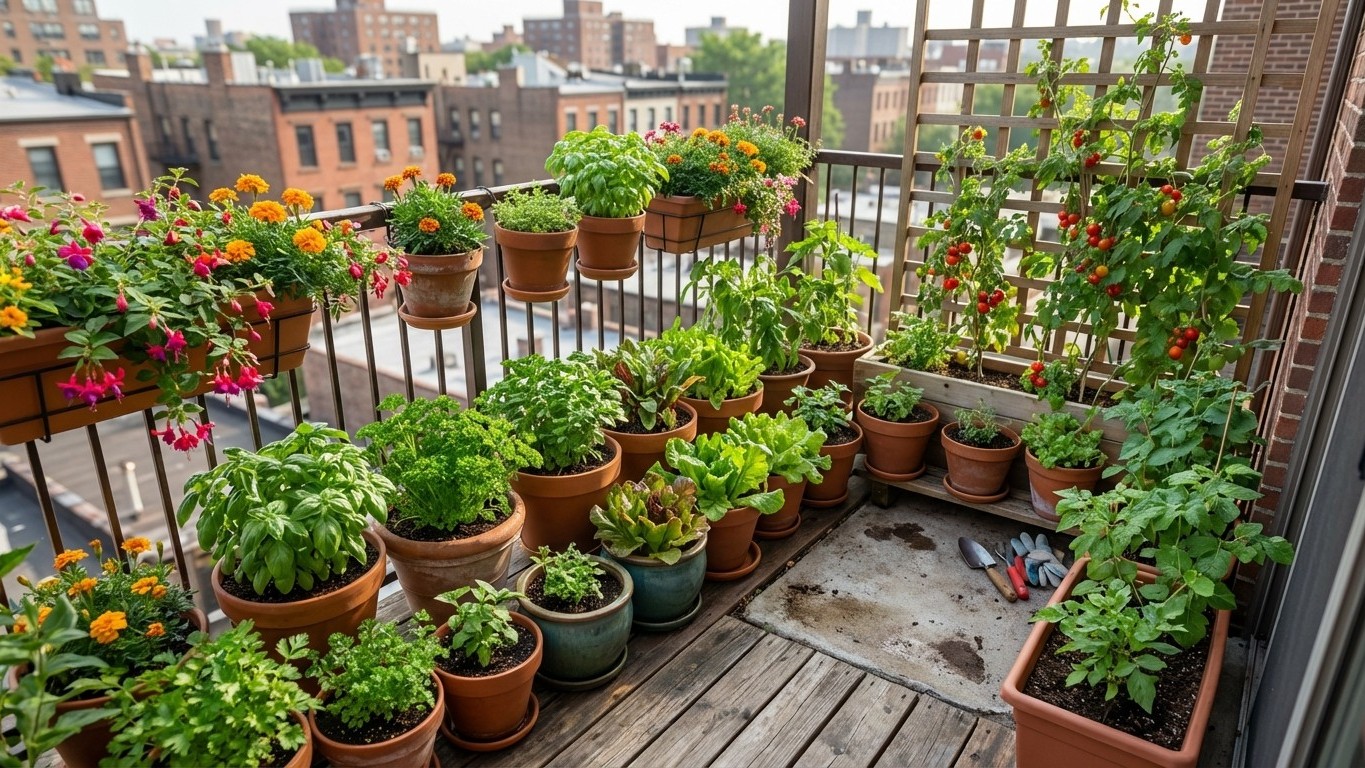
Forty-seven million American apartments have at least one balcony. Most sit empty, decorated with a forgotten chair and a rusting barbecue grill. Yet that same flat slab of concrete, even measuring just 6 by 8 feet, holds enough potential to produce fresh cherry tomatoes, a summer’s worth of herbs, and crisp salad greens from April to October. The catch? Most people assume they need more space, more experience, or more money than they actually do. Balcony container gardening in small spaces is not about replicating a backyard. It’s about rethinking how every square inch, and every vertical plane, can grow something edible or beautiful.
This guide is for the city dweller who wants to start now, with what they have. No prior gardening experience required. No enormous budget. Just a balcony, a clear plan, and a few smart decisions upfront. If you’re looking for detailed step-by-step instructions, check out this comprehensive guide on how to start a balcony container garden.
Why Your Balcony Is Already a Garden Waiting to Happen
The real advantages of container growing in a city
Container gardening is a fantastic way to grow plants, whether you’re new to gardening or working with a small space like an urban lot or apartment balcony. It’s also a great option for experienced gardeners, offering flexibility and control: each container acts as a microenvironment, allowing you to tailor watering, fertilizing, and even sun exposure to suit your plants’ needs.
That portability matters more than most people realize.
Plants are grown in pots or containers, allowing complete control over soil quality and placement, making the whole system highly flexible for small spaces. Choosing the best containers for balcony gardening ensures your plants have proper drainage and can be moved to suit the sun’s position.
Beyond the practical, there’s something almost subversive about growing food in a city.
Home-grown vegetables and herbs reduce your reliance on chemically-treated, store-bought produce, and gardening lowers cortisol levels, which helps with stress relief and mental health.
: your balcony garden is also a wellness strategy, one that costs less than a gym membership.
For more inspiration on what’s possible with even the most modest outdoor space, browse these urban balcony container garden ideas organized by style and theme.
Constraints to acknowledge from the start
The amount of sunlight the space receives is the most critical factor to consider, but wind exposure and temperature are important too.
These three variables, light, wind, and heat, form the microclimate of your balcony, and understanding them before buying a single pot saves enormous frustration later.
Strong winds, which are common on balcony and rooftop gardens high above the ground, can quickly dry out the soil, rip the petals off flowers, and knock over tall potted plants. Sun reflecting from windows can intensify the heat of a balcony garden and burn delicate foliage.
And on the other end of the spectrum:
many urban balconies receive quite a bit of shade if surrounded by tall buildings or covered by an overhang.
None of these is a dealbreaker. All of them require a plan.
Preparing Your Balcony: The Step Everyone Skips
Orientation, sun exposure, and building regulations
Spend one full weekend day simply observing your balcony before doing anything else. Track where the sun hits at 9 a.m., noon, and 4 p.m.
Evaluate your available space’s sunlight exposure throughout the day. Most vegetables need 6–8 hours of direct sunlight, while shade-tolerant herbs and greens can grow with less.
If you don’t hit that threshold naturally, adjust your plant selection, not your balcony.
South-facing balconies are the best, but southeast- or southwest-facing will do.
North-facing? Adjust your expectations but not your ambitions. Herbs like parsley, chives, and mint, plus cut-and-come-again lettuces, thrive with only partial light.
Some herbs that grow well in partial shade include parsley, chervil, cilantro, and tarragon.
Regulations matter, especially if you rent.
Make sure to respect the aesthetics of your building and to produce no nuisance for your neighbors, particularly regarding water runoff from watering.
Check your lease and your building’s co-op or HOA rules before hanging anything from railings. A quick conversation with your property manager takes ten minutes and prevents a headache later.
The weight question: the most overlooked safety concern
This is where most beginner guides go silent. Weight is not optional to consider.
The International Building Code specifies a minimum live load that balconies must support, which as of the 2018 Edition is 60 pounds per square foot for residential balconies.
That sounds like a lot until you do the math:
every cubic foot of wet soil adds 75–100 pounds of weight to your structure.
The solution is simple: think light.
When selecting containers, choose ones with adequate drainage holes to prevent waterlogging, and opt for lightweight, weather-resistant materials like plastic, fiberglass, or resin.
Spread your pots around your balcony instead of clumping them in one area. Doing this will spread out the weight distribution and you won’t have any nasty balcony gardening mishaps.
Clustering fifteen heavy terracotta pots in one corner is a structurally different proposition than distributing eight lightweight fabric grow bags across the full surface.
Position heavier containers near load-bearing walls and distribute medium-sized planters evenly across the balcony surface.
If you have any serious doubts about your balcony’s structural condition, consult a professional. No harvest is worth the risk.
Drainage: the detail that decides success or failure
Water management on a balcony is a two-sided problem. Too little, and plants wilt. Too much, with nowhere to drain, and roots rot.
Make sure to add a drainage layer of a few centimeters, using clay balls, gravel, or pot shards, in all large pots and planters to prevent moisture stagnation, which leads to root asphyxiation.
Always place saucers under pots to collect overflow, then empty them after watering to prevent standing water and the problems it brings.
After a few minutes, discard any water left in the saucer to keep excess salt from building up in the container, and to discourage the growth of mosquito larvae.
Containers, Layout, and the Art of Small-Space Thinking
Choosing the right containers for balcony gardening
Depth is more important than width.
For species with rapid growth like salads, radishes, and aromatic plants, opt for pots of 15 to 22 cm deep. Fruiting vegetables like tomatoes, zucchini, eggplant, or cucumbers will be at ease in a container of at least 40–45 cm deep.
Match the pot to the plant, not to your aesthetic preference.
Material-wise, each option has trade-offs. Terracotta breathes well and looks beautiful, but it’s heavy and fragile in frost. Plastic is lightweight and moisture-retentive, but heats up in direct sun.
Fabric grow bags are another lightweight container option, with the added advantage of being easy to store after the growing season is over. They also have handles for more convenient portability.
Fabric bags have a surprising bonus: they “air-prune” roots, preventing the circling root systems that can strangle plants in conventional pots.
For a deep dive into which containers best suit specific plants and balcony conditions, check out this guide to the best containers for balcony gardening.
Layout strategies that multiply your growing space
Balconies have three distinct sections to consider: the floor, the railing, and everything else. Thinking in these three layers will help you make the absolute best use of the limited space you have.
Most beginners only use the floor. The ones who succeed fill all three.
Railings are prime real estate.
Hanging baskets and outdoor railing baskets are real space savers and can be used to grow everything from herbs to houseplants to trailing vegetables.
Walls and fences open a third dimension entirely.
Vertical tower gardens are a revolutionary solution for maximizing yield in minimal spaces, making them one of the most impactful container vegetable gardening ideas for urban dwellers.
When organizing the floor space, think in tiers.
Start your balcony garden by placing larger containers against walls or railings. Position tall plants like tomatoes and climbing vegetables at the back to create depth. Use hanging baskets from railings or overhead supports to add vertical interest. Arrange medium-sized pots with herbs and flowers in the middle area. Place low-growing plants like lettuce and strawberries in front for easy access.
One more thing people forget: circulation.
On a balcony, you must optimize space. But you also need to be able to move around without difficulty and reach your plantings without straining or injuring yourself.
Leave at least 18 inches of clear walkway. You’ll be watering daily in summer; that path needs to be comfortable.
How to Start Your Container Garden: A Practical Roadmap
Key steps before the first planting
Three things to do before buying any plants: measure your balcony precisely, document your sun exposure hour by hour, and check your building’s regulations. That’s it. Everything else follows from those three data points.
Then, choose your soil.
Do not fill your containers with soil from your garden or bagged topsoil. Fill the containers with a “soilless” potting mix that will retain moisture and resist compaction.
To create a high-quality soil mix, combine equal parts compost, peat moss or coco coir, and an inorganic amendment like perlite or vermiculite. This mixture provides a balanced environment for your plants, ensuring good drainage and nutrient retention.
The full step-by-step process for setting up your first balcony container garden, including how to assess your exposure and plan your budget, is covered in detail here: how to start a balcony container garden.
Starting budget: what you actually need
A common trap for beginners is thinking they need everything upfront: fancy pots, expensive fertilizers, matching tools.
You don’t. The minimum viable balcony garden requires containers (bought or repurposed), quality potting mix, seeds or starter plants, and basic watering tools.
DIY milk crates or 5-gallon buckets with drainage holes are affordable and deep enough for tomatoes or carrots.
A friend growing mint, coriander, and cherry tomatoes on a Brooklyn balcony started with $23, a hardware-store bucket, and seeds from the dollar section of her local nursery. By July, she was harvesting enough basil to supply her entire floor. The point isn’t frugality for its own sake; it’s that the investment in time and attention matters far more than the investment in equipment.
Basic gardening tools include a hand trowel for digging, pruning shears for trimming, and a watering can.
Add a spray bottle for seedlings, and you’re fully equipped. The rest is optional. For a step-by-step checklist to make sure you’re not forgetting anything critical, this resource on container gardening for small-space balconies is an excellent reference.
Best first plants for beginner urban gardeners
Leafy greens like lettuce, spinach, and kale are particularly suited to urban gardens confined to small spaces.
They grow fast, tolerate partial shade, and provide near-instant gratification. Radishes are harvestable in three weeks. Cherry tomatoes, the classic beginner choice,
have the advantage of growing quickly without developing too much. They will require a stake to accompany their growth but will remain discreet on your balcony due to their low volume.
Herbs like basil, oregano, rosemary, and thyme are all easy to keep contained in a balcony herb garden, and you can harvest fresh leaves as you need them to flavor your food.
Start with three or four herb varieties you actually cook with. Nothing kills enthusiasm faster than nurturing plants you never use. The same logic applies to vegetables: grow what you eat, not what gardening books tell you to grow.
Companion planting adds another layer of efficiency.
Planting aromatic herbs like basil, rosemary, and mint helps deter common garden pests like aphids, mosquitoes, and whiteflies.
One pot of basil next to your tomatoes does double duty as a culinary ingredient and a natural pest repellent.
Maintaining Your Mini Garden Through the Seasons
Watering: the daily rhythm of container gardening
Container gardening’s biggest demand is hydration.
As a general rule, select as large a container as possible. Small containers dry out more quickly and may need daily watering.
Balcony plants tend to dry out quickly, especially if they are in full sun or exposed to the wind. On hot summer days, you may need to water twice a day.
Check moisture by inserting a finger two inches into the soil. Dry? Water thoroughly until it drains from the bottom. Still moist? Leave it. This simple test beats any schedule.
Self-watering containers wick water from a chamber at the bottom of the pot to give your plants’ roots a consistent supply.
They cost slightly more upfront but dramatically reduce the stress of forgetting to water during a heatwave or a work trip.
Put saucers or trays under your plants to collect any water overflow so you don’t waste a drop.
In drought-prone climates, this water reclamation can make a genuine difference. And if you travel:
a DIY drip bottle system or self-watering planters will keep your garden alive.
Feeding your plants and managing soil health
Fertilizer is especially important when you’re growing vegetables in containers. You simply won’t succeed if you don’t use some kind of fertilizer.
The confined root environment depletes nutrients faster than any open garden.
Incorporate organic fertilizers and plant-based compost into container soil to provide essential nutrients for healthy plant growth throughout the growing season.
Using fresh commercial potting soil will give plants 8–10 weeks of nutrients while minimizing problems with insects, diseases, and weeds. You may need to fertilize your balcony garden after a couple of months.
Liquid fertilizers applied weekly during the growing season are the most efficient method for containers, since nutrients leach out with every watering. At the end of the season, refresh or replenish your potting mix rather than reusing completely exhausted soil.
Dealing with wind, heat, and urban pests
Your plants will be happiest in a protected location where the wind doesn’t batter and dry out their foliage. Use the shelter of a building, or erect a temporary windbreak made from portable fencing or fabric.
Arrange your pots so larger plants shield smaller plants. Clustering potted plants also helps to raise humidity levels, keeping plants more productive.
Urban pest pressure is real but manageable without chemicals.
Companion planting and pest control are integral parts of balcony gardening. Use companion planting techniques to maximize space and naturally repel pests.
Adding flowers like dwarf zinnias, nasturtiums, and marigolds provides visual beauty and serves as an additional source of food for beneficial insects.
A balcony that hums with pollinators is one that’s producing abundantly.
Real-World Balcony Gardens: What Actually Works
One university student started his balcony garden with $20 and a half-broken milk crate, layering newspaper and compost from kitchen scraps, growing spinach, coriander, and cherry tomatoes using cuttings, regrowth scraps, and traded seeds, with no tools but a kitchen spoon. Three months later, he was harvesting a full salad twice a week and giving neighbors herbs.
That’s not an exception. That’s what happens when intention meets a small, well-organized space.
Successful container gardening is a journey of experimentation and learning. Start small, expand gradually, and adapt your approach based on what works best in your unique space.
Every balcony has its own microclimate, its own wind patterns, its own sun pockets. The gardener who observes and adapts outperforms the one who follows generic advice to the letter.
For themed setups, creative container combinations, and style-forward approaches to urban growing, explore these urban balcony container garden ideas for serious inspiration.
Starter Checklist and Common Beginner Mistakes
Before planting anything, confirm you’ve covered these fundamentals:
- Measured sun exposure across the day and identified sunny vs. shaded zones
- Checked balcony weight limits and distributed containers accordingly
- Chosen lightweight containers with adequate drainage holes
- Sourced a quality potting mix (not garden soil or topsoil)
- Selected plants matched to your actual light conditions
The most common mistakes aren’t about plants at all. They’re about skipping the preparation phase.
Measure the available space and note the number of hours of direct sun. A completely shaded balcony will not suit the majority of vegetables or aromatics.
Starting with plants that don’t match your light exposure is the fastest way to feel like gardening “isn’t for you” when the real issue was simply plant selection.
Overwatering is the second silent killer. More container plants die from too much water than too little. Always check moisture before watering. Never assume.
The third mistake: scaling up too fast.
Begin with easy-to-grow plants like herbs or lettuce, and use containers that suit your balcony size.
Two well-maintained pots of basil and a healthy cherry tomato plant will teach you more than twelve neglected containers ever will.
Frequently Asked Questions
How do I start a container garden on a tiny urban balcony with no experience? Begin with an honest assessment of your light exposure, then choose three easy crops matched to that light. Herbs in a small pot, a cherry tomato in a 5-gallon container, and a window box of lettuce is a complete, beginner-proof setup. Water consistently, fertilize after week eight, and observe. Everything else follows from those basics.
Which vegetables are best suited to very small balcony spaces?
Cherry tomatoes, peppers, herbs, cut-and-come-again lettuces, spinach, radishes, and lamb’s lettuce are perfect for getting started.
Radishes and turnips are fast-growing vegetables perfect for small areas. Microgreens are another excellent option for urban balcony gardening.
All of these produce meaningful harvests in containers no larger than a standard planter box.
What mistakes should I absolutely avoid when starting out? Using garden soil in containers (it compacts and cuts off airflow to roots), ignoring sun exposure before choosing plants, overwatering without checking soil moisture, and buying too much equipment before you know what you actually need. The gardener’s best tool is observation, not money.
The full, exhaustive resource for every aspect of balcony container growing, from soil composition to seasonal care, lives in this complete guide to container gardening in small urban spaces. And for a structured, step-by-step approach to your very first setup, this walkthrough on how to start a balcony container garden breaks the process down into manageable stages with specific guidance on exposure, budget, and plant selection.
Your balcony is already ten steps ahead of you. The question is simply when you decide to catch up.