
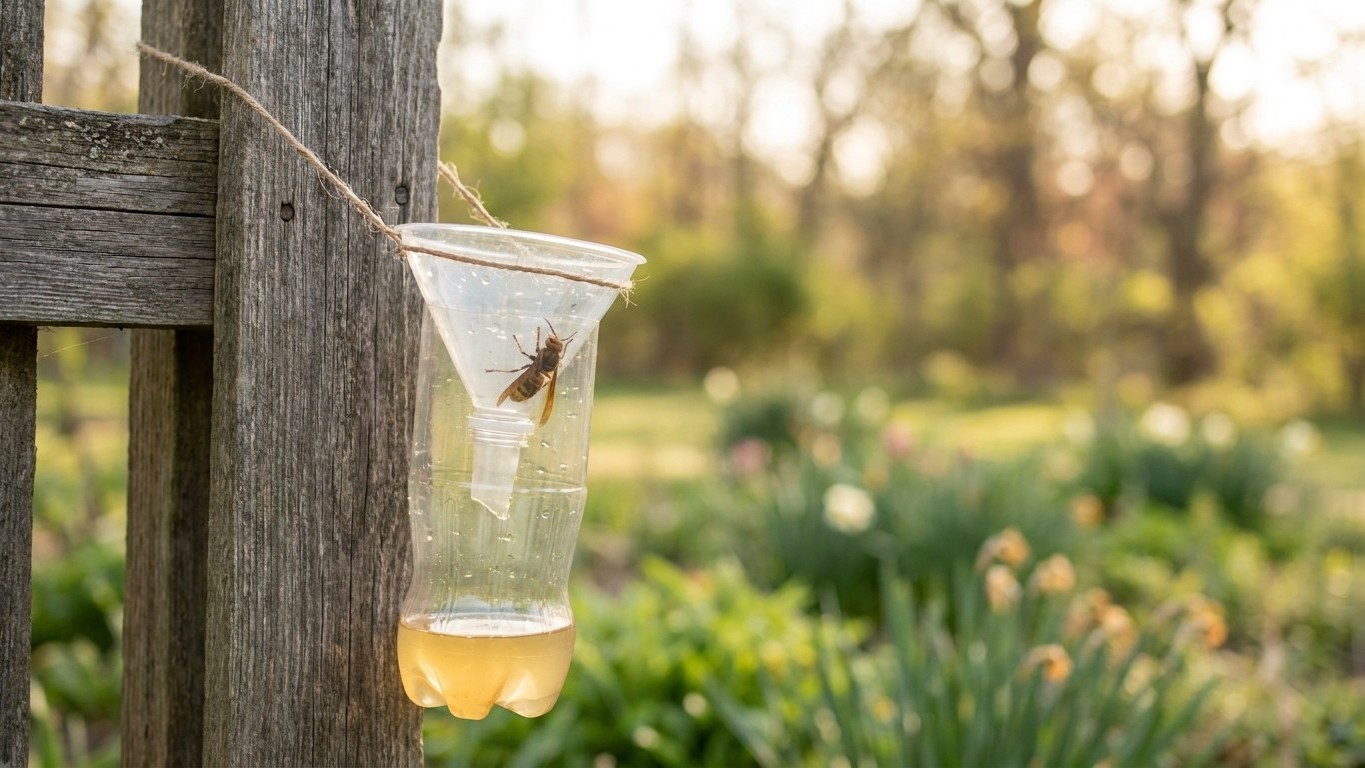
Last spring, a single plastic bottle hanging from a fence post kept my garden hornet-free all the way through August. My neighbor, who waited until he spotted the first swarm in July, spent the rest of the summer dodging a colony of more than 200 insects that had set up camp under his deck. Same neighborhood, same hornets, radically different outcomes. The difference wasn’t money, or luck, or a magic product. It was timing.
Key takeaways
- One queen hornet can become a colony of 300-1,000 workers by summer—but she’s vulnerable and alone in early spring
- A neighbor learned too late: waiting until July meant dealing with 200+ hornets instead of preventing the problem in March
- The trap mechanism is brutally simple, but timing is everything—set it before forsythia blooms or you’re playing defense instead of prevention
The Queen Is the Colony
The queen wasp or hornet comes out of hibernation on the first sunny days of spring, already fertilized and ready to build a nest where she will lay her eggs. She doesn’t arrive with backup. In early spring, there is usually just one queen. If intercepted during this period, you can prevent the entire colony from forming. That’s the brutal arithmetic of hornet control: catch her early, and you’ve solved the problem before it exists.
The numbers behind that single queen are staggering. Each queen hornet can build a nest with the capacity to house between 300 and 500, and in the worst cases even 1,000, larvae. Put it another way: each queen caught is estimated to represent 1,000 workers later in the season. One bottle trap in March can save you a full summer of anxiety.
After winter, queen wasps need to recover their strength to build their new nests. That’s why, on their first flights, they are hungry for food and sugary substances. This vulnerability is the window every gardener should exploit. Placing wasp traps only when the fruits on the trees are ripe is already too late. My neighbor learned this the hard way.
How to Build the Trap: Dead Simple, Genuinely Effective
You can build an effective hornet trap using a plastic soda bottle, a sharp knife, and a simple bait mixture. Cut the bottle below its taper, invert the top section into the bottom to create a funnel entrance, and secure with tape. The hornet enters through the funnel chasing the scent and can’t find its way back out. That’s the whole mechanism. No chemicals, no electricity, no subscription.
Bait is where most people go wrong. During early spring through early summer, use protein-rich options like lunch meat or hamburger, since wasps are actively hunting for protein sources. As late summer and fall approach, switch to sugary baits such as sugar water, fruit juice, or soda, when their dietary preferences shift toward sweets. The same trap can serve you from March to October, you just change what’s inside it. Avoid honey entirely, as it attracts bees instead. Add vinegar to your bait mixture to further deter bees while drawing hornets.
Place your trap 20 to 30 feet from dining areas and 5 to 10 feet off the ground in shaded locations. Shade matters more than most people think: direct sun degrades the bait faster and makes the liquid evaporate before it can do its job. Renewing the bait every 15 to 20 days keeps it active and ensures the trap doesn’t stop capturing pests.
Why Spring Is the Only Moment That Counts
The most efficient use of a trap is to set it out early in spring before the insects become numerous, because the females, the queens, are moving about in the early season. Once a colony takes root, the dynamic changes entirely. Mid to late season, when hornet colonies are fully developed, trapping targets workers, the only ones active outside the nest. The goal is no longer prevention but reducing immediate pressure. You’re playing defense instead of offense, and there are suddenly hundreds of them instead of one.
The critical period starts as soon as temperatures reach 20°C for three consecutive days, usually February to March, and during dispersal flights, which begin at around 15°C. In most U.S. climates, that means your window opens sometime in late February or March, depending on your region. A trap hung before the forsythia blooms is a trap that does actual preventive work.
Research backs this up beyond garden anecdote. According to the ITSAP Institute of the Bee and Pollination, “trapping founding queens in spring helps reduce the number of hornet nests, provided it is repeated over several consecutive years.” Initial results show that continuous trapping enhances effectiveness, trapping continuously for 4 years is twice as effective as doing it for only 3 years. Consistency, year after year, is where the real payoff compounds.
Maintaining the Trap (and Not Making It Worse)
Hornet traps can effectively reduce pest populations, but they require consistent upkeep. Proper maintenance involves checking traps weekly to monitor captured insects and guarantee continued effectiveness. A trap full of dead hornets stops attracting new ones, and a trap with rotten bait starts attracting things you don’t want at all.
Remove dead hornets promptly to prevent attracting additional pests and maintain peak trap performance. A quick weekly check, a bait refresh every two to three weeks: that’s genuinely all it takes. The investment in time is closer to five minutes a week than anything requiring real effort.
One overlooked detail that separates effective trapping from theater: selectivity. A poorly baited trap can catch beneficial insects, including native bees that your garden actually needs. The function of the bait is not only attractive, depending on how it is prepared, it can attract some types of insects and repel others. This facilitates the selection of the target insect and keeps useful insects like bees and bumblebees away from the trap. The vinegar-plus-sugar formula specifically exploits hornets’ preference for fermented fruit while being largely unattractive to honeybees. Worth getting right.
What’s less obvious, and genuinely worth knowing, is that hornets are not purely villains in the garden ecosystem. Hornets prey on numerous garden pest insect larvae. A single trap targeting queens in spring doesn’t threaten local hornet populations at large; it simply prevents one colony from establishing in your immediate space. The goal was never elimination, it was coexistence on your terms, not theirs.
Sources : tipnut.com | sixbrotherspestcontrol.com