
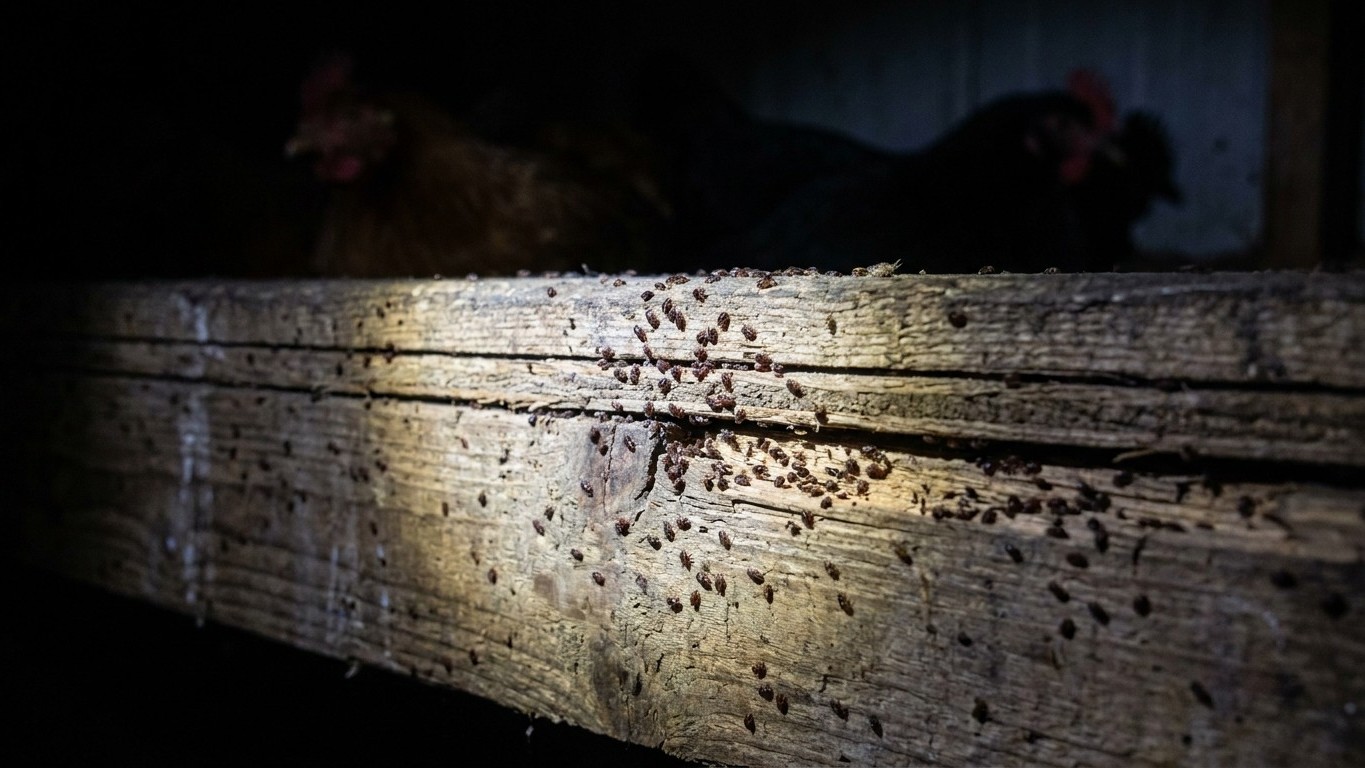
Three feathers stuck to the roost, a comb gone from bright red to dull pink, and hens huddled in the coop’s darkest corner at nine in the morning instead of scratching in the yard. That’s what greeted me on a 95-degree week in July, and I did what most backyard chicken keepers do first: blamed the heat. It wasn’t the heat. When I finally grabbed a flashlight and checked the coop at 2 a.m., the beam caught hundreds of tiny reddish-black dots crawling out of the wood joints and heading straight for my sleeping flock.
Poultry red mites. That’s the answer, and it’s a far more common problem than most new chicken owners realize. Dermanyssus gallinae, to use the scientific name, doesn’t live on the birds during the day. It hides in cracks, under perches, inside nesting box seams, sometimes even in the screw holes of the coop frame. Then, once the lights go out and the hens settle onto the roost, it emerges by the hundreds to feed on blood. A single mite takes maybe an hour to feed and retreat. Multiply that by a heavy infestation, and a flock of six hens can lose a meaningful percentage of their blood volume over a single week.
Key takeaways
- A common parasite mimics heat stress symptoms so perfectly that most backyard chicken keepers treat the wrong problem
- The mites hide in wood seams all day and emerge by the hundreds at night to feed on sleeping birds
- One nighttime inspection with a flashlight can confirm what daytime coop checks never reveal
Why the symptoms look exactly like heat stress
This is the trap. Anemic hens pant. They sit low, wings slightly spread, comb pale, appetite reduced. In a Texas or Georgia summer, every one of those signs gets filed under “too hot,” and the mite problem keeps compounding while the actual cause goes untreated. The giveaway most people miss is timing: heat-stressed birds perk back up in the cool of early morning. Anemic, mite-bitten birds stay listless even at dawn, because the exhaustion isn’t about temperature. It’s blood loss.
There’s a second clue, easy to spot once you know to look for it: dark, gritty specks along the roost bars that look like pepper or dried coffee grounds. That’s mite excrement, and where you see it, the population behind it is usually already well established. Left unchecked, red mites reproduce fast. A female lays eggs in batches, and under warm summer conditions a full life cycle from egg to feeding adult can complete in as little as seven days. Which means a coop that looked clean a month earlier can be crawling by the time symptoms show up.
What actually happens to the hens
Severe infestations don’t just cause fatigue. Egg production drops first, often before anyone notices the mites at all, because laying is one of the first things a stressed, anemic bird’s body deprioritizes. Combs and wattles pale from lack of hemoglobin. In extreme, prolonged cases, chronic blood loss can be fatal, particularly in smaller or older birds that can’t compensate the way a robust young hen might. Veterinary references on poultry parasites consistently rank red mite infestation among the leading preventable causes of anemia-related death in backyard flocks, right alongside neglected internal parasites.
The flashlight test is the fastest way to confirm what’s going on, and it costs nothing. Wait until at least an hour after dark, when the flock is settled, then check the underside of the roost, the corners of nesting boxes, and any seam where two pieces of wood meet. Mites that have just fed look plump and dark red. Unfed ones are grayish and much harder to spot, almost translucent, which is exactly why daytime inspections so often come up clean. A coop can look spotless at noon and be an active feeding ground twelve hours later.
Getting the coop back under control
Treating the birds themselves matters less than most people assume, because the mites don’t live on the hens, they live in the structure. Cleaning out bedding completely, then treating every crack, joint, and seam in the wood is where the real work happens. Food-grade diatomaceous earth, applied into cracks and dusted on roosts, is a standard first line of defense, though it works mechanically (drying out the mites’ exoskeleton) rather than chemically, so it needs reapplication after any rain or humidity. Poultry-safe permethrin sprays, labeled specifically for coop use, are the more aggressive option for infestations that have gotten out of hand, and they typically require a second application ten days later to catch newly hatched mites the first treatment missed.
Steam cleaning, where practical, kills both mites and eggs on contact and works especially well on wooden roosts with porous surfaces that dust treatments can’t fully penetrate. Wooden coops are, frankly, harder to keep mite-free long term than plastic or metal ones, simply because the material offers so many more hiding seams. If you’re building or replacing a coop, that’s worth factoring in before construction, not after the first infestation.
My flock recovered within about three weeks of treatment: full cleanout, diatomaceous earth in every seam, a second treatment ten days out, and daily flashlight checks until I stopped finding anything crawling. Combs came back to their normal color faster than I expected, egg production returned within the same window. What stuck with me wasn’t the mites themselves so much as how convincing the wrong explanation felt. Heat was right there, plausible, seasonal, easy. The actual cause needed a flashlight and a two-in-the-morning walk to the coop to even become visible. Anyone keeping hens through a hot summer owes their flock that one nighttime check, if only to rule out the thing that heat makes so easy to overlook.