
Three weeks. That’s all it took for one batch of sage cuttings to turn into a science experiment in decay, while an identical setup two gardens over produced actual roots. Same plant, same month, same intentions. The difference wasn’t luck. It was where on the plant those cuttings came from.
Sage looks forgiving because, mostly, it is. If you’re not confident about taking cuttings, you should start with sage because it’s very forgiving; you can strip the leaves off a length of stem and just plant them in a pot of soil. But “forgiving” doesn’t mean immune to basic plant biology. Flowering stems are, structurally, a different kind of wood than the leafy, vegetative growth surrounding them. That distinction matters more than most weekend gardeners realize.
Key takeaways
- A sage plant in bloom is starving for root energy—all resources are locked into flowers instead
- Flowering stems turn woody and fibrous by August, creating the perfect conditions for basal rot fungi
- Your neighbor probably ignored the showy flower spikes and hunted for soft, green, non-flowering growth instead
Why flowering stems are the wrong choice
A sage plant in bloom is spending its energy budget on reproduction, not on growing new roots. Flowering diverts energy away from root production, so pinching off flower buds and selecting vegetative, non-flowering stems gives better results. That’s the whole story in one sentence, but it’s worth sitting with. A stem that’s already committed its resources to producing flowers has very little left over to throw down a root system once it’s severed from the mother plant. It’s running on empty right when it needs reserves the most.
There’s also a texture problem. Stems that have flowered tend to be older and more fibrous by the time August rolls around, closer to the “hardwood” end of the spectrum than the soft, pliable growth cuttings actually want. The most reliable cuttings are 4 to 6 inch semi-woody shoots taken in late spring or early summer, since semi-woody tissue balances vigor with rootability, avoiding the extreme softness of very young growth or the slow rooting of fully woody stems. Push past that window and you end up with a stem that’s essentially trying to root as fully hardwood tissue, which behaves very differently in a pot of moist soil. Woody stems sit there absorbing water they can’t efficiently use for root initiation, and that dampness at the cut end becomes a breeding ground for the rot fungi that turn a stem base black.
That blackening isn’t mysterious. It’s basal rot, and it shows up almost exactly on the timeline described here: healthy-looking for a week or two, then a sudden collapse at the cut end as fungal pathogens move in faster than any root tissue can form. A sterile potting mix is vital for preventing root rot and fungal infections during the critical rooting phase, but sterile soil can only do so much when the cutting itself was compromised from the start by being too woody, too committed to flowering, and too slow to root.
What the neighbor almost certainly did differently
Chances are good the neighbor skipped the showy flowering spikes entirely and went hunting along the sides of the plant for younger, softer growth. Non-flowering stems with a vibrant green hue and healthy leaves tend to be far more successful for propagation than flowering ones. That single choice, non-flowering versus flowering, is probably responsible for the entire gap between a rotten stump and a rooted cutting.
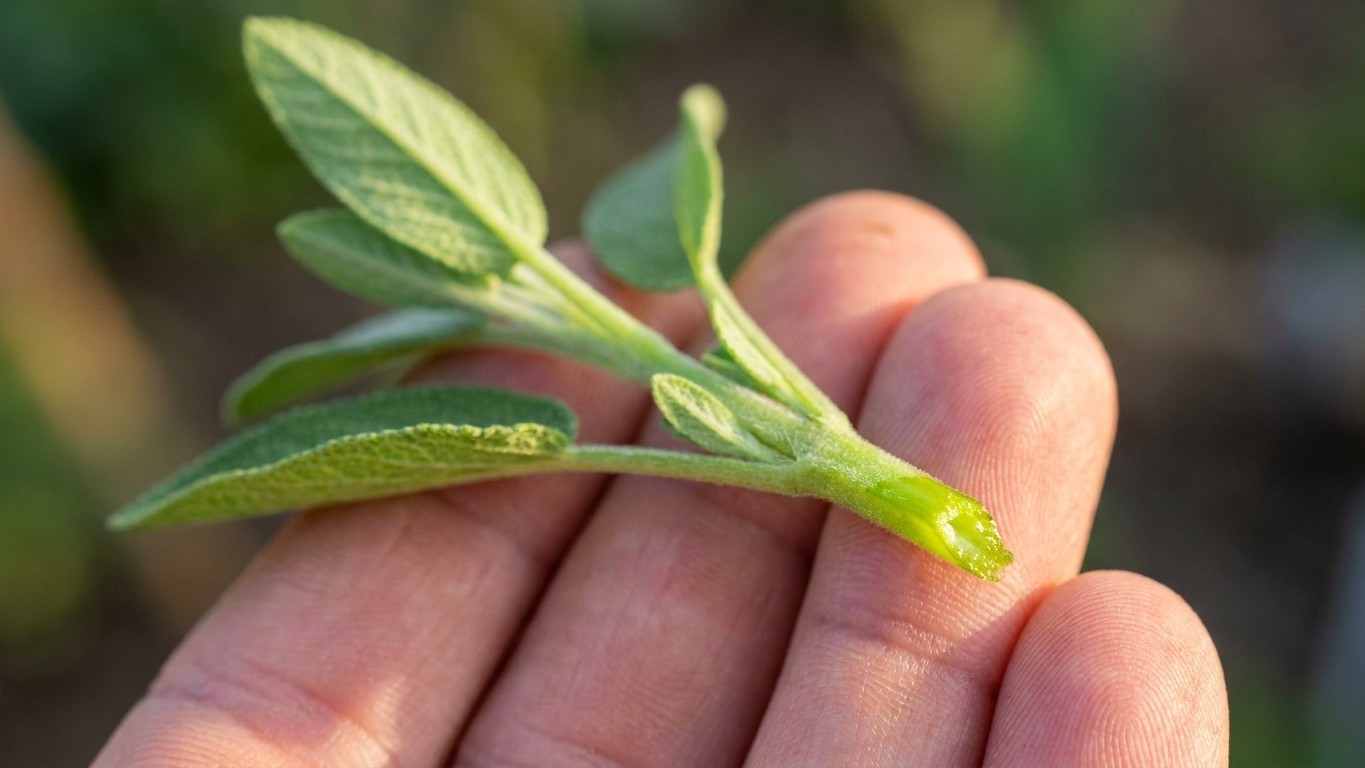
The technique itself doesn’t need to be complicated. The best approach is to select healthy, non-flowering stems and cut 4 to 6 inch sections from tip growth, making clean cuts just below a leaf node, then removing the lower leaves and leaving 2 to 3 pairs at the top. That leaf node detail isn’t decorative advice. The node is where the highest concentration of rooting hormones is found, which helps a cutting develop roots more quickly. Cut in the wrong spot, on the wrong kind of stem, and you’re working against the plant’s own chemistry instead of with it.
Rooting hormone is optional but genuinely useful insurance, especially in August when stems are trending woodier by the day. Sage cuttings typically develop roots in 2 to 3 weeks when grown in soil under optimal conditions, and while hormone isn’t required, it significantly improves success rates. A humidity dome or loosely draped plastic bag helps too, keeping the leafy top from losing moisture faster than the rootless bottom can replace it. Skip the dome on a flowering, semi-woody stem and you’ve basically stacked every disadvantage on top of each other.
Timing still matters, even in late summer
August isn’t a bad month for sage cuttings, despite the conventional wisdom pointing to late spring. From lavender to sage to penstemon, late August is still a fine window to propagate, and sage is one of the easier plants to root from cuttings. The trick is scouting the plant carefully rather than grabbing whatever stem is closest to hand, which is usually the tall, flowering one because it’s the most visually obvious.
Look instead toward the base and sides of the plant, where new, non-flowering shoots tend to hide beneath the showier flower spikes. Select newer tender growth toward the tips of the plant rather than older woody growth closer to the base. A stem that bends without snapping, that’s still distinctly green rather than gray-brown and rigid, is the one worth cutting. If every stem on the plant is flowering, it may simply be past its prime propagation window for that season, and waiting for a fresh flush of vegetative growth after a light prune will produce far better material than forcing a cutting from what’s available now.
One detail worth remembering for next time: grocery-store sage rarely works as well as garden-fresh cuttings for exactly the same reason as those flowering stems failed. Cuttings from store-bought sage have limited success because grocery store sage is often harvested from woody stems and stored cold, which reduces viability. Woody, stressed, and lacking active growth hormones, it’s the same failure mode wearing a different disguise.
Sources : cultivatedearth.com | homesteadandchill.com