One sunny afternoon was all it took. Strip the leaves off a pepper plant to speed up ripening during a heat spike, and by evening the fruit already carries pale, papery scars that no amount of care will undo. This is sunscald, and it’s one of the most common self-inflicted wounds in a summer vegetable garden.
The logic behind defoliating seems reasonable at first glance: fewer leaves means more light reaching the fruit, and more light should mean faster ripening. Understanding what causes sunscald makes prevention straightforward, and there are three scenarios that account for most cases home growers encounter. The first, and the one that trips up even experienced gardeners, is exactly this kind of impulsive pruning. Removing too much foliage at once exposes fruit that developed under a canopy, and the transition from shade to full sun is abrupt, so the fruit has no time to adapt. Peppers don’t tan. They burn.
Key takeaways
- A single afternoon exposed a pepper plant’s fruit to 38°C sun after months of shade—with irreversible damage by evening
- Thin-walled pepper varieties like Thai Dragon and cowhorn types are far more vulnerable than chunky bell peppers
- The real danger isn’t the cosmetic scar, but secondary molds and bacteria that colonize the damaged skin afterward
What’s actually happening to the fruit
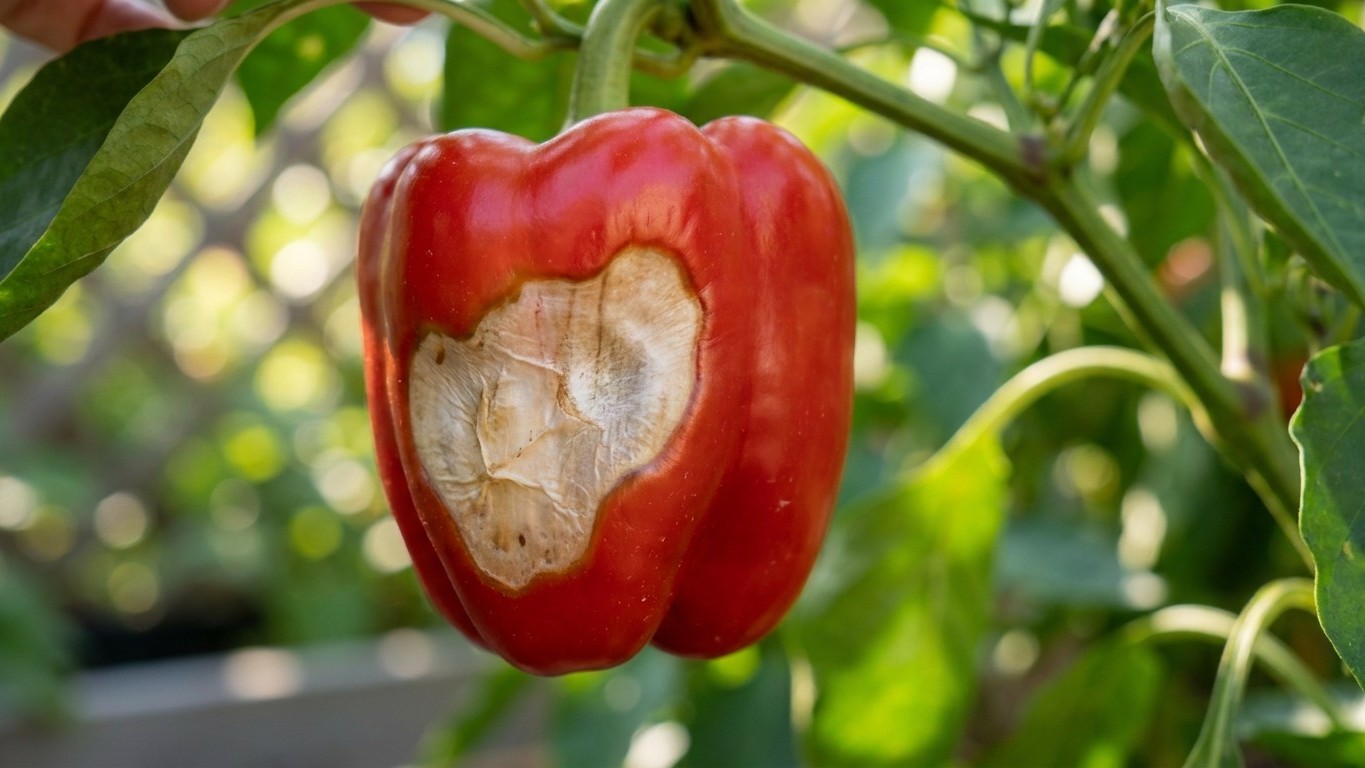
Sunscald isn’t a disease, despite how alarming it looks. It’s a physiological disorder caused by direct ultraviolet and infrared radiation hitting fruit tissue that isn’t acclimatized to intense sun exposure. The damage shows up as white, tan, or light yellow patches on the sun-facing side of the fruit. Cornell’s plant pathology program frames it simply: fruit exposed to direct sunlight can be damaged.
The comparison to human skin isn’t just a figure of speech gardeners use to make the concept relatable. A simple way to define sunscald is as the effect of prolonged excessive exposure to the sun, and the result is damage that you could compare to sunburn on human skin. A pepper wall exposed to 38°C sun after months of dappled shade reacts about as well as untanned skin does on a first beach day without sunscreen.
The progression from there follows a predictable, and frustrating, timeline. As it progresses, the affected skin turns papery and may collapse inward, leaving a sunken, leathery spot that secondary molds love to colonize. That’s the real danger here, not the cosmetic patch itself, but what moves in afterward. The fruit may crack and split where the scald occurs, and sometimes cracking can allow bacteria or fungi into the fruit, so the fruit will soften and the burnt areas will become rotten.
Why thin-fruited and large varieties suffer most
Not every pepper reacts the same way to a sudden loss of shade. Thin-walled varieties like the elongated, mildly pungent cowhorn type and large-fruited sweet peppers are particularly vulnerable because their surface area-to-wall ratio means less thermal mass to buffer heat spikes. A chunky bell pepper has more flesh to absorb heat gradually; a slender chili heats through almost instantly.
Plant architecture plays a role too. Varieties with naturally thin canopies, like the intensely hot fiery, thin-fruited Thai Dragon type, can show sunscald even without aggressive pruning simply because the plant architecture leaves fruit exposed by default. Fruit orientation matters as well: pepper varieties where the fruits point upward, such as tabasco peppers, may be more likely to develop sunscald, since upright fruit catches direct overhead rays instead of hanging in the plant’s own shadow.
The good news, if there is any after the fact, is that the damage is rarely a total loss. Most of the damage on sunscalded peppers is cosmetic and the fruit is perfectly good to eat. Some growers even find a silver lining in the kitchen: sometimes only the skin has been damaged and you can roast these peppers and pull off the skin. For anything worse, remove any fruit where the scalded area has turned dark, developed a foul smell, or shows visible mold growth, since these are already colonized by secondary pathogens and will spread spores to healthy fruit if left in place.
What to do differently next time
The fix isn’t complicated, but it does require resisting the urge to intervene aggressively. Extension advice is remarkably consistent on this point: maintaining robust foliage is the first line of defense against pepper sunscald, and the rule of thumb is to avoid over-pruning, removing only damaged or lower leaves. If a heat wave is forecast, the leaves you already have are doing more protective work than you might realize. Healthy tomato and pepper plants naturally protect their fruit with leaves, and problems begin when that leafy “umbrella” disappears.
When temperatures are genuinely dangerous, temporary shade beats defoliation every time. During extreme heatwaves, temporary shade cloth can reduce sunscald while still allowing plants to receive enough light for healthy growth. Row covers work on the same principle: row covers or forms erected with shade cloth have the ability to deflect much of the intense light and protect the plants from pepper sunscald.
Watering habits matter more than most gardeners assume. Heat stress makes plants more vulnerable to sunscald, and when tomatoes and peppers struggle to access water, they may shed older leaves to conserve energy, which creates the exact bare-canopy problem that triggers scald in the first place. Deep, consistent watering, paired with a few inches of mulch to keep roots cool, keeps that natural leaf canopy intact through a heat spell instead of thinning it out under stress.
Fertilizer timing deserves a mention too, because the instinct to “help” a scalded plant recover can backfire. Heavy fertilizing after sunscald appears is a mistake, since a nitrogen push encourages lush new foliage that sounds helpful but produces a flush of soft growth more susceptible to further sunscald and disease pressure; steady, moderate fertility is the right call. The plant doesn’t need a growth spurt right after a burn. It needs stability, shade, and time to grow back its own protection the way it was designed to.
Sources : vegogarden.com | worldscoolestraingauge.com