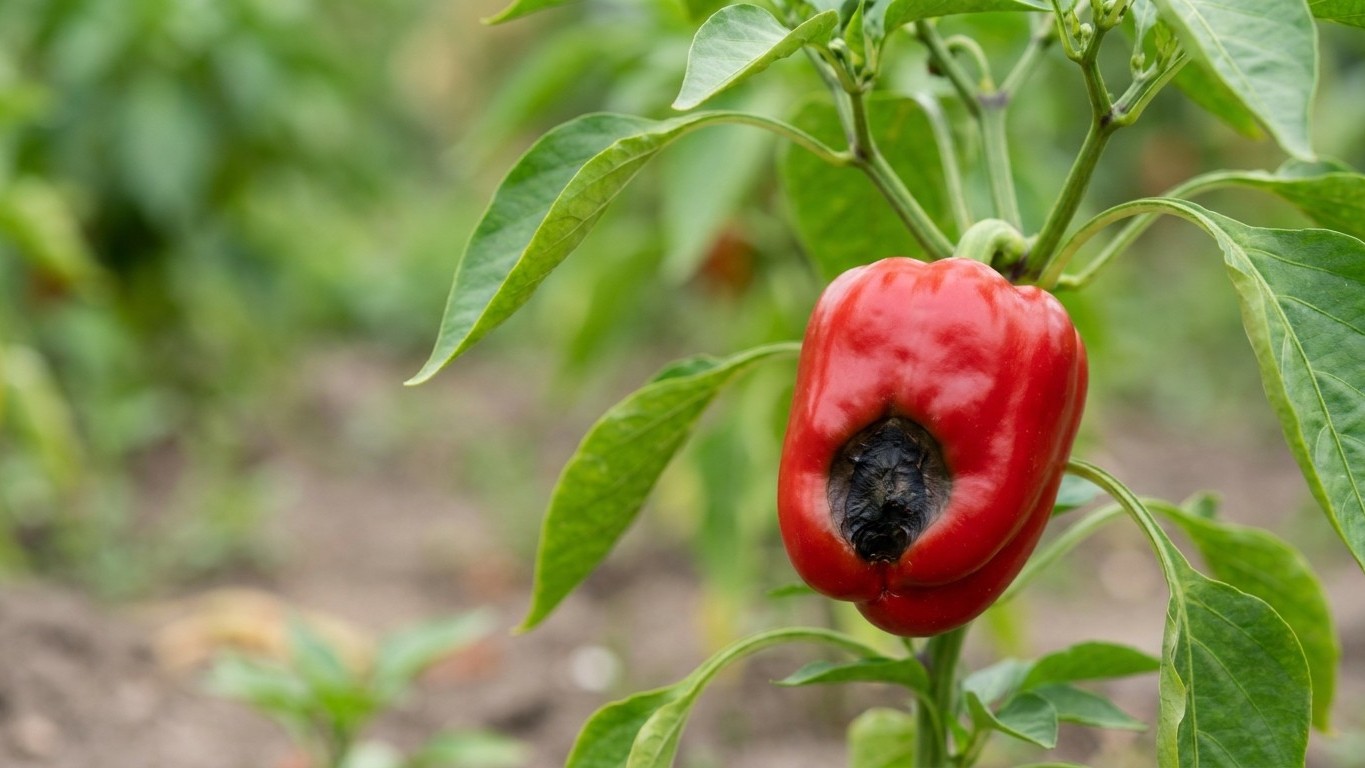
Blossom end rot doesn’t care how much calcium you dump on it. That black, leathery patch spreading across the bottom of a pepper isn’t a mineral shortage you can fix with a bag from the garden center. It’s a plumbing problem, and gardeners have been pouring calcium down the wrong pipe for decades.
The instinct makes sense. See a nutrient deficiency symptom, add the nutrient. Except blossom-end rot is associated with inadequate calcium in the developing fruit, but that does not mean the garden soil lacks calcium. In many cases, the soil contains enough. The problem is that calcium did not reach the fruit consistently during a critical period of growth. Dumping more calcium onto soil that already has plenty is like adding more water to a bathtub with a clogged drain. The tub doesn’t need more water. It needs the drain fixed.
Key takeaways
- A gardener dumped an entire bag of calcium on their pepper bed, but the new fruit developed the exact same black bottoms weeks later
- Blossom end rot happens when inconsistent watering breaks the plant’s ability to transport calcium to developing fruit, not because soil lacks calcium
- The real solution has nothing to do with what’s in the bag and everything to do with consistent moisture and a hose
Why the calcium never made it to the fruit
Here’s the mechanism nobody explains at the garden center checkout. Plants absorb calcium from the soil solution through active roots. Once inside the plant, calcium moves mainly with the transpiration stream. Water enters roots, travels through the plant, and evaporates from leaf surfaces. Leaves are transpiration powerhouses, so they pull calcium toward themselves aggressively. Leaves transpire strongly and receive a dependable flow of calcium. Developing fruit transpires much less. It therefore depends on a steady water supply and functioning vascular system to receive enough calcium while cells are expanding.
That’s the whole trick, and it’s why a whole bag of calcium changes nothing. When the soil alternates between dry and wet, calcium delivery becomes irregular. The fruit may develop normally at first. Damaged tissue appears later near the blossom end because that portion was unable to build strong cell walls during early expansion. The damage happens weeks before you ever see it. Research results suggest that signs of blossom end rot on fruits become visible two weeks after the calcium deficiency has occurred. By the time you’re staring at a rotted pepper bottom, the fruit that caused your panic is already ancient history. It won’t heal, no matter what you feed it now.
Once fruit tissue is damaged, it will not recover. Cut the black bottom off and eat the rest, or toss it. Nothing you pour on the soil today changes what’s already dead.
Peppers hide the problem differently than tomatoes do
Tomato growers get an obvious black bullseye on the fruit’s bottom. Peppers are sneakier. Peppers are less tidy, and that is why many gardeners misread the first damaged pods. UNH Extension notes that pepper lesions can appear on the side of the fruit and look like sunscald. That distinction actually matters for diagnosis, because the fix is completely different depending on which one you’re dealing with. Sunscald usually follows exposed fruit and hot direct sun, while blossom end rot can show on fruit that never had much sun on the damaged side. A dark patch tucked under a canopy of leaves, shielded from any direct light, points straight back to calcium transport, not sunburn.
There’s also a version of this disorder that skips the dramatic black patch entirely. Thin-walled hot peppers can also hide the problem by aborting fruit early. Instead of a big black patch, you may see small fruit yellow, shrivel, and drop before they size up. If your jalapeños or serranos keep dropping tiny, yellowing pods for no obvious reason, the same watering inconsistency could be the culprit, just wearing a different disguise.
The extension research is remarkably consistent on the fix. Land-grant universities from Florida to California say the same thing in nearly identical language. Blossom end rot starts when the demand for calcium in the expanding fruit exceeds the supply. However, it is not a case of a simple calcium deficiency, but is much more complex. Adding calcium to the soil rarely alleviates the problem. BER involves a low level of calcium in the fruit, but often the supply may be more than adequate in the plant or soil. In terms of management, blossom-end rot is primarily a water issue. Florida’s extension service puts it just as bluntly: foliar applications of calcium are not effective at reducing blossom end rot. This is because very little calcium is taken up by the fruit and the calcium absorbed by the leaves can not be translocated to the fruit.
What actually stops the next round of black bottoms
Consistency beats quantity, every single time. The most effective way to prevent blossom end rot is to maintain uniform soil moisture. avoid allowing the soil to dry out in between watering. Setting up a drip irrigation system on a timer is a great way to ensure consistent watering. To reduce moisture evaporation from the soil, apply a layer of mulch or pine straw around the plants. A three-inch layer of straw mulch does more to fix that black bottom than an entire bag of calcium ever will, because it smooths out the moisture swings that broke the delivery system in the first place.
Container-grown peppers deserve extra vigilance here, since pots dry out far faster than garden beds and swing between soaked and bone-dry in a single hot afternoon.
Nitrogen deserves a second look too, especially if you’ve been feeding heavily to push growth. Don’t over-fertilize with nitrogen. This is important and can contribute to BER. Too much nitrogen causes the plant to grow more leaves. As water is drawn towards the leaves, it carries calcium with it, which may in turn reduce the amount of calcium going to the fruit. A pepper plant pushed into a leafy growth spurt is, in effect, stealing calcium from its own fruit to build more leaves.
Before adding anything to the soil, get an actual number. If a soil test shows calcium below 1,000 ppm, supplementation is warranted. A soil test from your local extension service costs $15–25 and removes all guesswork. Without this test, adding calcium is treating a symptom that probably doesn’t exist in your soil. Most home gardens, especially anything amended with compost or bagged potting soil over the years, already sit well above that threshold. If your test comes back low and you’re gardening on naturally acidic, sandy, or heavily leached soil, then dolomitic lime or gypsum applied at planting time (not mid-season as a rescue attempt) can genuinely help going forward. For everyone else, the fix has nothing to do with what’s in the bag and everything to do with the hose.
Sources : mysolutionssupply.com | bloomingexpert.com