
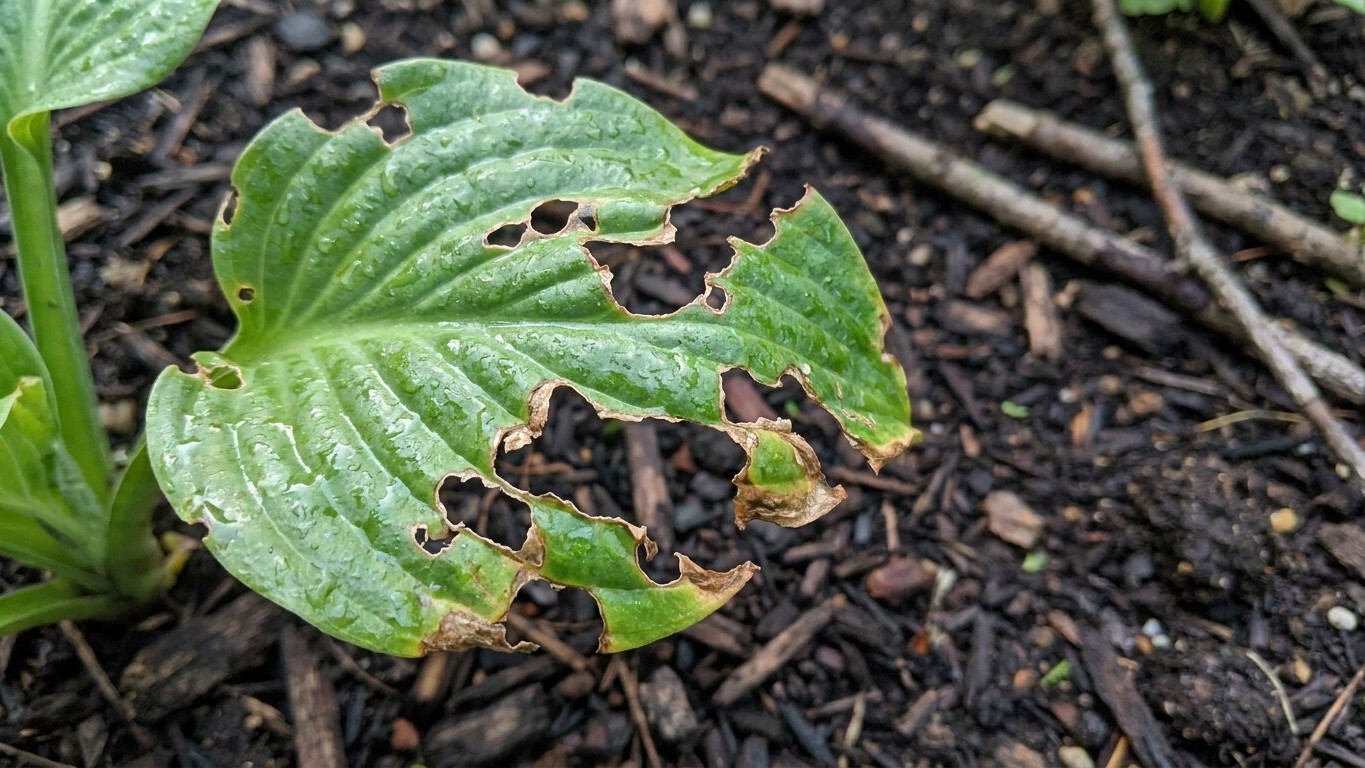
Slugs don’t avoid sharp edges. They swim over them. That crushed eggshell ring circling your hosta isn’t a fortress, it’s decoration, because the mollusks chewing through your foliage every night have already solved the problem you thought you’d created.
The barrier theory sounds airtight: crushed shells have jagged points, slugs are soft-bodied, therefore contact equals injury. Except slugs secrete slime precisely to protect against cuts on rough surfaces, and this slime is so efficient they can even cross shards of glass without any damage. Researchers who actually tested the theory with lettuce and live slugs found the same thing you’re finding on your hosta leaves: the leaf surrounded by shells had entirely disappeared, while the unprotected leaf was in better shape but still suffered damage. the ring didn’t fail quietly. It failed while doing basically nothing.
Here’s the part most gardeners never hear: eggshells can backfire. Unless they’re thoroughly cleaned to remove the inner membrane and rinsed of any remaining egg white, they give off an odor that actually attracts slugs. So that ring you scattered with good intentions might be functioning less like a moat and more like a dinner bell, depending on how well you rinsed your breakfast eggs.
Key takeaways
- Slugs produce slime that lets them cross eggshells and even glass without injury
- Dirty eggshells can actually attract slugs instead of repelling them
- The real slug habitat is living in your mulch, not above it
The real problem is living an inch below your feet
Ragged holes appearing overnight aren’t a barrier problem. They’re a habitat problem, and the habitat is sitting right under that eggshell ring, in the mulch, the leaf litter, the damp crevices you walk past every day without a second glance. Slugs are protected from drying by hiding during the day and feeding at night, spending daylight hours in soil crevices or under boards, rocks, mulch, debris, or the foliage of low, dense plants. That thick, attractive layer of bark mulch you spread around your hosta bed to keep weeds down and moisture in? It’s also a five-star slug hotel.
Hostas make this worse by their very nature. They usually grow in cool, shaded, moist garden beds, the exact conditions slugs need to avoid drying out, and a hosta planting with mulch, fallen leaves, dense companion plants, and damp soil can become a perfect hiding and feeding area. You’ve essentially built luxury housing next to an all-you-can-eat buffet. One gardener discussing mulch around hostas put it plainly: mulch is a good slug magnet, definitely gives them a place to hide as they love the cool, moist conditions it provides.
The eggshells sitting on top of all that never had a chance. They’re a surface-level fix for a problem that lives underneath, in the exact spot where slugs spend fourteen hours a day waiting for dusk. Iowa State University’s extension service notes that slug feeding damage appears as large, irregular holes, and when populations are abundant, they can cause considerable damage, which tracks with the “shredded overnight” pattern so many hosta owners describe.
Why the damage always looks the same
If you’ve been blaming deer, insects, or hail, it’s worth ruling those out first, but the signature is usually unmistakable. Slugs are one of the most common causes of holes in hosta leaves, and you’ll typically see irregular holes, ragged edges, and shiny slime trails. Deer tear leaves at the petiole, rabbits snip clean like scissors, but slugs leave that telltale lace-edged chewing pattern because they rasp leaf tissue away in small bites, night after night, working the same plant until it looks like it survived a hailstorm indoors.
The timing matters too. Slugs are most active at night, early morning, and during cool, cloudy, damp weather, and damage often gets worse after rain or irrigation. That’s exactly why a fresh crop of holes shows up every single morning after a wet night, while dry stretches sometimes give your hostas a break. It’s not that the slugs took a vacation. They simply had less cover and less moisture to work with.
What actually reduces the damage
Forget the single silver bullet. Extension horticulturists consistently frame slug control as habitat management first, chemistry second. Start by cleaning up debris, watering in the morning, thinning crowded plants, handpicking slugs at night, and using traps such as boards or citrus rinds, while encouraging natural predators and avoiding constantly damp hiding places. Pulling back mulch a few inches from the base of each hosta, rather than piling it against the crown, removes the exact shelter that makes eggshell rings pointless in the first place.
Copper offers a genuine mechanical deterrent, but only when installed correctly. Copper tape or strips can help protect hostas in pots or raised beds, though the barrier needs to form a continuous band, since leaves, mulch, or other materials bridging over it will let slugs simply crawl across. For beds where copper isn’t practical, targeted bait fills the gap. Iron phosphate slug baits are commonly used by home gardeners and are generally considered a safer option around pets and wildlife when used according to the label, which makes them a reasonable last resort once cleanup and handpicking haven’t fully solved the problem.
None of this means eggshells belong in the trash. They’re genuinely useful crushed into vegetable garden soil for a slow calcium boost, or composted alongside coffee grounds. What they can’t do is stand guard over a hosta bed while the actual threat naps six inches away under a curl of bark mulch, waiting for the sun to go down.
Sources : laidbackgardener.blog | gardenmyths.com