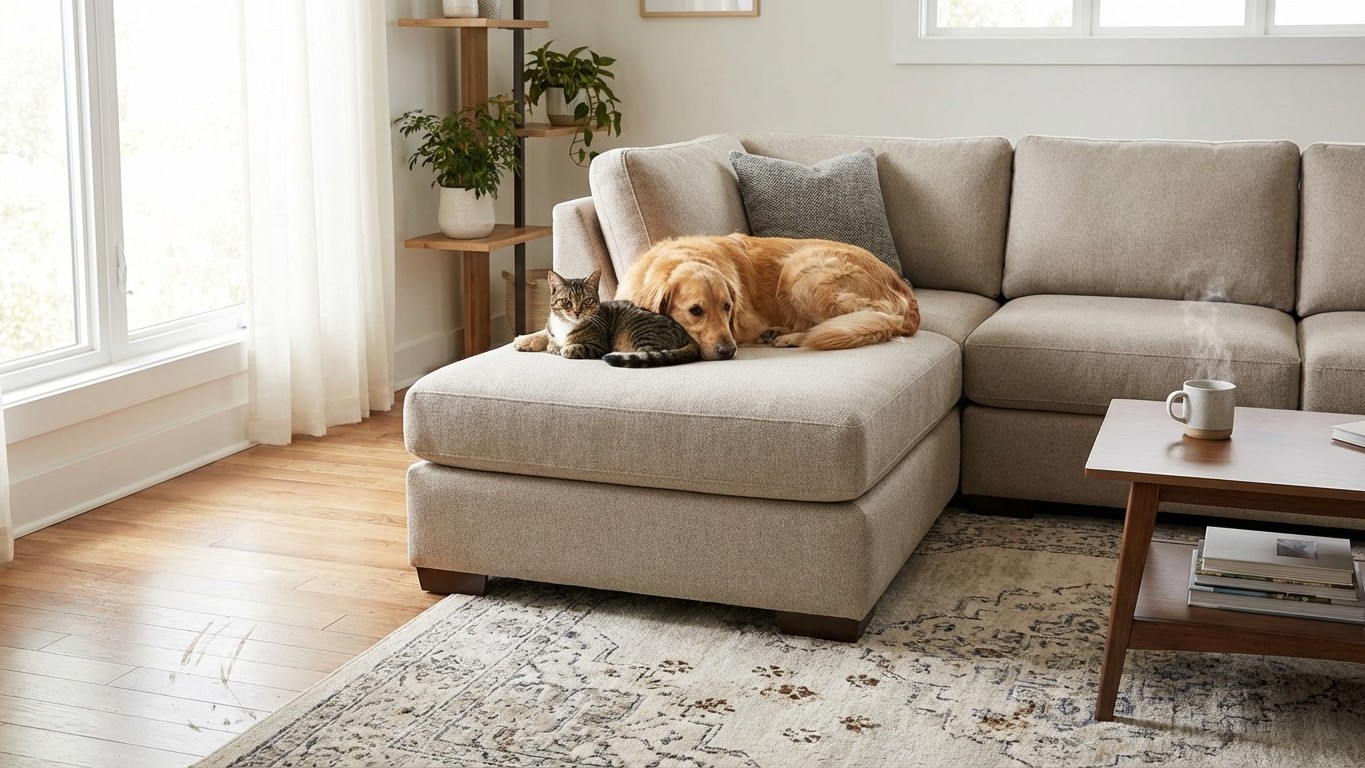
Sixty-seven percent of American households own at least one pet. And yet, most interior design advice still treats dogs and cats as an afterthought, a footnote after the beautiful mood boards and pristine linen sofas. The reality is messier, more clawed, and honestly more interesting. Building a home that genuinely works with your pets, without looking like a veterinary waiting room, is a material problem first and a design problem second. Get the materials right, and the rest follows.
This guide covers every surface that takes a daily hit in a pet-owning home: floors, upholstery, rugs, and walls. For each one, you’ll find a clear breakdown of what actually holds up, what doesn’t, and where the smart tradeoffs lie. No vague advice, no fictional product specs. Just the real comparison.
Pourquoi les matériaux font toute la différence dans un intérieur pet-friendly
Griffures, taches, poils, odeurs : les quatre ennemis du décor
A dog’s claws hitting hardwood floor at full sprint. A cat deciding your velvet sofa is actually a scratching post. These aren’t hypothetical scenarios, they’re Tuesday.
Life with pets means muddy paw prints, accidental spills, and the occasional scratch across the floor, and the wrong materials can turn their everyday messes into permanent damage.
The four core challenges, scratches, stains, pet hair, and odors, each demand a different response from your materials. A floor that laughs at claws might trap odors. A sofa made with scratch resistant fabric for cats that repels liquid might magnetize fur. That’s why choosing pet odor resistant materials for home interiors requires balancing these competing demands. Understanding these conflicts is the first step to solving them.
VOCs (volatile organic compounds) found in paints, cleaning supplies, and flooring can potentially cause adverse health effects, and some are known to cause cancer in animals.
That’s a dimension most homeowners overlook entirely: the materials you choose don’t just affect durability, they affect your pet’s health. A beautifully finished floor sealed with a high-solvent varnish might be doing quiet damage to a dog who spends all day lying on it. This is why choosing pet safe paint and finishes for interiors is crucial for maintaining both your home’s aesthetics and your pet’s wellbeing.
Les bénéfices concrets de matériaux adaptés
Scratch-resistant flooring and stain-resistant fabrics extend the longevity of household materials while keeping your home stylish and easy to maintain. Choosing durable materials like luxury vinyl, sealed hardwood, pet friendly rugs that are easy to clean, best upholstery for pet hair, and pet friendly flooring for dogs and cats ensures your home remains pet-proof while maintaining aesthetics.
The upfront investment in the right materials typically pays back in reduced replacement costs, less cleaning time, and a genuinely livable space rather than one you’re constantly trying to protect from your own pets.
There’s also the design angle.
Indoor-outdoor, pet-friendly rugs are now crafted using the same fashion-forward patterns and textures as indoor rugs, allowing customers to achieve an aesthetic without sacrificing function.
The gap between “pet-proof” and “beautiful” has narrowed dramatically. The materials covered in the linked guide on pet friendly home design cat dog furniture show exactly how far this convergence has come.
Sols pet-friendly : le comparatif complet des revêtements
Vinyle de luxe, carrelage, stratifié et béton ciré
Luxury Vinyl Plank (LVP) has become the consensus pick for most pet households, and the reasons aren’t complicated.
LVP checks all the boxes: it’s waterproof, scratch-resistant, and affordable. It’s a top pick for anyone needing dog-proof flooring that holds up against heavy paws and unexpected accidents, and it’s available in various styles that provide a comfortable underfoot feel that’s gentler on both pets and humans.
The added acoustic benefit matters too:
vinyl reduces the sound of clicking nails on hard floors.
Tile is a different kind of champion.
Tile is virtually impervious to pet claw scratches, being one of the hardest flooring materials. Glazed tiles are completely waterproof, ideal for pet accidents and spills, and dirt, pet hair, and messes are easily removed.
The catch?
Tile can be slippery, so it’s worth opting for textured tiles or adding rugs for traction.
In warmer climates, that cool surface is a genuine comfort for pets. In a Minnesota winter, not so much.
Laminate occupies the budget-smart middle ground.
Laminate is one of the most scratch-resistant flooring options available, thanks to its tough wear layer that stands up well to pet claws and everyday scuffs, often even better than vinyl.
The key caveat:
pet owners should opt for a water-resistant or waterproof option, as regular laminate may be damaged by liquids if not cleaned up quickly. Look for an abrasion class (AC) of 4 or 5, which resists scratches and scuffs.
Cork is the underdog worth mentioning.
It’s soft, absorbs sound, and naturally resists mold, making it one of the best flooring options for bedrooms with pets. The natural give is great for older pets or those with joint pain, and its antimicrobial properties help keep a cleaner indoor environment.
The vulnerability is real though: sharp claws and standing water are both enemies. Seal it well, and maintain it faithfully.
For a full room-by-room breakdown, the dedicated comparison on pet friendly flooring for dogs and cats goes deeper into each option with specific product guidance.
Parquet et bois : quand le charme vaut le compromis
Solid hardwood scratches easily, but engineered hardwood is more stable and pet-tolerant.
The gap between the two is significant.
White oak and engineered hardwood are excellent choices because they have tighter grain patterns that hide scratches better than softer woods. Opting for a matte finish or a distressed look can further disguise inevitable wear and tear.
Finish matters as much as species.
Natural oil finishes make it easier to spot and fix scratches, while polyurethane can be more wipeable and scratch-resistant, and matte finishes are more durable and show less.
One genuinely useful tip:
lighter floors tend to show fewer scratches and fur or hair.
A detail that sounds cosmetic but saves a lot of daily frustration.
Tapis et moquettes : les erreurs classiques à éviter
Wall-to-wall carpet remains a controversial choice, and for good reason.
Carpet isn’t usually the first choice for pet owners: it traps pet hair, dirt, and odors, and accidents can leave behind stains that are tough to remove.
If you’re committed to carpet,
choose low-pile (shorter fibers are easier to clean and less likely to trap pet hair), opt for stain-resistant options, and consider carpet tiles that allow you to replace just one section if it gets damaged or stained.
One structural detail that gets overlooked:
loop pile rugs can be problematic for pets, as long claws can get caught on the loops, damaging the rug or possibly injuring your pet. Many people opt for cut pile rugs as a safer alternative.
A small technical choice with real consequences.
Tissus et textiles : choisir les bons revêtements pour canapés et fauteuils
Microfibre, skaï, Crypton et performance fabrics : le classement réel
Microfiber earns its reputation.
Microfiber is one of the best choices for cat owners: its tightly woven construction means no loops for claws to snag, the smooth surface prevents cats from digging in, and dust and fur are easily removed. Liquids also don’t absorb as quickly as in other woven fabrics.
Microsuede (a variant) adds even more tactile appeal:
whether you have a cat that uses your sofa as a scratching post or a dog that loves to burrow into the cushions, microsuede fabric is designed to hide light scratching, keeping your furniture looking fresher for longer.
Leather deserves more nuance than it usually gets.
Leather is an elegant material that is easy to maintain. Its smooth surface makes it resistant to fur and stains, and spills can often be wiped clean with a damp cloth. It is also odor-resistant because it does not absorb smells.
The real tension with cats:
though easy to clean, leather can show visible punctures from cat claws.
Top-grain leather, the thickest option, offers the most resistance, but no leather is truly claw-proof.
Crypton fabric sits in a category of its own.
Designed for ultra-durability, Crypton fabric is both stain- and odor-resistant. It’s so reliable, even hospitals and pet shelters use it on high-traffic furniture. With built-in moisture barriers, accidents don’t soak in, and the fabric is treated to be antimicrobial, providing spill resistance with a liquid barrier that repels stains.
Performance fabrics from brands like Sunbrella and Revolution occupy a similar tier, combining the look of conventional textiles with technical protection.
For a full breakdown of what to buy (and what to absolutely avoid) for sofas and armchairs, see the guide on scratch resistant fabric for cats and the companion piece on best upholstery for pet hair.
Textiles qui ne piègent pas les poils : la question des couleurs et des motifs
The science of hiding pet hair is underrated as a design discipline.
When selecting upholstery for a pet-friendly home, consider color and pattern to help mask fur and stains: dark colors hide dirt but may show light-colored fur, while neutrals like gray, taupe, or camel blend well with most fur colors. Patterns help conceal small stains, scratches, and pet hair better than solid colors.
Fabrics to avoid?
Loose-weave fabrics like chenille or tweed trap fur and dirt, delicate fabrics like silk or linen wear out quickly under rough use, and highly textured materials can pill or snag from a dog’s claws.
Velvet sits in an interesting gray zone: conventional velvet is a cat’s dream scratching surface, but performance velvet (with its protective coating) is actually a reasonable choice, combining aesthetics with durability.
Eco-minded households will be pleased:
many brands now use recycled polyester and upcycled fibers from plastic bottles to make tough, pet-resistant fabrics, cutting down on landfill waste. Some upholstery options are made from 100% post-consumer recycled polyester and stand up well to claws and messes.
Tapis pet-friendly : matières, entretiens et sélection par pièce
Polypropylène, laine, fibres naturelles : le vrai bilan
Polypropylene is the clear frontrunner for rugs in pet households.
Synthetic fibers like polypropylene resist stains well, offer great durability and good looks, stop liquid absorption, and work well in homes with active pets.
The performance envelope keeps improving:
nylon and polyester blends work well for stain-resistant carpets, and newer models now have nano-coated builds
that reinforce protection after each cleaning cycle.
Jute and sisal look beautiful in catalog photos. In practice, they’re problematic.
Both jute and sisal are extremely absorbent, which means urine stains will be nearly impossible to remove. To make matters worse, these natural fibers can even encourage some dogs to do their business there. Unless extremely confident in your dog’s training, it may be better to go for a synthetic material like polypropylene or a more easily cleaned natural material like wool or cotton.
Indoor-outdoor rugs offer a compelling hybrid solution.
Modern indoor-outdoor rugs offer great solutions for pet owners who want maximum strength without losing style, and they usually have moisture-resistant backs and UV-treated fibers.
The construction choice matters here:
the construction of pet-friendly rugs informs not only their pile, texture, and dimension, and the main construction types for indoor-outdoor rugs are power-loomed, hand-woven, hand-tufted, and braided.
Machine-made, tightly woven options tend to perform best in high-traffic zones.
Formes, couleurs et placement selon la pièce et l’animal
Where you place the rug matters as much as what it’s made of.
When choosing the right pet-friendly rug, consider both material and construction as well as pile density. Consider the amount of foot traffic your space might have and the size and shape of your area. Pet-friendly rugs are available in a variety of styles, from vintage-inspired to modern to solid.
Texture is a comfort variable that’s easy to underestimate.
Consider your pet’s needs when looking at textures: older dogs or those with joint issues may need more cushion, while active puppies might prefer flatter weaves for secure footing.
A high-pile shag rug might seem like luxury for a dog. In practice, it’s a fur trap and an obstacle course. Keep pile low in rooms where pets spend most of their time.
For a complete guide to choosing pet-friendly rugs by room type and maintenance requirements, the resource on pet friendly rugs that are easy to clean covers construction types, sizes, and cleaning protocols in depth.
Peintures et finitions intérieures : protéger les surfaces sans risque pour vos animaux
Peintures non toxiques et lessivables : ce que les étiquettes ne disent pas toujours
Here’s a fact that should land harder than it usually does:
in pets, the risk from VOCs is even greater than in humans, especially for small animals, birds, or pets with pre-existing health issues. Pets tend to be closer to the ground (and fresh paint fumes), and their smaller body size makes them more sensitive to chemical exposure.
Conventional paint isn’t just aesthetically temporary. It can be genuinely harmful.
The ingredients in paint and the type of finish you choose can significantly affect your home’s air quality and your pets’ health. Dogs, cats, and even small animals like rabbits or birds can be more sensitive to fumes than humans.
The solution is straightforward in principle:
look for interior paints labeled “low-VOC” or “zero-VOC,” as these products emit fewer chemicals during application and drying.
The important distinction:
“low odor” is not the same as “low VOC.” Always read the label.
Several brands have now built reputations specifically around this category.
Water-based zero-VOC paints are truly zero-VOC, not just “low-VOC” like many competitors, which means no harmful solvents are released into your home during the painting process. These paints are also nontoxic, non-allergenic, and specifically formulated to be safe for those with asthma or chemical sensitivities.
One often-ignored precaution:
if you’re removing old paint, be extra cautious. Lead-based paints, banned in the U.S. in 1978, are extremely toxic, and pets can ingest flakes from old trim or baseboards.
Finition lessivable, vernis et anti-odeurs : les bonnes combinaisons
Paint safety is only half the equation. The finish determines how long your walls actually look good.
Choose finishes that are easy to clean and resist damage. Satin, eggshell, or semi-gloss finishes are typically more washable than flat or matte paints, and they also offer better resistance to moisture and odors.
Flat finishes look sophisticated in design magazines, and turn into impossible-to-clean sponges the moment a dog rubs against them.
Some paints are specifically formulated to be odor-resistant, which can be a huge bonus in homes with pets. These paints can help combat persistent smells from litter boxes, wet fur, or accidents.
When combined with a scuff-resistant formula, you get walls that clean easily and last significantly longer between repaints.
For furniture and woodwork, the choice of varnish or lacquer deserves similar scrutiny.
Pet-friendly paints and finishes are created without toxic ingredients like heavy metals or phthalates, which may pose a risk to your pet’s well-being if they are exposed to them.
Water-based polyurethane offers a reasonable balance of durability and lower chemical load compared to solvent-based alternatives. Always ventilate thoroughly and keep pets out of freshly treated rooms until curing is complete.
Design pet-friendly sans compromis esthétique
Associer durabilité et style dans toute la maison
The old assumption that pet-friendly means utilitarian is simply outdated.
Pet-friendly products are crafted with high-quality performance fabrics that are mold- and mildew-resistant, stain-resistant, fade-resistant, and a breeze to clean. Rug manufacturers are now able to replicate the intricate designs, rich colors, and textural feel of luxury handmade rugs, but in performance yarn.
The same revolution has happened across flooring, paint, and upholstery categories.
Think about the color strategy across your whole home. Medium-toned floors, whether LVP or engineered hardwood with a lighter matte finish, hide both scratches and fur more effectively than either very dark or very light options. Pair them with neutral-toned textured upholstery in microfiber or performance velvet, and you’ve created a base palette that works hard while looking considered.
Neutrals like gray, taupe, or camel blend well with most fur colors, and patterns help conceal small stains, scratches, and pet hair better than solid colors.
That’s not a compromise on design taste, it’s a smarter application of design principles. Solid bright upholstery in a house with a golden retriever is a daily battle. A patterned twill-weave in warm sand tones is a daily reprieve.
Palettes de couleurs, inspirations et projets réels
Rooms that successfully blend pet-friendly materials with genuine design appeal tend to share a few structural choices. Tile or LVP flooring in a warm stone or bleached wood look anchors the space with practicality. A low-pile, geometric-patterned polypropylene rug in the living area adds warmth and texture while resisting accidents. A microfiber or performance-weave sofa in a heathered mid-tone takes whatever the day brings.
The walls are where personality lives, and they’re also the easiest win. A semi-gloss or satin zero-VOC paint in a warm neutral or a moody accent color adds depth without chemical risk. It wipes clean when a wet dog decides to lean against it. A good design palette doesn’t start with “what looks best.” It starts with “what survives contact with reality, and still looks best.”
Built-in pet nooks and hidden storage solutions keep pet supplies organized and reduce clutter in shared spaces. Pet-friendly homes can incorporate custom cabinetry, multi-functional furniture, and dedicated play areas to enhance the experience for both pets and owners.
The smartest pet-friendly interiors don’t erase the presence of animals. They make space for them deliberately, with surfaces that absorb that reality without being destroyed by it.
Tableaux récapitulatifs : synthèse par matériau
A quick reference to help compare your options at a glance:
| Matériau | Résistance griffures | Résistance taches/eau | Entretien | Confort animal | Où l’utiliser |
|---|---|---|---|---|---|
| LVP (vinyl luxe) | Excellent | 100% waterproof | Très facile | Doux, anti-bruit | Toute la maison |
| Carrelage | Indestructible | Imperméable (vitrifié) | Très facile | Froid, dur (joints) | Cuisine, entrée, SDB |
| Stratifié AC4/AC5 | Très bien | Résistant (si waterproof) | Facile | Correct | Séjour, chambres |
| Parquet chêne blanc/engineered | Bon (finition mate) | Moyen (à sceller) | Modéré | Très bon | Séjour, couloirs |
| Microfibre/microsuède | Très bien (chats) | Résistant | Facile | Très doux | Canapé, fauteuil |
| Crypton fabric | Excellent | Anti-taches, anti-odeurs | Très facile | Confortable | Canapé, chaises |
| Cuir top-grain | Moyen (chats surtout) | Excellent | Modéré (conditionner) | Frais, lisse | Canapé, chaises |
| Tapis polypropylène | Bien | Anti-taches, non absorbant | Très facile | Bon | Séjour, couloirs |
| Peinture satin/semi-gloss zero-VOC | Correct | Lessivable, anti-humidité | Facile | Sans danger | Toutes pièces |
The question pet owners rarely ask, but probably should, is how these materials interact with each other across rooms. A home where every surface is chosen with the same logic, durability that doesn’t foreclose beauty, safety that doesn’t require sacrificing function, becomes more than the sum of its parts. It becomes the kind of place where you stop dreading muddy Tuesday mornings. Where does your home still need rethinking?