
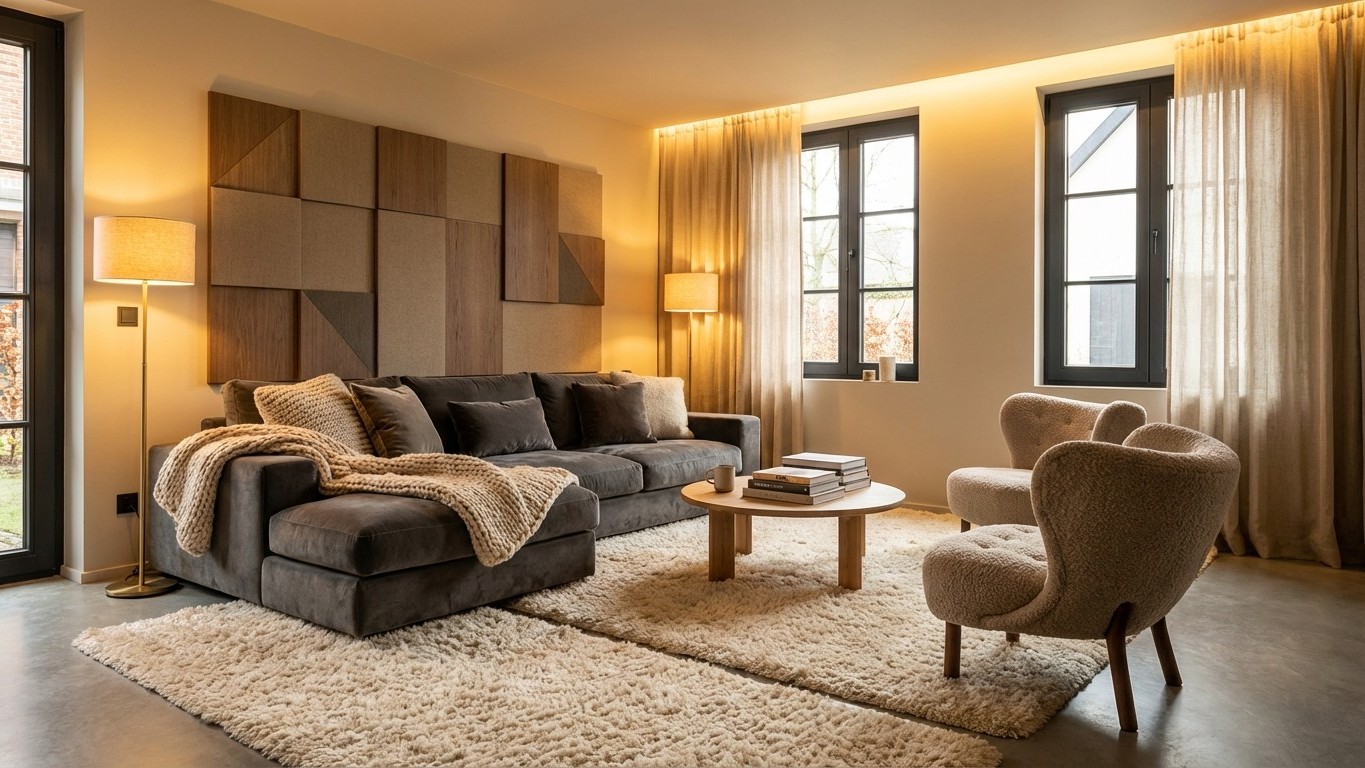
Lately, a new kind of quiet has settled in American homes. Call it the hush revolution. Upholstered Ceilings, wall hangings, plush rugs, everywhere you turn, soft textures replace the stark, echoing surfaces of the early 2010s. For anyone who ever tried to hold a phone call in a “modern” concrete-walled apartment, this shift feels like oxygen. In 2026, echoing rooms are out. Cozy acoustics now shape the very way we live, gather, and unwind.
Key takeaways
- Why have hard, echoing interiors fallen out of favor so fast?
- How pandemic life shifted our need for silence and comfort at home.
- Can sound-softening décor reshape not just rooms, but lifestyles?
How Hard Edges Lost Their Grip
A decade ago, the minimalist craze was an Instagram fever dream come to life. Polished concrete floors and cavernous layouts dominated. Impressively photogenic, painfully impractical, especially the moment more than two people started talking. Sound ricocheted, amplifying every clatter, laugh, and dropped fork. Sunday brunches turned into shouting matches.
Consider how many of those spaces got rave reviews for their “airy openness,” yet drove dwellers to distraction after only a few weeks. One designer confessed that, after renovating her home in glass and steel, she developed a habit of tiptoeing around the kitchen to avoid waking her partner. A house, she joked, should never require ninja training.
The longing for sonic comfort was bubbling under the surface. When pandemic lockdowns turned our living rooms into offices, classrooms, and social hubs, echoes moved from aesthetic annoyance to daily obstacle. Suddenly, teachers struggled to keep kids focused above the clamour, and Zoom calls became distorted chorus lines, half business, half reverb.
From Hard to Healed: Why Sound-Softening Took Over
Fast forward to now. Open-plan apartments still dominate listings, but there’s an added layer: textiles. The average home in 2026 boasts an arsenal of cushions, heavy curtains, acoustic wall panels, and deep-piled rugs. Realtor jargon has shifted almost overnight : “sound-friendly spaces” now replace “loft-like echoes” in property blurbs. Noise-damping is no longer a bonus; it’s on the checklist.
Why this obsession with taming acoustics? Psychologists point to the link between sound and well-being. Constant reverberation increases stress and reduces concentration, according to researchers from the University of California. Rooms that swallow sound, on the other hand, encourage relaxation, the aural equivalent of a weighted blanket.
Manufacturers have followed this demand with lightning speed. Acoustic tiles, once reserved for recording studios, now belong to the everyday household toolkit. New lines of felted wall art appear in the mainstream, think oversized fiber collages, their colors as cozy as their soft surfaces. Even chairs and couches incorporate noise-soaking materials, subtly muffling footsteps and distant dishwashers.
It’s not just living rooms that feel the change. Bedrooms, once kept minimal for that “hotel feel,” now double as sanctuaries of calm, with tapestry headboards and cloud-like comforters. Kitchens, notorious for hard stone and echo chambers, are dressed up with plush runners and textile pendant lamps that absorb ambient noise. This movement has gone far beyond mere decoration; it’s about recrafting the entire home experience.
Case Study: The Curious Rise of Acoustic Art
See it in the burst of interest around “acoustic art.” These are pieces that do double duty: visual appeal meets sound management. Homeowners report immediate payoffs, not just less echo, but a perception of warmth and intimacy, even if the square footage stays the same. Take the story of a Des Moines family who installed a quilted wall panel above the dining table. Three kids, one dog, and a notoriously raucous extended family all fit at Sunday dinners. Yet the soundscape is gentler now — laughter is richer, arguments softer, everyone’s voice heard.
Retailers have noticed. The past year saw a 60% spike in sales of acoustic décor, roughly the population of Wichita discovering soft furnishings overnight. Social media amplifies the message: posts tagged with #SoundSoften show millions of American households trading gleaming austerity for cloudlike tranquility.
Not everyone embraces this change. Some interior purists bemoan the “overstuffed” look, worried about homes resembling molted birds’ nests. The debate echoes online, but market demand tells another story. Even die-hard minimalists are sneaking in felted objects, trading one kind of statement for another.
More Than Fashion: Soundscaping as a Lifestyle
The most compelling shift? Acoustics have become central to how we feel at home, not a technical detail hidden behind drywall. Designers now consult sound engineers alongside colorists and lighting specialists. Families draw up wish lists that include “quiet corners” and “sound-soaking zones”, priorities nearly as important as storage or energy efficiency.
This trend isn’t just for city apartments flanked by sirens. Rural households report similar cravings. Even with surrounding silence, interior echoes disrupt conversation and create a low-level sense of unease. Think about the last time you entered a wooden church hall or empty gymnasium, that odd feeling of exposure, as if your every movement is magnified. An acoustically treated room swallows that anxiety whole.
The rise of work-from-home arrangements turbocharged this change. Suddenly, our living rooms needed to host everything from conference calls to piano practice. People discovered the joy of “sound pockets,” those small, enveloping corners that turn chaos into calm.
And let’s be honest. There’s a primal pleasure in wrapping oneself in quiet. It’s about more than curtains or carpets; it’s a form of self-care, as instinctive as lighting a candle or curling under a blanket. When you walk into a sound-softened room after a loud day, you feel the difference in your bones. Even pets seem to relax faster, though the science on cats and carpets is still up for debate.
Echoes Fade, Comfort Prevails
Some might dismiss the cozy acoustics trend as a pandemic fad, a passing love affair with softness. Yet, glance around an American living room today, and the story feels bigger. We’re no longer content to sacrifice comfort at the altar of design minimalism. The future sounds different, literally. Homes are evolving into sanctuaries of quiet, where echoes fade and conversation takes center stage.
So, will our quest for softness inspire more radical design changes? Or perhaps there’s a new soundscape waiting to be invented, neither sterile nor overstuffed, but tuned perfectly to the hum of everyday life. In 2026, one thing’s clear: the reign of echoing rooms is over. Our walls may never talk, but at last, they know when to listen.