
That constant trickling sound from your toilet isn’t just annoying—it’s quietly draining your wallet. A constantly running toilet can silently drain up to $1,000 from homeowners’ wallets each year in water charges alone, making this seemingly minor issue a major financial drain. But here’s what most homeowners don’t know: there’s a simple fix that professional plumbers use to diagnose and solve 90% of running toilet problems in under five minutes.
While homeowners can expect toilet repair costs to average $271, with a range between $150 and $391, the truth is that most running toilet issues stem from just a handful of common problems that require nothing more than basic tools and a few minutes of your time. The real secret isn’t in expensive parts or complicated procedures—it’s in understanding exactly what to look for and in what order.
The Professional Diagnostic Method That Always Works
Professional plumbers don’t start randomly replacing parts when they encounter a running toilet. Instead, they follow a systematic approach that quickly identifies the root cause. Your toilet makes specific sounds that point to different problems. A phantom flush happens when the toilet refills on its own without being used – this usually means the flapper is leaking water from the tank into the bowl. If you hear a constant hissing, the fill valve might be having trouble shutting off the water supply properly.
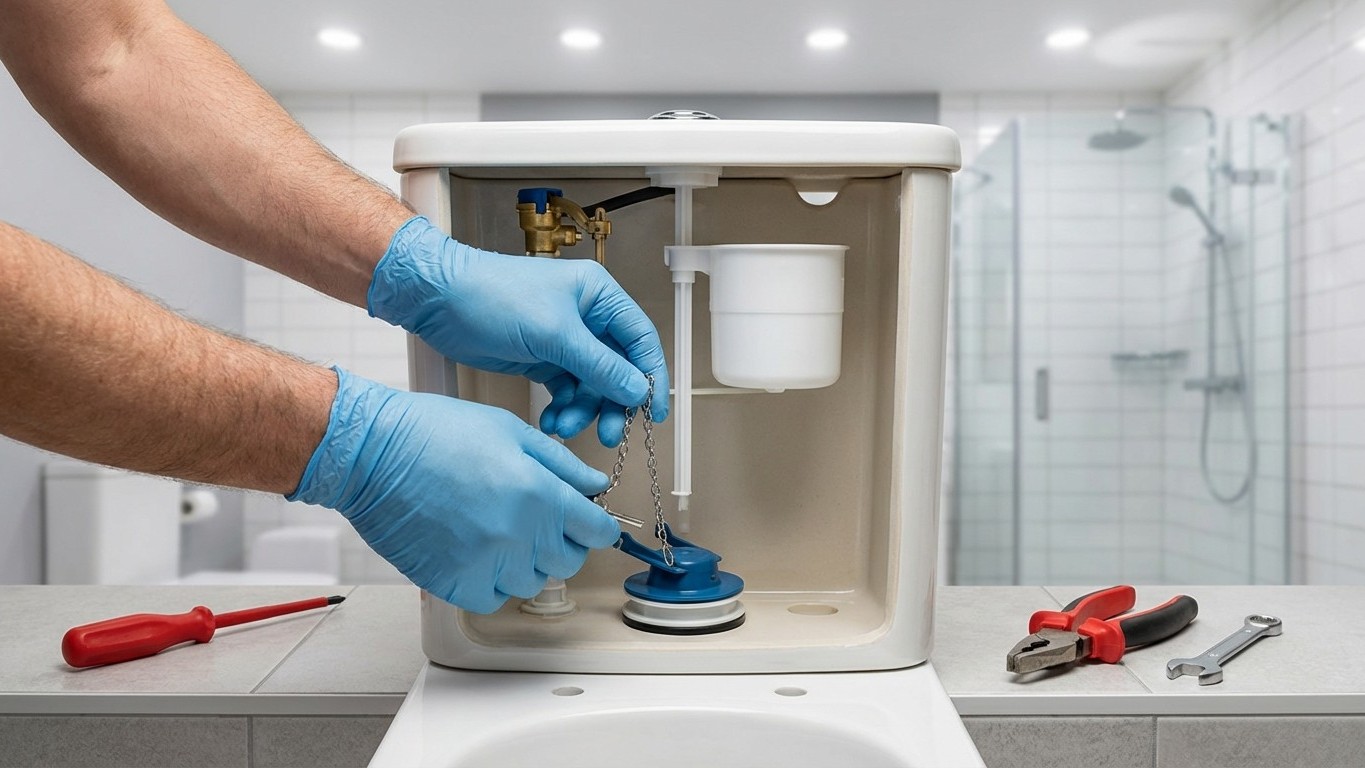
The first step in any professional diagnosis involves lifting the toilet tank lid and observing the system in action. Remove the tank lid and set it aside carefully. Flush the toilet and observe the components in action. Check if the water continues to run after the tank has been refilled. Listen for any unusual sounds, such as hissing or gurgling. Inspect the flapper for signs of wear, damage, or discoloration. This visual inspection immediately reveals whether you’re dealing with a flapper issue, a fill valve problem, or a chain adjustment—the three most common culprits behind running toilets.
What separates professional troubleshooting from amateur attempts is the systematic approach. Rather than guessing, experienced plumbers test each component methodically. Lift up on the toilet float arm when the tank is filling to see if the water stops. Bend or adjust the toilet float arm so the tank stops filling when the water level is 1/2- to one-inch below the top of the overflow pipe. This simple test immediately tells you whether the problem lies with the float mechanism or elsewhere in the system.
The Three Most Common Fixes That Save Hundreds
A worn or damaged flapper is one of the most common causes of a running toilet, and fixing it is surprisingly straightforward. The flapper is that rubber seal at the bottom of your tank that lifts when you flush and should create a watertight seal when closed. Over time, mineral deposits, chlorine, and Simple wear cause the rubber to warp or crack, preventing a proper seal.
Replacing a flapper demonstrates the dramatic cost difference between DIY repairs and professional service calls. Flappers deteriorate from mineral deposits and chlorine, typically lasting 3-5 years. Professional replacement costs $80-120. DIY repair costs $5-15 for the part. This simple fix can save 200+ gallons of water daily. The replacement process itself takes just minutes: turn off the water supply, flush to empty the tank, unhook the old flapper, and snap the new one into place.
The second most frequent issue involves the chain connecting the flush handle to the flapper. If the chain that is attached to the flapper is too loose, the slack part of the chain can get between the flapper and the rim of the flush valve. This can prevent the flapper from sealing properly. Tighten the chain as much as necessary to minimize the slack. However, it’s important not to tighten the chain too much. If the chain is too tight, the flapper can’t fully seal onto the flush valve. You may need to experiment to get the right amount of tension in the chain.
Fill valve issues represent the third major category of running toilet problems. When lifting the float arm DOES NOT shut off the water completely, then the fill valve has failed, replacement becomes necessary. While this sounds intimidating, modern fill valves are designed for homeowner installation and typically cost between $15-30 for the part compared to $90-150 for professional installation.
When Professional Help Actually Makes Sense
Despite the potential for significant savings through DIY repairs, certain situations genuinely require professional intervention. Here are signs it’s time to call a plumber: The toilet continues to run after trying all the fixes. You notice cracks in the toilet tank or bowl. There are other plumbing issues, such as leaks or low water pressure. Additionally, if you discover water pooling around the toilet base, this often indicates wax ring failure, which requires lifting the entire toilet—a job better left to professionals.
The economics of repair versus replacement also deserve consideration. Some do time and material, some do a service call plus parts, labor, tax etc.. So that can add up pretty quickly and get to the 100-150 dollar range which is just about the cost of an average basic 2- piece new toilet at any box store. When multiple components fail simultaneously or your toilet is approaching 20 years old, replacement often makes more financial sense than repeated repairs.
Understanding these professional secrets transforms toilet maintenance from an expensive emergency into routine homeownership. Fortunately, fixing this plumbing issue is often a simple DIY task that most homeowners can manage with basic tools and doesn’t require replacing your toilet. The key lies in systematic diagnosis, understanding which problems you can tackle yourself, and knowing when to call for backup. With these insights, that mysterious trickling sound becomes nothing more than a five-minute fix and a few dollars in parts—not a several-hundred-dollar service call.