
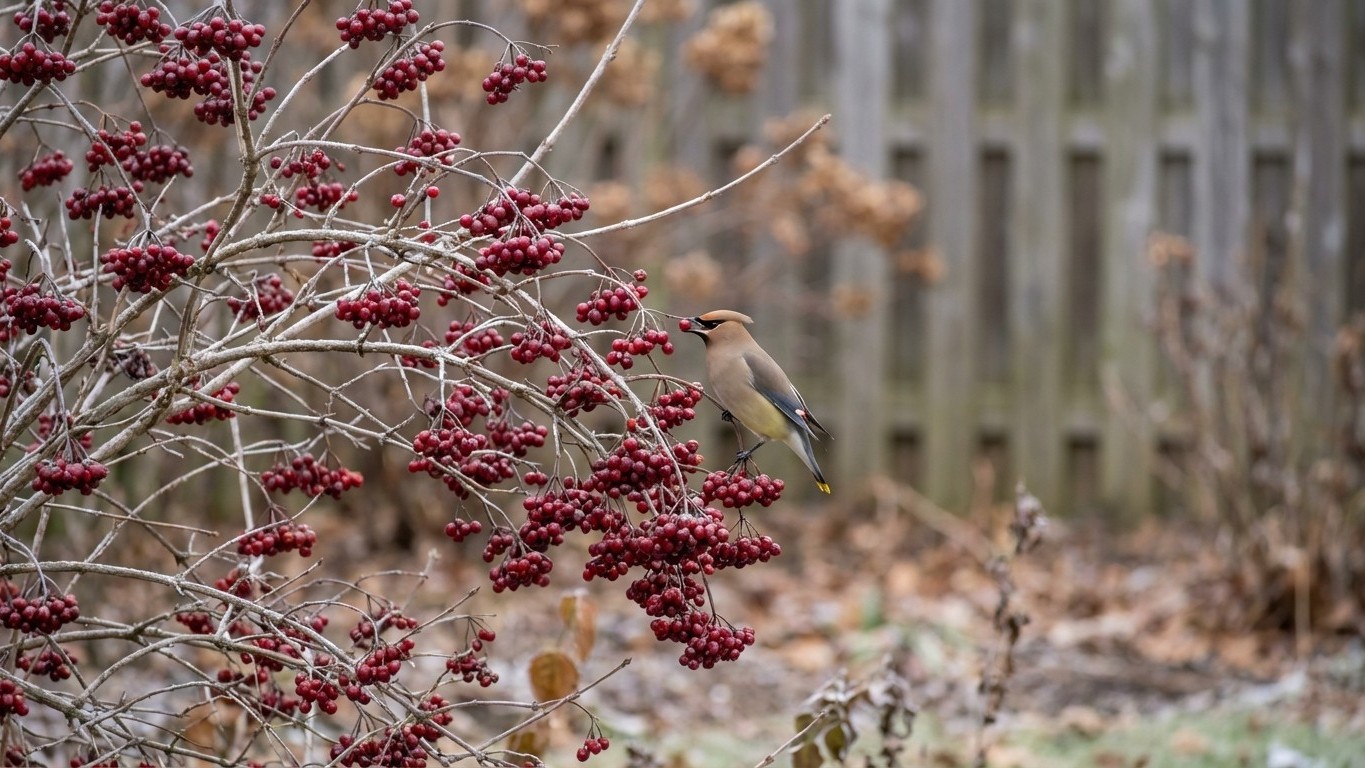
Walk through any old farmstead or century-old cottage garden, and you’ll almost certainly find it growing along a fence line or property edge: a dense, berry-laden shrub that hums with bird activity from January to December. Generations of gardeners planted it not because a magazine told them to, but because they watched what happened when they did. Birds arrived. And they stayed.
The shrub in question is viburnum, a genus so versatile and wildlife-friendly that ornithologists and master gardeners alike treat it as something close to a cheat code for attracting backyard birds year-round. There are dozens of species, but the ones old-timers favored most, like Arrowwood Viburnum (Viburnum dentatum) and American Cranberrybush (Viburnum trilobum), share a common trait: they produce fruit that persists well into winter, exactly when birds need it most.
Key takeaways
- A single shrub choice can triple the bird species visiting your yard compared to popular modern alternatives
- The timing of viburnum’s flowers, foliage, and berries aligns almost perfectly with bird migration and survival patterns
- By year three, gardeners report a dramatic shift—from scattered visits to what feels like an established bird community
Why Birds Can’t Resist It
Think of viburnum as a full-service hotel for wildlife. The dense branching structure provides nesting habitat in spring and shelter from predators year-round. The flowers, which bloom in clusters of creamy white in late spring, attract the insects that warblers and vireos depend on during migration. Then, from late summer through the coldest months, the berries take over.
Those berries are the real draw. Viburnum fruit is high in fat and carbohydrates, which is exactly the fuel a bird burning calories to survive a February night needs. Cedar waxwings are practically addicted to them, arriving in flocks that can strip a shrub in an afternoon. Robins, bluebirds, catbirds, thrushes, and mockingbirds all compete for the crop. Some years, if the fruit persists long enough, you’ll find hermit thrushes working through the last of the berries in March, birds that most suburban gardeners rarely see up close.
A Cornell Lab of Ornithology study found that native berry-producing shrubs attract roughly three times more bird species than non-native ornamental alternatives. Viburnum consistently ranks among the top performers in that category, partly because it’s been co-evolving with North American birds for thousands of years. The berries are timed almost perfectly to align with fall migration and winter residency patterns.
The Hedge That Old Gardeners Actually Planted
There’s a reason this wasn’t just a specimen plant dropped in the middle of a lawn. Old gardeners planted viburnum as a hedge, a living wall, and that choice was deliberate. A single shrub is nice. A row of them, spaced three to four feet apart and allowed to fill in, becomes something else entirely: a corridor, a windbreak, a nesting colony.
Arrowwood Viburnum in particular was the hedge plant of choice across the eastern United States for generations. It tolerates shade, wet soil, clay, drought once established, and neglect. It grows eight to ten feet tall with a similar spread, meaning a hedge of five or six plants creates a serious privacy screen within a few seasons. No chemical hedge trimmer required, no annual replacement, no drama. Just steady, reliable growth and an annual spectacle of birds you’d otherwise need a nature trail to see.
The contrast with modern hedge choices is almost painful. Arborvitae, which lines millions of American backyards, offers almost no food value for wildlife. Leyland cypress, another popular choice, is similar in that regard. They provide structure but not sustenance. Planting them as your primary hedge is the landscape equivalent of building a beautiful dining room with no food in the kitchen.
How to Plant It and What to Expect
Viburnum is genuinely forgiving, but one point matters more than any other: most species produce more fruit when planted near at least one other viburnum of the same type for cross-pollination. A single plant may fruit lightly. Two plants, even ten feet apart, can transform the yield dramatically. Old gardeners knew this intuitively, which is why you rarely see viburnum planted alone in historic gardens.
For planting, fall is ideal. The cooler temperatures let roots establish without the stress of summer heat, and by the following spring the shrub hits the ground running. Choose a spot with at least four to six hours of sun for maximum berry production, though most species tolerate partial shade gracefully. Dig a hole twice as wide as the root ball, amend minimally (viburnum doesn’t love overly rich soil), and water deeply for the first season. After that, step back. The shrub handles itself.
Expect modest activity the first year or two, then a noticeable shift around year three. By then the canopy has filled in, the berry production has ramped up, and word seems to travel through the local bird population. Gardeners who have tracked this describe it almost like watching a neighborhood change: a few early adopters, then suddenly a community.
A Living Calendar You Don’t Have to Maintain
What makes viburnum so different from most “bird-friendly” plants marketed today is the timeline it covers. Spring flowers feed early insects and the birds that eat them. Summer’s dense foliage hosts nesting pairs. Fall berries fuel the migration rush. Winter’s persistent fruit keeps resident species alive through the hardest months. That’s 52 weeks of ecological function from a plant that asks almost nothing from you after its first summer.
The old gardeners who Planted this shrub weren’t following a trend. They were paying attention to what worked, season after season, year after year. There’s a quiet wisdom in that kind of observation, one that no garden center display or social media algorithm is going to replicate. The birds knew the value of these shrubs long before we started making lists about them.
Which raises a fair question for anyone looking at a bare fence line or a row of uninspiring arborvitae right now: what would your yard look like in three years if you made a different choice this spring?