
As winter wanes and spring approaches, it’s the perfect time to assess your home’s energy efficiency. One often-overlooked culprit of energy loss? Micro-leaks in your windows. These tiny gaps can significantly impact your comfort and utility bills. Let’s explore how to detect and address these sneaky leaks before the warmer months set in.
Key takeaways
- What are micro-leaks and why they silently drain your energy.
- Simple to cutting-edge ways to detect elusive window leaks.
- Innovative solutions that Transform your windows into energy savers.
Understanding Micro-Leaks and Their Impact
Micro-leaks are minuscule openings around window frames, sashes, or panes that allow air to infiltrate or escape your home. While individually small, collectively they can lead to substantial energy loss. The U.S. Department of Energy notes that windows account for 25%–30% of residential Heating and cooling energy use. Addressing these leaks enhances comfort. Also, reduces energy consumption.
Detecting Micro-Leaks: Modern Techniques
Identifying these tiny breaches requires a keen eye and, sometimes, advanced technology. Here are some effective methods:
Visual Inspection
Begin with a thorough examination of your windows. Look for cracks, gaps, or deteriorated caulking around the frame. Discoloration on walls or window sills can also indicate water intrusion, a common companion to air leaks.
Flame Test
On a windy day, hold a candle or incense stick near the window frame. If the flame flickers or smoke moves erratically, it’s a sign of an air leak. This simple test can help pinpoint problem areas.
Infrared Thermography
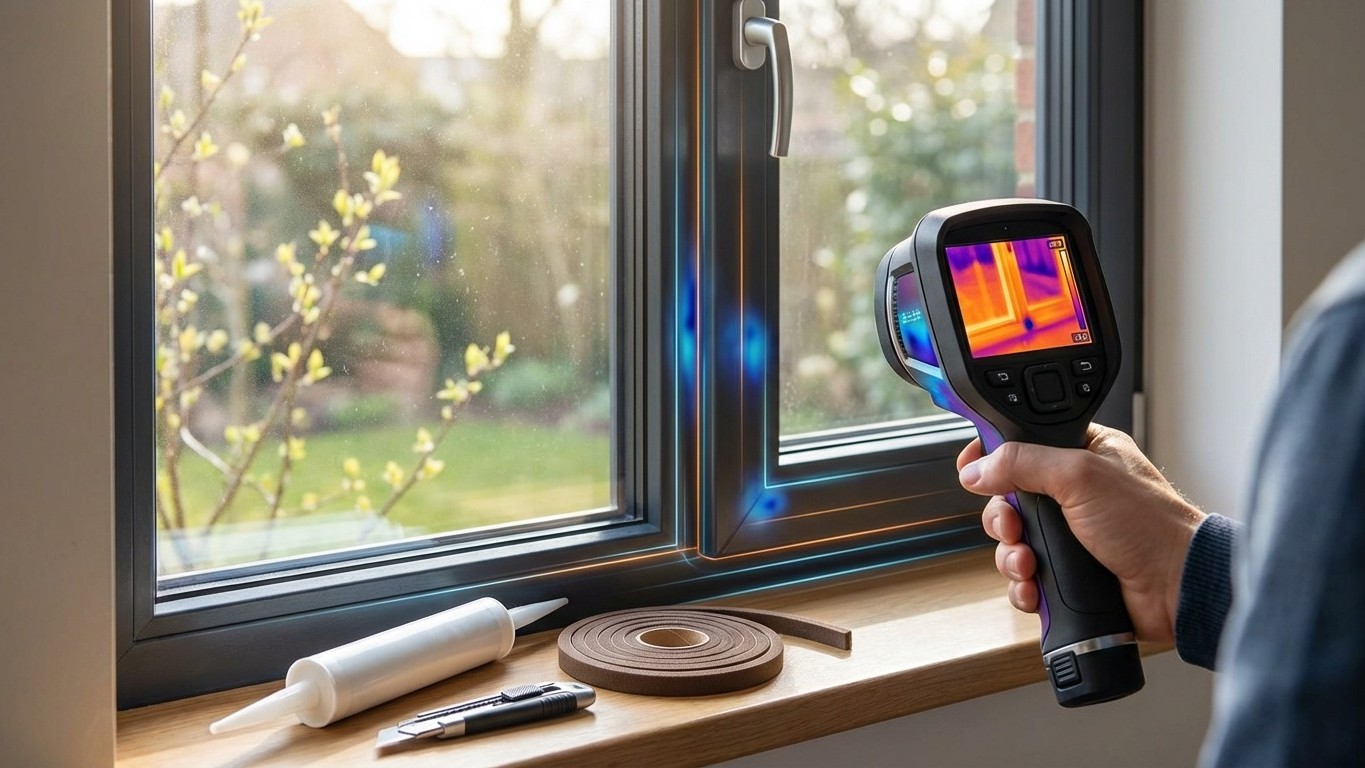
For a more advanced approach, infrared thermal imaging cameras detect temperature variations caused by air leaks. These devices capture heat differences, revealing hidden leaks behind walls or around window frames. Professional-grade thermal cameras can detect temperature variations as small as 0.1°C, making them highly effective for this purpose.
Acoustic Leak Detection
Innovative acoustic imaging devices, like the FLIR Si2-LD acoustic camera, detect the sound of air escaping through leaks. Equipped with ultra-sensitive microphones, this handheld device can identify even minor leaks, allowing for precise repairs without invasive procedures.
Addressing Micro-Leaks: Effective Solutions
Once identified, it’s crucial to seal these leaks promptly. Here are some effective strategies:
Re-Caulking
Remove old, cracked caulk with a putty knife. Clean the surface thoroughly and apply new exterior-grade caulk around the window frame where it meets the siding. This simple step can significantly reduce air infiltration.
Weatherstripping
Replace worn or damaged weatherstripping to ensure a tight seal when windows are closed. Various types are available, including foam, V-strip, and compression weatherstripping. Choose the one that best fits your window type.
Window Insulation Kits
These kits include shrink-wrap plastic film that creates an air barrier over the entire window. Applied with double-sided tape and tightened with a hairdryer, they offer a temporary but effective solution during colder months.
Upgrading Window Glazing
For a more permanent solution, consider upgrading to advanced glazing options. Technologies like Vacuum Insulated Glazing (VIG) offer exceptional thermal performance by incorporating a near-perfect vacuum between glass panes, drastically reducing heat transfer. This upgrade can lead to significant energy savings and enhanced comfort.
Embracing Technological Innovations
Beyond traditional methods, emerging technologies offer promising solutions for window insulation:
Transparent Heat-Insulating Hydrogels
Researchers have developed composite hydrogels that achieve high visible light transmittance while providing efficient UV absorption and thermal insulation. These materials can be integrated into window systems, offering long-term cooling and waste heat Collection capabilities.
Longwave-Transparent Low-Emissivity Materials
Innovations in low-emissivity materials now allow for energy savings of up to 41.1% over traditional options. These materials minimize unwanted radiative heat loss or gain while maintaining transparency, making them ideal for window applications.
By proactively detecting and addressing micro-leaks, you enhance your home’s comfort. Also, contribute to energy conservation. As technology advances, integrating these innovations can further optimize your home’s efficiency. Perhaps it’s time to view your windows not just as portals to the outside world, but as key components in your home’s energy strategy.