
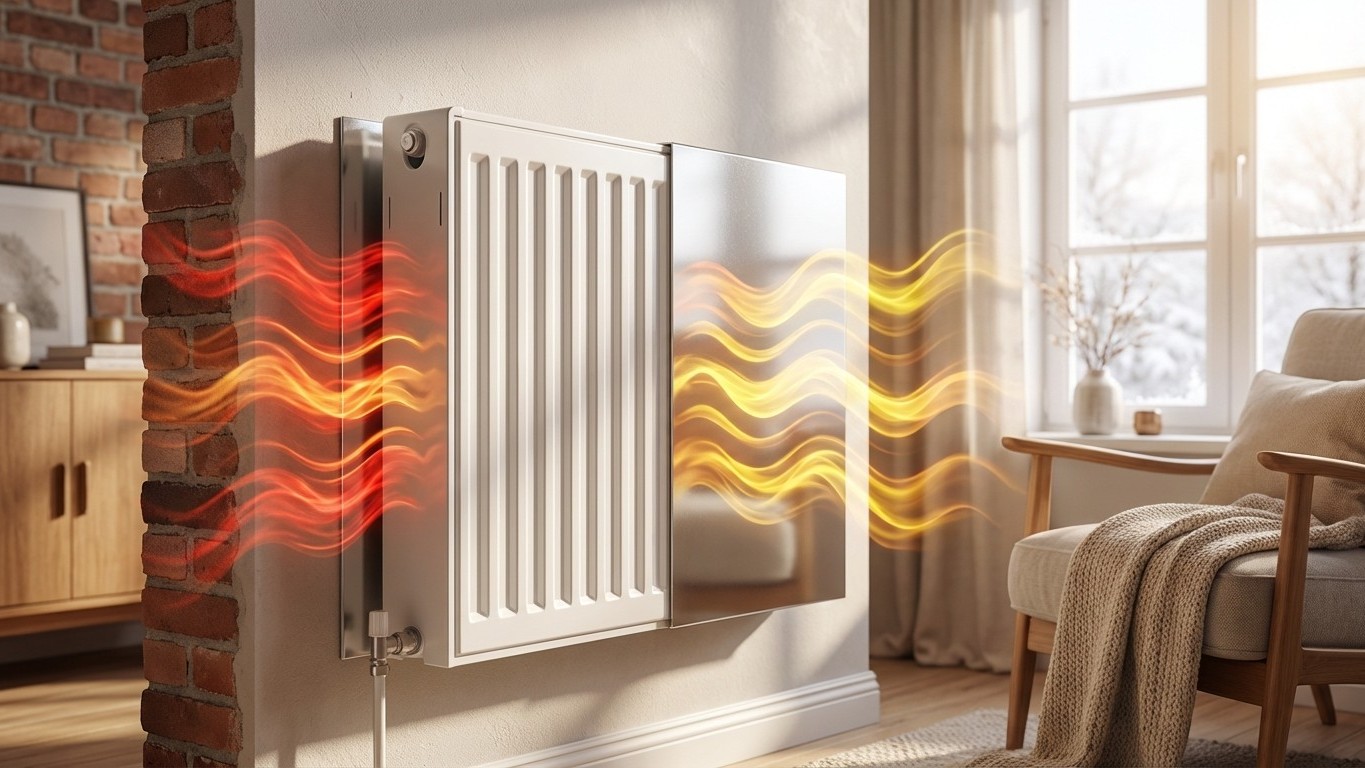
As winter’s grip finally begins to loosen and spring beckons on the horizon, there’s one last heating trick that could dramatically slash your energy bills before you turn off those Radiators for the season. This Simple, often-overlooked strategy involves installing radiator reflector panels—thin sheets of reflective material that bounce wasted heat back into your room instead of allowing it to disappear through exterior walls.
The science behind radiator reflectors is surprisingly straightforward. By installing these panels behind radiators, you prevent heat from being absorbed by the walls. Instead, the heat is reflected back into the room. This simple upgrade can significantly increase the warmth in your space and boost your radiator’s energy efficiency. What makes this end-of-winter timing perfect is that You Can capture maximum savings during those final cold weeks while also preparing your heating system for next season.
The Hidden Heat Loss You’re Paying For
Most homeowners have no idea how much money literally disappears through their walls every Winter. The radiators are near the walls so they are out of the way and can easily be connected to the pipes from the boiler, but part of the heat they emit can be lost through the wall via conduction. This can be an especially big problem in older homes where the insulation is less robust. A study by the University of Salford found that reflective foil could save around 2.9% of space heating gas consumption on a typical UK winter day, depending on insulation and radiator position.
The most dramatic savings occur with radiators mounted on uninsulated exterior walls. Results show how the performance of the reflecting panel depends strictly on the insulation level of the external wall facing the radiator; more specifically, efficiency increases when the thermal resistance decreases, reaching energy savings of up to 8.8% in worst insulation conditions. This means older homes with solid brick or block construction—precisely where heating bills tend to be highest—benefit most from this intervention.
The Science of Reflecting Heat Back Where You Need It
A freestanding, cast-iron radiator puts out about 60% of its heat by convection, and the remaining 40% by radiation. While reflector panels capture both forms of heat transfer, their primary function extends beyond simple reflection. The moulded shape of the Heatkeeper Radiator Reflector panel creates an air space between the radiator and the wall surface creating a thermal barrier.
The effectiveness varies dramatically based on wall construction and radiator type. Panel and convector radiators (the most common types) emit heat directly backwards, making them ideal candidates for foil lining. Column radiators (especially cast iron radiators) emit heat 360°, so less heat is lost from the back, making foil less effective. Understanding your radiator type ensures you invest your effort where it will yield maximum returns.
Installation couldn’t be simpler. No need for removal of radiators, professional installers, or any sticking to the wall – Radflek just hangs from the wall brackets behind the radiator and disappears from view once installed. Installation is quick and simple, only taking minutes- anyone can do it! The panels slip behind existing radiators and remain invisible once in place.
Making the Investment Count: What the Numbers Really Show
The potential savings make this one of the most cost-effective home improvements available. Installing radiator panels on uninsulated external walls can save £25 a year on your energy bills in GB or £20 in NI. For homes with multiple radiators on exterior walls, these savings multiply quickly. Independent scientific studies have shown that these innovative panels can lead to impressive energy savings of up to 20% on heating costs when fitted to all the radiators in your home.
The payback period is remarkably short. Radflek is at least 23% more efficient than any louvered or saw toothed radiator reflector panels and will typically pay for itself in about a year. Even premium reflector systems designed for maximum durability and performance deliver strong returns on investment within a single heating season.
What makes end-of-winter installation particularly strategic is the dual benefit it provides. You capture immediate savings during the final weeks of heating season while positioning yourself for maximum efficiency when autumn returns. At the time, we were paying CDN$0.33/cubic meter, so the panels paid for themselves in less than two years. This real-world example demonstrates how quickly the investment returns value.
Beyond Reflectors: Maximizing Your Radiator’s End-of-Season Performance
Installing reflector panels represents just one component of comprehensive radiator optimization. Trapped air in your heating system is not only easy to spot, but also simple to remedy and a guaranteed way to improve radiator efficiency. When you switch on your heating, go and have a feel of every radiator in your home. If you find cold spots at the TOP of any of your appliances, the chances are that the radiator needs to be bled.
The combination of bleeding radiators and installing reflectors creates a powerful efficiency boost. Bleeding the radiators will remove any trapped air, preventing cold spots and improving heat-up times. This simple process boosts overall heating efficiency and reduces the energy needed to reach your desired temperature. Together, these interventions can transform underperforming radiators into heat delivery champions.
Position and maintenance matter as much as equipment. Placing furniture in front of radiators can significantly reduce heat output, meaning your system has to work harder to warm the room. How to fix it: Keep radiators clear and allow airflow around them. Blockages can reduce a radiator’s ability to circulate warmth throughout a space by over 30%.
As winter winds down and you prepare to turn off your heating system for the warmer months ahead, installing radiator reflectors offers the perfect opportunity to reduce this season’s remaining bills while setting up major savings for next year. The combination of immediate returns, minimal investment, and simple installation makes this one home improvement that truly pays for itself—sometimes within weeks of installation. Whether you choose commercial reflector panels or create DIY versions using quality materials, you’re making a smart investment in long-term energy efficiency that will keep paying dividends every heating season to come.