
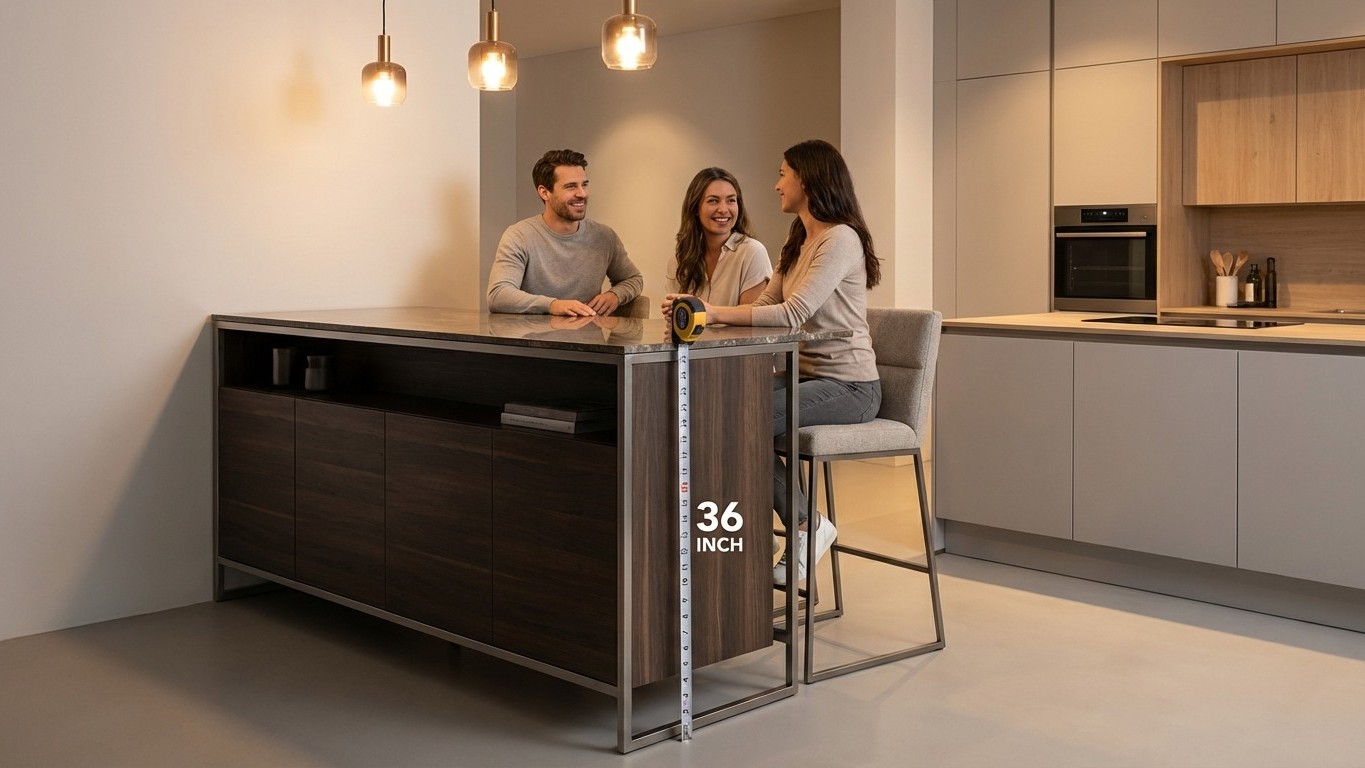
The difference between a kitchen credenza bar that transforms your space and one that becomes a constant source of frustration often comes down to a single, overlooked measurement: the 36-inch rule. This specific dimension, measured from the floor to the underside of your credenza bar, determines not just comfort but the entire functionality of your kitchen’s social hub.
Most homeowners focus on the obvious elements when planning their credenza bar installation – the length, the materials, the style that matches their décor. Yet the height measurement remains the invisible architect of success or failure. Too low, and your guests hunch uncomfortably over their morning coffee. Too high, and the space feels awkward, forcing people to perch unnaturally on stools that never quite align with the surface.
Professional kitchen designers have discovered that the 36-inch measurement creates the perfect ergonomic sweet spot for most adults. This height allows for comfortable interaction whether someone is standing casually against the bar or seated on a standard counter-height stool. The measurement accounts for the natural arm positioning that occurs during conversation, eating, or working at the surface.
Understanding the Science Behind the Perfect Height
The 36-inch standard emerged from extensive ergonomic research studying how people Naturally interact with elevated surfaces. When you consider that the average kitchen counter sits at 36 inches, maintaining this consistency creates a visual flow that feels inherently right. Your credenza bar becomes an extension of your workspace rather than an awkward interruption.
This measurement also accounts for the typical seat height of counter stools, which range from 24 to 26 inches. The resulting 10 to 12-inch clearance provides adequate legroom while maintaining the intimate feel that makes credenza bars such popular gathering spots. The proportions encourage lingering conversations and casual meals, transforming your kitchen into the heart of your home.
Beyond comfort, the 36-inch height serves practical storage purposes. The space beneath accommodates wine storage, built-in appliances, or decorative elements without feeling cramped. Many homeowners discover they can incorporate wine fridges, additional drawers, or open shelving that remains accessible yet unobtrusive.
Adapting the Rule to Your Space
While 36 inches serves as the gold standard, your specific situation might call for minor adjustments. Kitchens with unusually high or low Ceilings may benefit from slight modifications to maintain visual proportion. In spaces with 8-foot ceilings, consider dropping to 35 inches to prevent the bar from overwhelming the room. Conversely, rooms with soaring 10-foot ceilings can handle 37 or even 38 inches without losing their welcoming feel.
The primary users of your kitchen also influence the ideal height. If your household includes exceptionally tall family members, an extra inch can make extended use more comfortable. However, resist the temptation to exceed 38 inches, as this pushes beyond the comfort zone for most people and creates an institutional rather than residential feel.
Consider also the style of your credenza bar top. Thicker materials like butcher block or stone slabs effectively reduce the clearance underneath. If you’re planning a substantial 3-inch Countertop, you might lower the base structure accordingly to maintain that crucial 36-inch total height.
Installation Strategies for Perfect Results
Achieving the precise 36-inch measurement requires careful planning Before installation begins. Start by marking this height on your wall with a level line, accounting for any floor irregularities that might affect your measurements. Many floors have subtle slopes that become apparent only during installation, so check multiple points along your planned bar location.
Professional installers recommend using adjustable feet or shimming systems that allow for fine-tuning after the main structure is in place. This flexibility proves invaluable when dealing with the reality of construction tolerances and settling foundations. The ability to make small adjustments can mean the difference between a credenza bar that feels perfectly proportioned and one that seems perpetually “off.”
Pay particular attention to the relationship between your credenza bar and adjacent elements. Kitchen islands, existing counters, and even windowsills should harmonize with your 36-inch measurement. Visual consistency across these horizontal planes creates a cohesive design that feels intentional rather than accidental.
The Long-Term Impact of Getting It Right
The 36-inch rule extends beyond immediate comfort to influence how your kitchen ages with your lifestyle. Properly positioned credenza bars adapt seamlessly to changing needs – from quick breakfast spots to homework stations to entertaining centers. The versatility that emerges from correct proportions ensures your investment continues paying dividends for years.
Resale value also benefits from adherence to this standard. Potential buyers instinctively recognize when proportions feel right, even if they cannot articulate why. A credenza bar positioned at the optimal height reads as professional and thoughtful, suggesting quality throughout the rest of the home.
Transform-old-radiators-effortless-diy-to-make-ugly-heaters-chic-without-removal”>Transform your kitchen installation from guesswork into precision by embracing the 36-inch rule. This single measurement serves as your foundation for creating a credenza bar that enhances daily life while standing the test of time. The difference between adequate and exceptional often lies in such seemingly small details that create extraordinary results.