
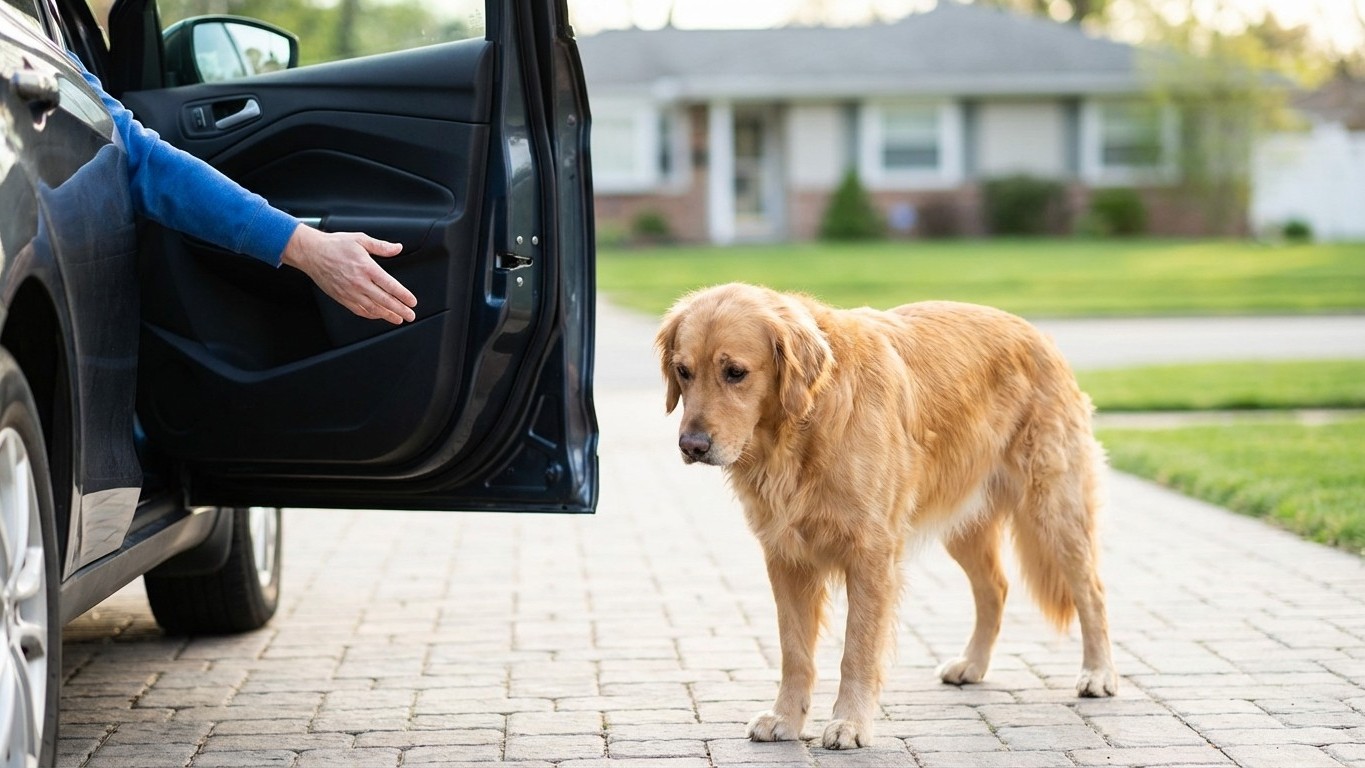
When your beloved companion suddenly plants their feet firmly on the sidewalk, refusing to budge toward your vehicle, they’re sending you a Critical message about their emotional state. Dogs with severe car anxiety will often outright Refuse to get into the car, and this behavior represents far more than simple stubbornness—it’s a sophisticated communication system that deserves our immediate attention and understanding.
The refusal to enter a vehicle serves as your dog’s primary defense mechanism against What They perceive as an overwhelming or threatening situation. Unlike humans who can verbally express their fears, dogs rely on body language and behavioral signals to communicate distress. When a dog backs away from a car door or actively resists approaching the vehicle, they’re essentially saying “I’m not comfortable with this situation, and I need help.”
Understanding the Physical Manifestations of Car Anxiety
Many of the behaviors your dog displays when nauseous mimic anxiety, such as licking lips, drooling, and panting. This overlap between physical discomfort and emotional distress makes it crucial for pet owners to observe their dog’s complete behavioral profile. The refusal to enter a car often comes accompanied by a constellation of stress signals that paint a clearer picture of your dog’s internal state.
If you see them Trying to avoid moving closer, trying to move further away from the car, or trying to jump out, that’s a sign that they’re stressed. Other subtle signals of stress include yawning, lip licking, or what are called “displacement behaviors.” These displacement behaviors manifest as otherwise normal behaviors being performed out of context when your dog is feeling emotionally conflicted, and include things like sniffing the ground, self-grooming, licking, sneezing, and scratching.
The intensity of these signals can vary dramatically between dogs and situations. General nervousness includes low-level whining, reluctance, but not complete resistance, to enter the vehicle, and mild panting, while more severe cases present with barking/howling/screaming in distress, severe panting and shaking, a total lack of interest in getting in the car/pushes back, and a total lack of focus. Recognizing where Your Dog falls on this spectrum helps determine the most appropriate intervention strategy.
The Root Causes Behind Car Refusal
Understanding why your dog refuses to enter the car requires examining their individual history and experiences. Many adult dogs become anxious or even nauseous during travel due to a lack of conditioning and the overwhelming, unusual stimuli associated with moving inside a vehicle. Dogs that travel only once or twice a year (typically when visiting the veterinarian) are not used to car rides and often associate the car ride with the stressful experience that follows.
Motion sickness plays a significant role in developing car anxiety, particularly in younger animals. Motion sickness is usually the result of an ear imbalance. Puppies often experience carsickness because their ears, which help them regulate balance, aren’t fully developed yet. Even after the physical symptoms resolve, if left untreated, motion sickness leads to anxiety about the car, creating a lasting psychological association between vehicles and discomfort.
The environment within the car itself can trigger anxiety responses. For some dogs, the sights, sounds, and sensations of a moving car can be overwhelming. Passing scenery, loud traffic noises, or the movement of the car itself may create an unsettling experience. This sensory overload can contribute to their anxiety. Additionally, some dogs dislike feeling restricted in a small space or struggle to find stability while the car is in motion. If they slide around or feel unsteady, they may become fearful of traveling in the car.
Breaking the Cycle: Effective Intervention Strategies
Addressing car refusal requires patience and a systematic approach that respects your dog’s emotional boundaries. Don’t try to lure with a toy or treat or force them closer with leash pressure. Their confidence around the car will grow if they are given the choice to approach or get in the car, and that choice is rewarded with things they love. This foundation of choice and positive reinforcement becomes the cornerstone of successful behavior modification.
The desensitization process should begin with the car stationary and the dog at a comfortable distance. Open the car door, and anytime your dog looks at or approaches the car, toss them a high-value treat. Continue this, waiting to reward as your dog gets closer and closer to the car. This gradual approach allows your dog to build confidence at their own pace without feeling pressured or overwhelmed.
As your dog becomes more comfortable with proximity to the vehicle, you can begin introducing them to the interior space. Encourage your dog to investigate the car on their own. Place a high-value treat inside and speak happily to them while they search. Start with the treats near the door and, as your dog becomes bolder, encourage them to put more of their body inside to find the reward. This method empowers your dog to make choices about their level of engagement while maintaining positive associations.
When professional intervention becomes necessary, don’t hesitate to seek help from qualified veterinary behaviorists or certified dog trainers. A certified dog trainer can also help you manage this behavior modification process by showing you what stress signals to watch out for and helping you plan out your dog’s program step-by-step. In cases where anxiety is severe or persistent, you should also talk to your veterinarian or veterinary behaviorist early on to figure out which supplements or medications will help your dog remain as calm as possible. Medication can relieve anxiety and help your dog enjoy car travel.
Creating Lasting Positive Change
The journey from car refusal to comfortable travel requires consistency and understanding that progress may be slow. Conditioning your dog to ride comfortably in the car may require several days or even weeks. Be sure to gradually expose your nervous pet to more and more challenging stimuli. Remember that you cannot force your dog to “get over” or “deal with” his anxiety. Traveling in a confined space in a motor vehicle can be frightening for a dog and requires time to adjust.
Success comes through recognizing that your dog’s refusal to enter the car is not defiance but communication. By responding with patience, understanding, and appropriate intervention strategies, you can help your companion overcome their fears and develop positive associations with car travel. The goal isn’t just getting your dog into the vehicle—it’s ensuring they feel safe, secure, and confident throughout the entire experience. When we honor our dogs’ emotional signals and work with them rather than against them, we build stronger bonds and create opportunities for shared adventures that benefit both human and canine family members.