
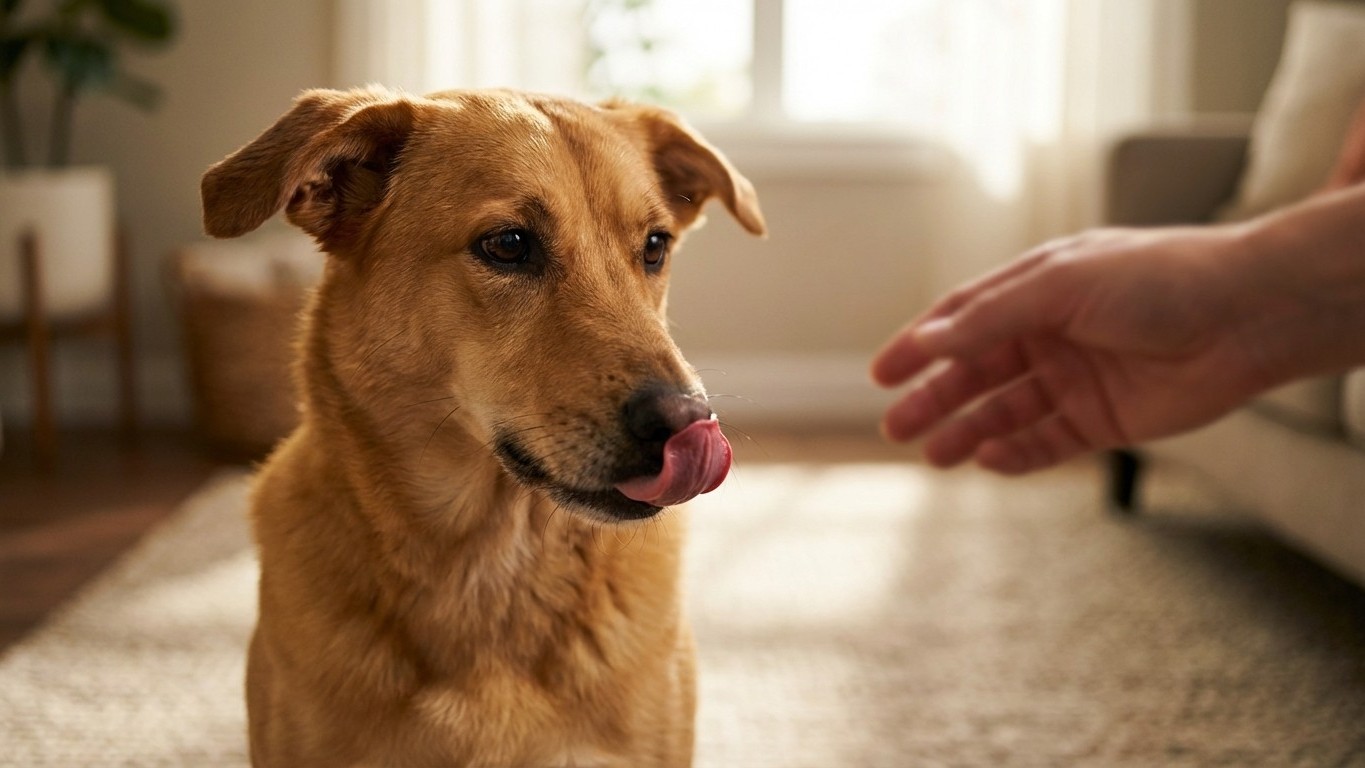
That subtle shift in your dog’s posture wasn’t random. The way his ears pulled back slightly, how his tail dropped just a fraction, the almost imperceptible lean away from your approaching hand — these weren’t signs of playfulness or simple acknowledgment. Your dog was politely asking for space.
Most dog owners miss these quiet pleas entirely. We’re so focused on the dramatic signals — growling, snapping, obvious cowering — that we overlook the sophisticated communication system dogs use long before reaching their breaking point. Think of it like human conversation: dogs start with whispers before They’re forced to shout.
Key takeaways
- Dogs use whisper-soft signals before they’re forced to shout—but most owners never see them coming
- A single lip lick during interaction reveals something shocking about your dog’s emotional state
- The most well-behaved dogs often hide the deepest discomfort—until suddenly they don’t
The Universal “Please Stop” Signal
Lip licking when there’s no food in sight. This single behavior might be the most misunderstood signal in the canine communication playbook.
Your dog isn’t being cute or anticipating treats. When a dog licks his lips during interaction — whether you’re petting, approaching, or even just talking to them — it’s a stress signal. A polite request to dial down the intensity. Behaviorists call it a “displacement behavior,” something dogs do when they’re caught between wanting to please you and feeling overwhelmed.
The timing matters. Notice when this happens. During enthusiastic belly rubs? When visitors lean in for aggressive cuddles? As children reach for their face? Your dog is essentially saying, “I love you, but this is too much right now.”
Veterinary behaviorist Dr. Patricia McConnell documented this phenomenon extensively in shelter environments. Dogs who lip-licked during human interactions were statistically more likely to show other stress indicators within minutes — panting, yawning, or attempting to move away. The lip lick was their first diplomatic attempt at communication.
Reading the Full Conversation
Dogs rarely send isolated signals. The lip licking typically arrives with companions that paint a clearer picture of your pet’s emotional state.
Watch the eyes. A dog asking for space will often break eye contact, looking away or down. Not submission exactly — more like the canine equivalent of checking your phone during an uncomfortable conversation. They’re creating psychological distance when physical distance isn’t available.
Body language shifts subtly. Weight transfers to the back legs, ready to move away if needed. The tail drops or tucks slightly — not the full fearful tuck between legs, but a noticeable departure from its normal position. Ears pull back against the head, creating a smaller profile.
Yawning appears frequently in this stress-signal cluster. Unless your dog just woke up, that yawn during interaction means they’re processing some level of discomfort or overstimulation. Combined with lip licking, it’s a clear request for a brief break in the action.
Why We Miss the Message
Human communication operates on volume and directness. We’re trained to recognize obvious distress — crying, shouting, dramatic gestures. Dog communication evolved for pack harmony, emphasizing subtlety over confrontation.
Our good intentions create blind spots. We approach dogs with the same energy we’d use to greet a friend returning from vacation — enthusiastic, physical, overwhelming. Meanwhile, the dog is essentially tapping us on the shoulder saying, “Hey, could we take this down a notch?”
Children especially struggle with these signals because they mirror their own communication style. When kids are excited, they want everyone else to match that energy. They interpret the dog’s polite requests as shyness to overcome rather than boundaries to respect.
The friendly dog trap catches many families. “He’s so good with people!” becomes the narrative, while the dog’s subtle communications go unnoticed. These dogs often develop more obvious avoidance behaviors later — hiding when visitors arrive, becoming selective about who they approach.
Responding to the Request
Recognition is the first step, but response matters more. When you catch that lip lick mid-interaction, simply pause. Create physical space by taking a step back or stopping the petting. Let your dog make the next move.
Many dogs will actually re-engage once they’ve had a moment to reset. They’ll approach again, tail wagging, ready for interaction on their terms. This isn’t rejection — it’s healthy boundary-setting that builds trust between you and your pet.
Train family members and visitors to recognize these signals. Make it a game with children: “Can you tell when Max needs a break?” Teaching kids to read dog body language prevents countless stressful encounters and builds empathy that extends far beyond pet interactions.
Counter-intuitive but effective: reward your dog for giving these polite signals. A quiet “good boy” and a step back when you notice lip licking teaches them that subtle communication works. Dogs who learn their gentle requests are heard rarely need to escalate to more dramatic measures.
What might change in your daily interactions if you started viewing your dog as a conversation partner rather than a recipient of your affection? That shift in perspective — from giving love to exchanging it — could transform not just your relationship with your pet, but your understanding of what respectful communication really looks like.