
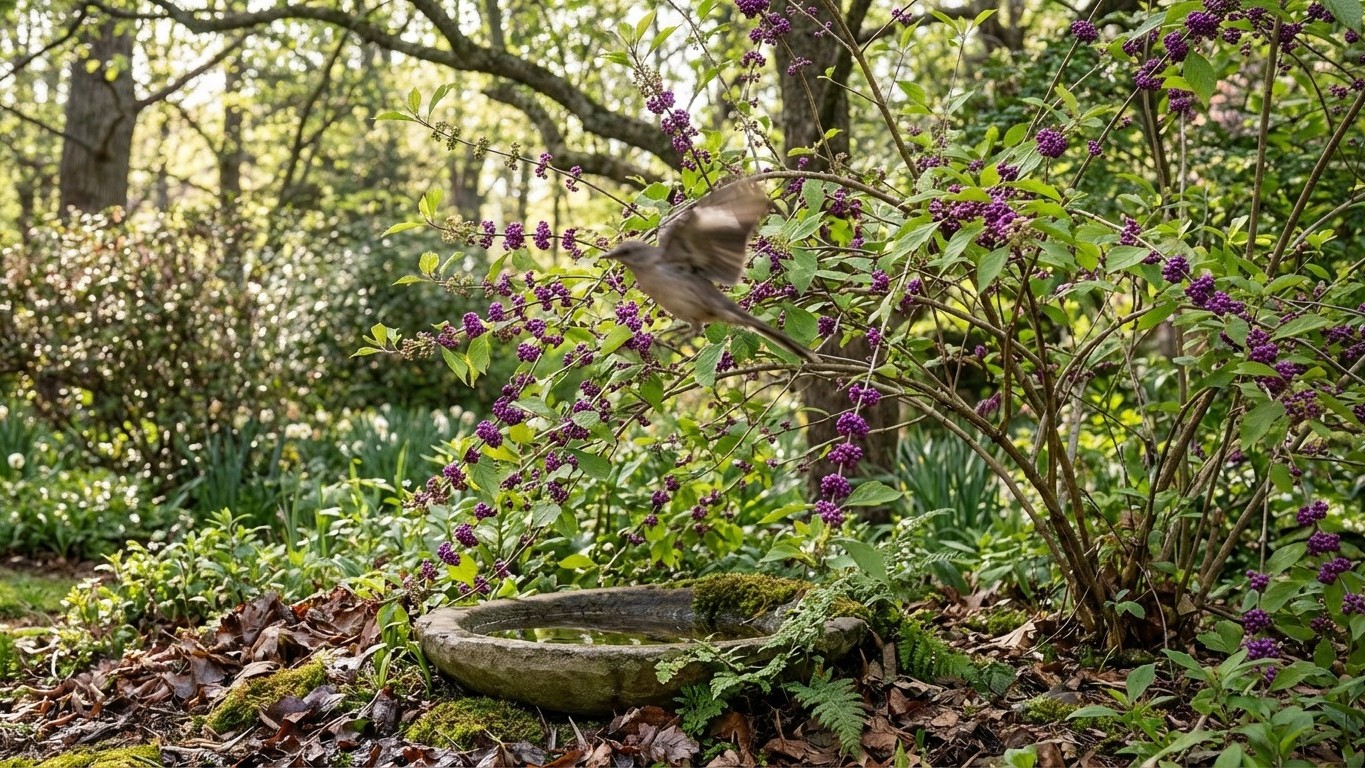
Three years ago, my garden was silent. A patchy lawn, a few sad perennials, and the occasional crow passing overhead. Then, on a whim one March weekend, I drove to the local nursery and loaded my car with five shrubs. No master plan, just curiosity and a vague hope. What happened next changed the way I think about gardens entirely.
Birds don’t appear by accident. They follow food, shelter, and safety, and they’ll skip your yard completely if it doesn’t offer at least two of those three. The right shrubs hit all three at once, which is why they’re the single best investment any gardener can make. Not a birdfeeder, not a birdbath (though those help too). Shrubs. Planted in March, while the soil is workable and moisture is reliable, they have an entire growing season to establish before winter birds start looking for a place to land.
Key takeaways
- A March planting of five specific shrubs transformed a barren garden into a bird hotspot without any fancy feeders
- One unexpected plant choice turned out to be a lifeline for migratory birds facing habitat loss
- The secret to success wasn’t the shrubs alone—it was understanding exactly where and how to plant them
Why March is the Sweet Spot for Shrub Planting
Soil temperature in early spring sits in that productive zone where roots can grow without the plant exhausting itself trying to support new foliage in summer heat. Think of it like Starting a new job in January rather than July: you get the quiet onboarding period before everything gets demanding. Shrubs planted in March typically establish their root systems two to three times faster than those planted in June, according to extension horticulture guides from universities in the mid-Atlantic region.
There’s also the practical bonus of availability. Nurseries in March are fully stocked, well-staffed, and not yet picked over by the May crowd. You get first choice of healthy specimens, and the staff Actually has time to talk to you. I’ve had some of my best gardening conversations standing in cold nursery lots in early spring, surrounded by shrubs I couldn’t yet name.
The Five Shrubs That Turned My Garden Into a Sanctuary
American Beautyberry (Callicarpa americana) almost looks like a prop from a science fiction film in fall. The stems erupt in clusters of electric purple berries that stop people mid-stride. More relevant to birds: it’s a late-season buffet for mockingbirds, robins, and finches at exactly the moment when natural food is getting scarce. It grows fast, tolerates partial shade, and asks almost nothing from you in return. Plant it at the back of a border where its loose, arching habit can breathe.
Winterberry Holly (Ilex verticillata) does for winter what Beautyberry does for fall. The berries persist on bare stems long after the leaves drop, creating those vivid red clusters you see on holiday cards. Cedar waxwings, in particular, seem to treat winterberry like a destination restaurant. They’ll arrive in small flocks, work the shrub methodically, and move on. One important note: you need at least one male plant near your females for pollination. Most nurseries sell them as a pair. Don’t skip the male or you’ll have a very photogenic but berry-free shrub.
Serviceberry (Amelanchier species) is the overachiever of the group. It blooms early, offering white flowers that feed pollinators in March and April. By June, it produces small, blueberry-like fruits that are edible for humans and absolutely irresistible to over 40 species of birds. Catbirds, thrushes, and Baltimore orioles tend to discover mine every summer without fail. Serviceberry also puts on a respectable fall color show in orange and red. Three seasons of value from one plant. Hard to argue with that math.
Spicebush (Lindera benzoin) is the one most people haven’t heard of, which is exactly why I recommend it to anyone willing to listen. Native to the eastern US, it produces small red berries that are exceptionally high in fat, the kind of concentrated energy migratory birds need before and after long flights. The wood thrush, a species under real pressure from habitat loss, relies heavily on spicebush during fall migration. Planting one feels less like gardening and more like conservation. It also handles shade better than almost any fruiting shrub I know, making it ideal under canopy trees.
Finally, there’s Native Viburnum, a category rather than a single species, because several of them (Arrowwood, Blackhaw, Nannyberry) all deliver similarly. Viburnums produce clusters of dark blue-black berries in late summer and fall, and they structure a garden beautifully: multi-season interest, good fall color, winter stem structure. Bluebirds, thrushes, and woodpeckers all visit mine regularly. Arrowwood viburnum is particularly forgiving of clay soils, which is the quiet reason it shows up in so many American suburban yards.
How to Arrange Them So Birds Actually Use Them
Placement matters more than most guides admit. Birds prefer shrubs that offer layers, meaning something at ground level, something at eye height, and something above that provides a lookout perch. If you can cluster three of these shrubs together rather than dotting them around individually, you create what ecologists call a “habitat patch,” and that’s where birds linger rather than just pass through.
Keep the area under and around the shrubs somewhat messy. Leaf litter beneath a spicebush is not a failure of gardening. It’s prime foraging territory for sparrows and towhees scratching for insects. The tidier you keep a garden, the quieter it becomes. A little wildness is the admission price for birdsong.
Water proximity helps enormously. A shallow dish or small ground-level basin within 15 to 20 feet of your shrub cluster will make the whole setup dramatically more attractive to birds, especially during migration windows in May and September when exhausted travelers need a quick resupply.
What surprises me most, three springs later, is how the sound has changed the feeling of being in the garden. I’m not just looking at it anymore. I’m listening to it. Which raises a question worth sitting with: how many of the things we grow in our yards are actually for us, and how many could just as easily be for something else?