
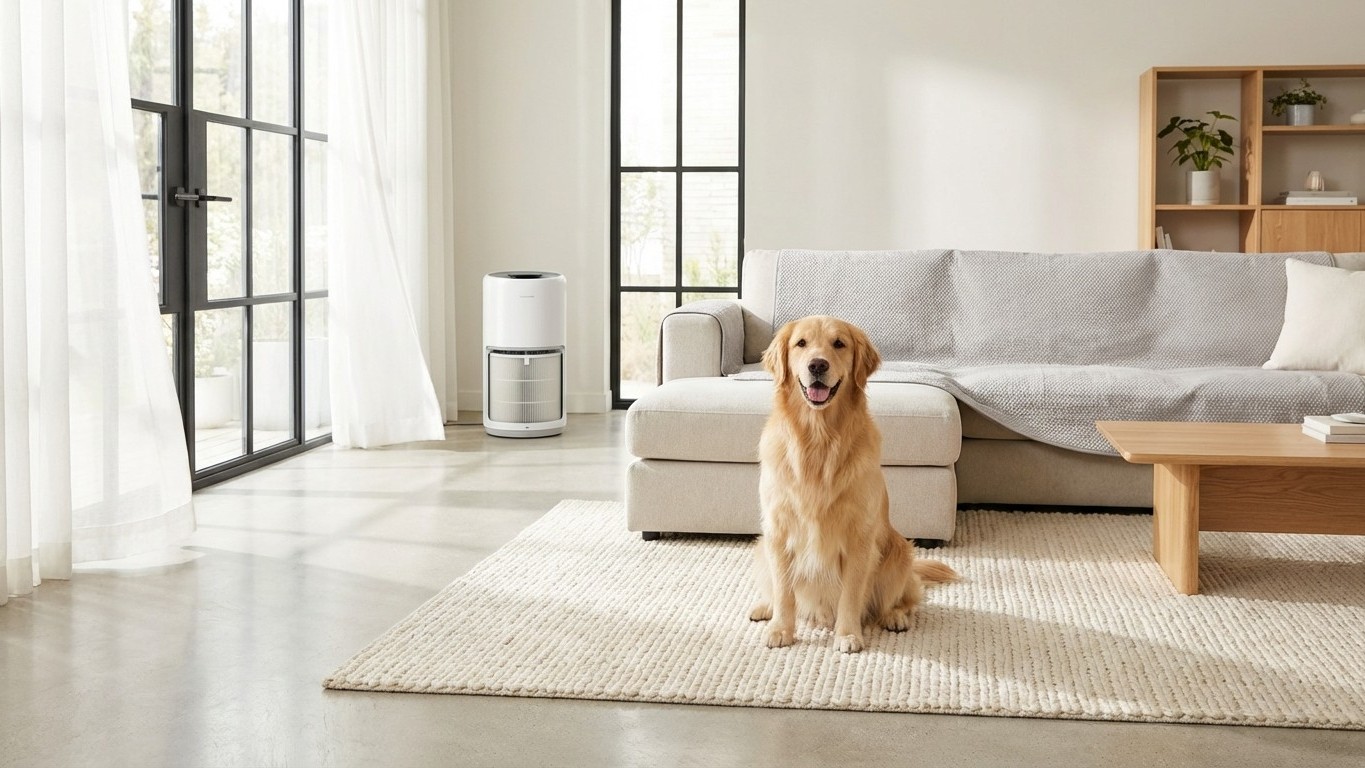
Seventy percent of U.S. households share their home with at least one pet. That’s a lot of fur, dander, and occasional accidents that your walls, floors, and sofas absorb every single day.
Pet odors come from accidents, dander, wet fur, and litter boxes, with lingering smells often signaling bacteria, mold, or urine crystals trapped in carpets, padding, or furniture.
The good news? You can design your way out of the problem. Choosing the right pet friendly home design materials from the ground up is the most lasting solution, because fighting odors at the source is always more effective than masking them with air fresheners that work for exactly forty minutes.
Why Pet Odors Are More Than Just Unpleasant
Before diving into solutions, it helps to understand what you’re actually dealing with.
Fresh urine from dogs and cats releases high levels of ammonia and volatile organic compounds (VOCs), which immediately compromise indoor air quality (IAQ).
That’s not a minor nuisance.
Urine breakdown releases ammonia, which can irritate the lungs, eyes, and sinuses, especially for children, seniors, and pets.
Dander adds another layer of complexity.
Dander doesn’t stop at being a respiratory irritant: it is a perfect petri dish for bacteria and mold, enhancing their growth. These microorganisms release toxins that can further deteriorate air quality, potentially exacerbating respiratory issues.
And the EPA confirms it:
biological contaminants include bacteria, viruses, animal dander and cat saliva, house dust mites, cockroaches, and pollen.
Living with pets means managing a complex biological ecosystem indoors. The winning strategy? Build an interior that simply doesn’t hold onto any of it.
Odor-Resistant Materials for Floors and Surfaces
Your floors are ground zero. They take every accident, every wet paw, every shedded coat.
Pet odors tend to persist because of moisture and bacteria. Carpets, especially high-pile varieties, trap pet hair, dander, and accidents deep within the fibers. Even some types of hardwood and laminate flooring can absorb moisture, leading to unpleasant smells over time. Without proper cleaning, these odors become embedded in your flooring, making them difficult to eliminate.
The Best Flooring Choices for Odor Resistance
Porcelain and ceramic tile sit at the top of the list, and for good reason.
Ceramic and porcelain tiles are completely waterproof, making them perfect for pet owners who deal with frequent accidents or spills. They do not absorb pet odors, keeping your home smelling fresh.
The one catch: grout lines.
When grout is properly sealed, tile remains highly effective at blocking liquid absorption, helping prevent odors from developing over time. Routine cleaning further supports a hygienic environment for both pets and owners.
Opt for epoxy grout when installing tile in pet-heavy zones, it offers the strongest barrier against urine infiltration.
Luxury vinyl plank (LVP) is the practical runner-up that many pet owners end up loving.
Luxury vinyl flooring is one of the best choices for pet owners looking to control odors. It is highly resistant to moisture, meaning accidents won’t seep into the material. LVP and LVT options are easy to clean and don’t absorb pet dander like carpet does. Many vinyl flooring options come with anti-microbial coatings that help reduce the growth of bacteria and mold, which can contribute to lingering odors.
Style-wise,
vinyl, being fully non-porous, also resists odor buildup and provides a practical solution for multi-pet households.
Explore a detailed comparison in our guide to pet friendly flooring for dogs and cats.
Concrete, polished and sealed, deserves more credit than it gets. Sealed concrete is essentially impermeable — nothing soaks in, nothing stays behind.
If you have a concrete subfloor, you’ll need to treat it with a water-resistant sealing agent to make it suitable for pet-friendly flooring. The sealant protects the concrete floor from stains and makes it easy to clean.
For wood lovers,
choosing harder wood species such as oak or maple, which are less porous than softer woods like pine, helps enhance odor resistance, and applying a high-quality sealant can help reduce odor absorption and make cleanup easier.
Walls That Actually Fight Back: Paints and Primers
Walls absorb more than we think. A room that “smells like dog” even after cleaning is often a wall problem, not a floor problem.
Odor may penetrate fresh paint, so simply repainting the walls will likely leave you with a still smelly space. For a room that looks and smells fresh, priming before painting is recommended. Priming provides a barrier that prevents odor from penetrating fresh paint.
Shellac-based primers and advanced water-based formulations are specifically engineered for this:
these products block odors and off-gassing from below, including formaldehyde, fragrance, pet odors (including urine), smoke, musty odors, and almost any other kind of odor.
For the topcoat, finish matters as much as the brand.
Satin, eggshell, or semi-gloss finishes are typically more washable than flat or matte paints. They also offer better resistance to moisture and odors.
Some formulations go further:
odor-absorbing paint contains anti-microbial agents which inhibit the growth of mold and mildew as well as related bacterial odors, and the larger the area you paint, the greater the stink-reducing power.
Worth noting: paint is a complement to a clean foundation, not a substitute for it. Fix the source before you paint over it.
Textiles and Fabrics That Don’t Trap Odors
Ask any interior designer what the single biggest mistake pet owners make, and the answer is usually the same: fabric choice. Soft, porous upholstery is essentially a sponge for every odor your home produces. The solution isn’t to eliminate soft furnishings, it’s to choose them wisely.
Pet-friendly fabrics are durable, scratch-resistant, stain-resistant, and easy to clean; they often have tight weaves or protective treatments to repel odors and moisture. Leather and Crypton sofas are ideal for avoiding dog smells because they do not absorb odors and are easy to wipe clean.
Leather is the classic choice, but it’s not the only one.
Crypton fabric is engineered to be moisture, stain, and odor-resistant, which is particularly important if your pets love to lounge on the furniture or have occasional accidents.
Microfiber performs similarly at a lower price point, with
microfiber standing out for easy cleaning, spills and stains usually blot right up, and hair brushes off easily.
Outdoor fabrics, Sunbrella and similar performance textiles, bring an unexpected advantage to indoor living. Originally engineered to resist rain, mold, and UV exposure, they naturally repel the moisture that bacteria need to thrive.
Performance fabrics like Sunbrella and Revolution are among the best pet-friendly sofa fabrics.
They’ve gone from deck chairs to living rooms, and for pet owners, that crossover makes complete sense. For scratch-proofing considerations alongside odor resistance, our article on scratch resistant fabric for cats goes deeper into textile selection.
Rugs and Washable Covers: The Replaceable Layer Strategy
One design principle that experienced pet owners swear by: build in layers that can be cleaned or swapped entirely.
Investing in indoor-outdoor rugs, which are designed with stain-proof, odor-proof synthetic materials, is a smart approach — when your pet makes a mess on the rug, you can take it outside, clean it with detergent and spray it down with a hose.
Washable slipcovers follow the same logic for sofas: protection that costs you nothing to refresh and everything to skip.
Using area rugs with washable covers adds comfort without compromising odor control.
Ventilation: The System-Level Solution
You can have the best flooring, the finest Crypton sofa, and the most odor-blocking paint on the market — and still live in a house that smells if the air doesn’t move.
A poorly ventilated home traps odors, making it harder to get pet smell out of the house. Increasing airflow helps dilute odor particles and improves overall indoor air quality.
Ventilation is the multiplier that makes everything else work better.
ERV and HRV Systems for Whole-Home Air Quality
Modern mechanical ventilation has evolved far beyond bathroom exhaust fans. Energy Recovery Ventilators (ERVs) and Heat Recovery Ventilators (HRVs) represent the gold standard for homes with pets.
Both ERVs and HRVs can help reduce odors by constantly exchanging stale indoor air with fresh outdoor air. These systems remove cooking smells, pet odors, and general stale air by venting it out and bringing in clean air from outside.
ERV systems enhance odor control by continuously exchanging indoor air with fresh outdoor air. They remove stale air that may carry odors from cooking, pets, or musty, damp areas like basements while bringing in fresh air from outside.
The moisture management dimension matters too:
ERVs have the added benefit of managing moisture, which helps prevent odors caused by dampness, like those from mold or mildew.
And humidity control is central to odor control, by controlling the relative humidity level in a home, the growth of some sources of biological pollutants can be minimized. A relative humidity of 30–50 percent is generally recommended for homes.
Smart placement of supply and return vents amplifies the effect.
Positioning supply vents in living spaces where you spend most of your time and return vents in kitchens and bathrooms, where pollutants and humidity spike, draws fresh air where you need it and removes stale air at its source.
Think of it as giving your home a respiratory system that works specifically against the biology of pet odor.
Air Purifiers: Targeted Reinforcement
Where ERV/HRV systems handle the whole house, portable air purifiers provide targeted support in the rooms pets use most. The filtration combination to look for is specific:
air purifiers with HEPA filters trap unwanted particles, while activated charcoal filters help eliminate bad smells.
A HEPA filter handles dander and hair; activated carbon handles the VOCs and ammonia that cause the actual odor.
A True HEPA filter captures 99.97% of airborne particles as small as 0.3 microns. A pellet-based carbon filter helps neutralize unpleasant pet odors.
For multi-pet households in particular, the more activated carbon, the better.
Design Strategies, Maintenance, and the Long Game
Material selection and ventilation get you most of the way there. The rest is systems thinking — routines that prevent buildup before it becomes permanent.
Using enzymatic cleaners on accidents breaks down odor-causing proteins
far more effectively than general-purpose sprays that simply mask the smell. The enzymes digest the biological compounds at their molecular source, which is the only way to actually eliminate them rather than cover them up.
For furniture that already exists in your home, the layering principle applies:
when it comes to upholstery, high performance fabrics are the most durable option on the market. Look for fabrics that are stain, scratch, water, odour, and UV resistant, and choose the appropriate fabric for each space.
And for rooms where pets spend the most time,
clinical grade air purifiers are great at removing dander and odors from the air, leaving your home smelling fresh and clean.
Furniture placement also shapes air circulation in ways most people never consider. Keeping pieces away from walls creates natural airflow channels. Avoiding bulky upholstered sofas jammed into corners, where air stagnates and odors concentrate, matters more than any spray. The goal is to make your space breathe continuously, not just when you open a window. For a comprehensive approach to furniture, materials, and space planning in one place, the full guide to pet friendly home design cat dog furniture covers every angle.
FAQ: Common Questions About Odor-Resistant Materials
What materials should I choose to avoid bad odors when living with pets?
Selecting flooring with moisture resistance, stain protection, and easy maintenance is key to combating pet-related smells.
For floors, ceramic tile, luxury vinyl plank, and sealed concrete are the top performers. For walls, shellac-based or advanced water-based primers combined with satin or semi-gloss paints create a barrier against odor penetration. For upholstery, leather, Crypton, and performance outdoor fabrics resist odor absorption far better than natural fibers or velvet.
Are there truly odor-resistant fabrics or covers for sofas and armchairs?
Yes — with conditions.
Crypton fabric is engineered to be moisture, stain, and odor-resistant, making it particularly suitable for furniture where pets lounge or have occasional accidents.
Leather and faux leather also perform well because their smooth, non-porous surfaces simply don’t absorb smells. For existing sofas, machine-washable slipcovers made from outdoor-grade synthetic fabrics provide a practical and stylish solution that can be refreshed on a regular schedule.
How do you effectively ventilate a closed room to limit pet odors?
Improving ventilation and using HEPA plus activated carbon air purifiers helps remove airborne odors.
In a closed room, the most effective approach combines a correctly sized air purifier with a carbon filter and strategic cross-ventilation when possible. If the room is part of a whole-home ERV or HRV system, positioning the return vent near where pets sleep or spend time maximizes odor extraction.
Dehumidifiers work by reducing humidity in your home. High humidity can create a hospitable environment for pet odor-causing bacteria to thrive, and by reducing the humidity, dehumidifiers can make it less hospitable to these bacteria, helping to reduce pet odor.
The question worth sitting with isn’t just “how do I get rid of the smell?” but rather: what would it mean to design a home that never really develops it in the first place? The gap between reactive odor control and proactive material design is precisely where the most rewarding pet-friendly interiors are built.