
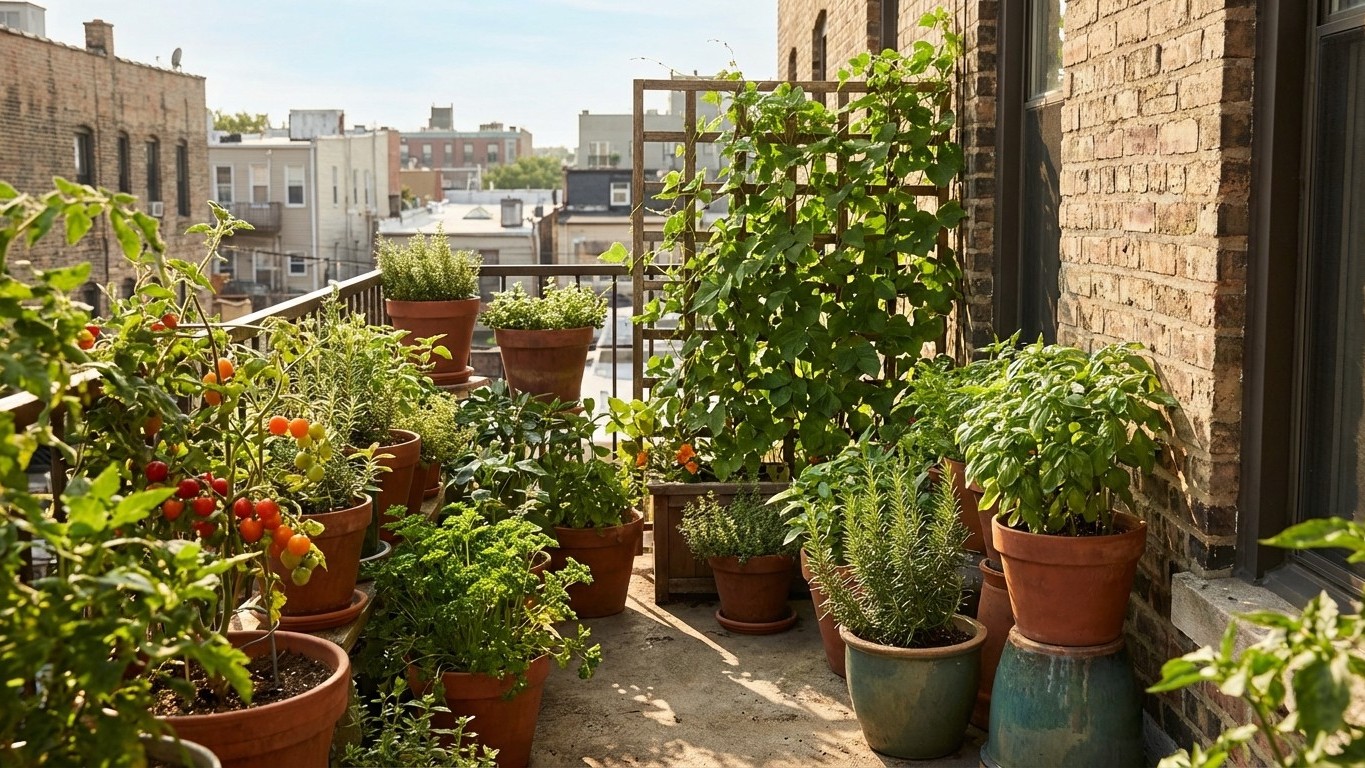
Picture a 6-by-8-foot concrete slab hanging off the side of a city apartment building. Blank, utilitarian, underused. Now picture that same space overflowing with cherry tomatoes ripening in the afternoon sun, basil nodding in the breeze, and a trellis of climbing beans turning a bare wall into a vertical living pantry. The transformation isn’t fantasy. Across the country, millions of urban renters and condo owners are quietly turning their balconies into some of the most productive micro-gardens imaginable. balcony container gardening small space has become one of the fastest-growing forms of urban agriculture, and techniques like vertical container gardening balcony help maximize every inch of space for good reason: you control every variable, the investment is low, and the returns, both edible and emotional, are real.
Living in a city doesn’t mean you have to give up your dreams of having a thriving garden. Container gardening offers the perfect solution for urban dwellers looking to grow their own herbs, vegetables, and flowers in limited spaces like balconies, patios, or windowsills.
The question isn’t whether you can garden on a small urban balcony. The question is how to do it well, safely, and sustainably, without drowning your downstairs neighbor in runoff or fighting a cease-and-desist from your HOA.
This guide covers every dimension of the subject: planning, choosing the right containers, selecting the best plants for balcony container garden for your specific exposure, optimizing space vertically, managing soil and water (including essential techniques on how to water container plants on a balcony), navigating urban regulations, and troubleshooting the challenges that are unique to city growing. For specific challenges like dealing with harsh conditions, check out our windy balcony container gardening tips. Wherever a topic deserves deeper exploration, you’ll find links to dedicated guides in this series. Think of this as your map for the whole territory.
Why Container Gardening on a Balcony Is Genuinely the Ideal Urban Solution
The real benefits, beyond the obvious ones
Urban gardens provide important avenues for people to maintain their mental and physical health, reduce stress, and improve their general well-being.
That’s not just lifestyle marketing. The research base here is substantial.
Gardening was associated with personal development and may be related to emotional well-being, physical well-being, social inclusion, interpersonal relations, sense of purpose, and overall quality of life.
For city dwellers who spend most of their waking hours indoors, a balcony garden becomes something closer to a lifeline than a hobby.
The practical upside is equally compelling.
You can grow fresh herbs and vegetables for cooking. Plants clean the air and reduce stress.
And if you think small-scale growing can’t make a dent in your grocery bills, consider that even a single planter of cherry tomatoes can yield dozens of fruits per season.
By growing on your balcony, you’re also beautifying a space that’s otherwise pretty drab.
A well-planted balcony adds visual warmth to the building, privacy from neighbors, and even a modest buffer against urban noise.
The constraints, and why they’re actually manageable
Growing plants in a limited space like a balcony or terrace can be a challenge even for an experienced gardener, but it’s also a great opportunity to be creative and have fun.
The three main constraints are real: weight capacity, light levels, and microclimate. None of them are insurmountable. They simply require a different mindset than in-ground gardening, one that prizes precision over abundance and adaptability over stubbornness.
The amount of sunlight the space receives is the most critical factor to consider, but wind exposure and temperature are important too.
Every balcony creates its own microclimate.
Each balcony has its very own micro-climate, and it’s important to pay attention to it. The conditions on your balcony, whether that’s very sunny, shady, or windy, will affect what grows best in your space.
Understanding your specific microclimate before buying a single seed packet is the single most valuable step you can take.
Planning Your Urban Container Garden: First Steps That Matter
Assessing light, space, and structural limits
Start with a notepad and a compass app on your phone.
Sun is the first question: what direction does your balcony face? South-facing balconies are the best, but southeast- or southwest-facing will do. And if you’ve got a north-facing window, you can still grow plants.
A north-facing balcony isn’t a death sentence for container gardening. It is a constraint that narrows your plant choices, and that’s fine.
Evaluate your available space’s sunlight exposure throughout the day. Most vegetables need 6-8 hours of direct sunlight, while shade-tolerant herbs and greens can grow with less.
Spend a day at home and observe. Walk out at 9 a.m., noon, 3 p.m., and 6 p.m. Note where the sun hits, where shadows fall, and where the wind comes from. That hour of observation is worth more than any gardening book.
Weight is the constraint that most beginners underestimate.
Most building safety codes require balconies to support 60 pounds per square foot. This will support most balcony gardens. If weight is a concern, stick to smaller pots and choose plastic containers rather than clay or ceramic.
you’ll need to stay within your balcony’s load-bearing capacity of 50-100 pounds per square foot when planning container gardens.
And here’s a detail many people miss:
the weakest point of any balcony is its middle, so keep heavy pots around the perimeter.
Structural logic, applied to garden design.
Before you start planting, the most critical factor to consider is the weight capacity of your balcony. Overloading your outdoor space with too many planters can result in structural damage or even collapse in extreme cases.
If you have any doubts, check with your building management before investing in heavy ceramic pots or large raised beds.
Defining your goals and starting budget
Before buying anything, decide what you actually want from your balcony garden. A culinary herb collection? A visual privacy screen? A miniature vegetable patch that supplements your grocery shopping? Your answer changes every decision that follows: container size, plant selection, budget, time commitment.
Begin with easy-to-grow plants like herbs or lettuce, and use containers that suit your balcony size. Start small and expand as you gain confidence.
This is, unambiguously, the right approach for a first season. One over-planted balcony in year one leads to one abandoned balcony in year two. A modest, well-tended setup in year one leads to an ambitious, satisfying expansion in year two.
Budget-wise, the initial outlay is a one-time investment. Good containers, a quality potting mix, and a small collection of plants are the core costs. From there, the annual cost drops to seeds, new potting mix, and fertilizer. The garden essentially pays for itself when you start harvesting.
Containers: Choosing the Right Vessels for a Small Urban Balcony
Types of containers and what each does well
Balconies have three distinct sections to consider, which are the floor, the railing, and everything else. Thinking in these three layers will help you make the absolute best use of the limited space you have.
This framework shapes your container choices from the start.
For the floor, larger containers give roots room to develop and hold moisture longer.
If you’re willing to sacrifice some foot room, the floor of your balcony is a great spot for larger containers full of plants that need a bit of space to grow. Tomatoes, peppers, eggplants, and beans are all great plants to grow in containers on your balcony floor.
For the railing,
hanging baskets and outdoor railing baskets are real space savers and can be used to grow everything from herbs to houseplants to trailing vegetables.
Fabric grow bags deserve a mention here.
Fabric grow bags are another lightweight container option, with the added advantage of being easy to store after the growing season is over. They also have handles for more convenient portability.
They’re particularly useful for heavy-feeding plants like tomatoes and peppers. The fabric allows air pruning of roots, which actually produces healthier root systems than hard-sided containers in many cases.
Self-watering containers are worth the added cost for busy urbanites.
Self-watering containers wick water from a chamber at the bottom of the pot to give your plants’ roots a consistent supply.
On a balcony where you might miss two or three consecutive watering days during a heatwave, that reservoir can be the difference between thriving plants and dead ones.
Material, size, drainage, and mobility: the four criteria that matter
Plastic and fiberglass plant containers are ideal for balcony gardens because they’re lighter in weight than terracotta or ceramic pots and come in a vast array of styles and sizes. However, on windy balconies, they can be blown over easily unless they’re secured in place.
A good workaround: fill the bottom third of a lightweight plastic container with a heavy layer of wet potting mix before planting. It adds stability without adding container weight.
Size matters more than most beginners expect.
Containers dry out quickly, especially if you’re using terra-cotta pots. To counteract this and give your plants the even moisture they need, select the largest pots you can. The increased volume will allow the soil to hold more water and evaporate much more slowly.
The minimum container depth guideline from the University of Georgia Extension is practical:
match soil depth to your crop, with 6-8 inches for small plants, 10-12 inches for medium crops, and 18 inches or more for large vegetables.
Drainage is non-negotiable.
Make sure the container has a drainage hole so the roots won’t sit in water.
And when you water, consider your neighbor below.
You may need to use a saucer under your container to keep the water from running onto your neighbor’s balcony. After a few minutes, discard any water left in the saucer to keep excess salt from building up in the container, and to discourage the growth of mosquito larvae.
Choosing the Right Plants for Your Specific Balcony
Edible plants: vegetables, herbs, and compact fruits
The variety selection makes or breaks a balcony food garden. Generic seed packets from the hardware store are often designed for sprawling in-ground gardens. What you need are compact, container-specific varieties.
Pick compact vegetable varieties bred specifically for containers. Cherry tomatoes like compact varieties thrive in 5-gallon containers. Grow bush beans, lettuce, peppers, and determinate tomatoes in 12-inch deep pots.
Opt for compact and dwarf varieties that thrive in containers, such as patio varieties of tomatoes, peppers, herbs like basil and thyme, lettuce, and strawberries. These plants fit well in confined spaces. Also, offer a bountiful harvest throughout the growing season.
Herbs are probably the best entry point for anyone new to container gardening.
Most herbs can be grown in pots or containers. Basil, parsley, and chives are good choices for beginners.
For the best plants for balcony container garden, the principle is simple: go small, go vertical, or go edible-ornamental. Dwarf fruit trees, alpine strawberries, and compact blueberry bushes blur the line between productive and decorative in exactly the right way.
A dwarf olive tree is the perfect choice for a balcony garden because of its low water requirements and resistance to high winds and subfreezing temperatures.
North-facing or windy balconies: plant choices that actually work
A north-facing balcony frustrates sun-lovers.
North-facing balconies capture only two hours of light a day, getting most from mid-March through the end of June, when the sun moves north in the sky and days get longer.
That’s a real limitation, not one you can ignore. But the shadow has a silver lining:
north-facing balconies are much cooler than south-facing balconies and are more inviting places to garden during hot summer months.
Vegetables that cope with shade include carrots, scallions, and cabbage.
Shade-tolerant herbs like mint, parsley, cilantro, and tarragon perform well with limited direct light.
You can grow spinach in a window box or railing planter of your north-facing balcony garden, as it bolts in full sun. Lettuce has shallow roots, so you can grow it in window boxes.
For ornamental choices,
north-facing balconies, which receive low light throughout the day, are ideal for shade-loving plants. With options like ferns, caladiums, and ivy, you can still have a lush balcony filled with beautiful foliage.
A practical trick for maximizing light:
add more light to a north-facing garden by adding mirrors and painting the walls a light color to increase the reflected light.
Sounds simple because it is. Reflected light from a pale wall can meaningfully extend the productive hours for shade-tolerant edibles. For all the details on managing these difficult exposures, the dedicated guide on windy balcony container gardening tips covers the full range of solutions.
Maximizing Space: Vertical Gardening and Intelligent Layout
Going vertical: the most underused dimension on a small balcony
Vertical space is often underutilized in balcony gardening but can be a significant asset for maximizing growing area. Consider installing wall-mounted planters, hanging baskets, or trellises to grow vining crops like peas, beans, cucumbers, and small-fruited tomatoes. By training plants to grow upwards, you can take advantage of sunlight exposure and airflow while minimizing the footprint on your balcony.
The three-layer approach does the heavy lifting here.
Think vertically to maximize the space you have. You may be able to hang plants from hooks, use flower boxes on the balcony railings, create towers, and put containers on the balcony floor.
A tall trellis against the back wall of a balcony can support a climbing bean or cucumber without claiming a single square foot of floor space.
Choose climbing plants like beans, peas, or cucumbers for vertical setups to use sunlight efficiently.
Tiered planters are another space-saving solution that allow you to use vertical space for your garden rather than taking up precious space on your balcony floor.
A three-tiered planter holding six to nine individual herb pots occupies the footprint of a single large pot while tripling the planting capacity. The depth guide on vertical container gardening balcony walks through every configuration in detail.
Layout strategies: depth, levels, and visual design
Create depth and visual interest by arranging plants in layers. Place taller plants towards the back and shorter ones nearer, such as thymus vulgaris for fragrance or small ornamental plants for texture.
This not only looks better, it’s functionally smarter: each plant gets the light it needs, taller ones don’t shade shorter ones, and the eye reads the space as larger than it is.
Moveable pots as well as fixed planters increase the versatility of the garden, as they can be moved aside to create more space for larger gatherings.
This is an underappreciated feature of container gardening generally: the garden is never fixed. If a plant isn’t performing in one spot, move it. If you’re hosting, clear a path. The flexibility is one of container gardening’s genuine advantages over any fixed garden design.
The classic design formula used by professional container designers works well on balconies:
use the “Thriller, Spiller, Filler” recipe. Put a showy upright plant in the center of your container to add height. Use trailing plants that spill over the side to create a lush feel. Add bushy, medium-height plants to fill in the spaces in between.
One large pot, three plants, and an instantly polished result.
Soil, Watering, and Feeding: The Invisible Engine of a Productive Balcony Garden
Choosing and preparing the right potting mix
Garden soil from the ground has no place in a container. Full stop.
Soil taken from your yard or a garden bed is too heavy and dense to use in a pot. In containers, soil from the ground can become easily compacted, causing problems with drainage and air circulation, and it can also harbor weed seeds, insects, and diseases.
The best soil for container gardening is a potting mix specifically designed for containers. Unlike garden soil, potting mixes are specifically engineered to promote drainage, aeration, and moisture retention, all of which are critical for root health.
Look for a mix containing peat moss or coconut coir for moisture retention, perlite or vermiculite for drainage and aeration, and compost for baseline nutrients.
Potting soil used in containers should be light and fluffy, allowing roots to grow easily while providing proper drainage and airflow. Choose a potting soil made of peat moss, pine bark, and perlite or vermiculite, as these ingredients help balance moisture retention with good drainage.
One more thing worth knowing:
refresh container soil every 1-2 years by mixing in new potting mix and fertilizer. The proper soil can double yields compared to poor mixes, making it the single most significant factor in container gardening success.
The complete guide on how to water container plants on a balcony covers substrate preparation in much greater depth.
Watering on a balcony: rhythm, technique, and summer strategy
Water is the single most time-sensitive task in balcony container gardening.
Balcony plants tend to dry out quickly, especially if they are in full sun or exposed to the wind. On hot summer days, you may need to water twice a day.
This isn’t optional. A container that goes dry for two consecutive summer days can lose plants that took weeks to establish.
Monitor soil moisture regularly, as containers can dry out quickly, especially during hot, dry periods. Water plants thoroughly whenever the top inch of soil feels dry to the touch.
The finger test is reliable: push your index finger about an inch into the soil. Dry? Water deeply until it drains from the bottom. Still moist? Wait. The most common mistake beginner container gardeners make is watering on a schedule rather than in response to the plant’s actual needs.
For anyone who travels or works long hours,
consider installing a drip irrigation system or self-watering containers to maintain consistent moisture levels and reduce the frequency of manual watering.
A simple programmable drip system costs less than a summer’s worth of replacement plants and eliminates the most stressful part of balcony gardening.
Feeding your container plants: when and how
Container plants are nutrient-hungry.
Using fresh commercial potting soil will give plants 8-10 weeks of nutrients while minimizing problems with insects, diseases, and weeds. You may need to fertilize your balcony garden after a couple of months.
Frequent watering leaches nutrients from the confined soil volume faster than most gardeners expect.
Incorporate organic fertilizers and plant-based compost into container soil to provide essential nutrients for healthy plant growth throughout the growing season.
A balanced slow-release fertilizer applied at planting, combined with a diluted liquid feed every two to three weeks during active growth, covers most container plants well. Heavy feeders like tomatoes and peppers benefit from a phosphorus-rich bloom booster once flowering begins.
Managing Urban Challenges: Wind, Heat, Pests, and the Rules
Protecting plants from wind, heat, and cold
Strong winds, which are common on balcony and rooftop gardens high above the ground, can quickly dry out the soil, rip the petals off flowers, and knock over tall potted plants.
Wind is, by most experienced balcony gardeners’ accounts, a bigger problem than insufficient light.
Wind issues are the biggest problem with balcony gardens, far more so than for raised beds or containers on the ground. Your first option is to plant wind-tolerant plants, such as rosemary. A second option with more flexibility is to stake your plants well and use windscreens to help break some of the nastier gusts.
An open-textured screen, a plastic barrier, or a living hedge protects plants on an open balcony buffeted by wind.
The key word is “open-textured.” A solid wall creates turbulence on its leeward side, which is almost worse than no protection. A screen that filters wind rather than blocking it completely is dramatically more effective. A trellis of climbing plants, loosely woven fabric panels, or a row of sturdy ornamental grasses in a railing planter all qualify.
Heat, too, deserves attention.
Sun reflecting from windows can intensify the heat of a balcony garden and burn delicate foliage.
A south-facing balcony with light-colored walls and glass can reach temperatures that stress even sun-loving plants. Move heat-sensitive herbs and lettuce to shadier spots in peak summer, and consider light-colored containers that reflect rather than absorb solar radiation.
Pests in the city: identification and organic management
Urban balcony gardens have their own pest profile. Aphids, spider mites, fungus gnats, and whiteflies are the most common urban container pests.
Plant aromatic herbs like basil, rosemary, and mint to deter common garden pests like aphids, mosquitoes, and whiteflies.
This isn’t folk wisdom; the aromatic compounds in these plants genuinely disrupt pest orientation. Companion planting a basil plant next to tomatoes is one of the simplest and most cost-effective pest management strategies available.
For fungal issues, airflow matters.
Apply organic fungicides containing copper or sulfur at first signs of powdery mildew or leaf spot. Monitor humidity levels and use fans in enclosed spaces like balconies to improve air movement around plants.
Pruning for airflow, keeping leaves dry when watering, and removing affected foliage promptly are all more effective than any treatment applied after a full infection has taken hold.
HOA rules, condo regulations, and neighbor relations
This is the most overlooked dimension of urban balcony gardening, and the one that can end a garden overnight if ignored.
Even if your balcony can handle the weight, your building or local regulations might have rules about what you can put out there. It’s better to know them ahead of time than to be asked to remove half your garden in midsummer.
Container gardens on a condo balcony may impact common elements of the association, such as the structure of the balcony itself, or may lead to water and debris entering another balcony or neighboring units.
The practical checklist before you start: check your lease or HOA bylaws, confirm weight limits with building management, ensure all containers have proper drainage with saucers to catch overflow, and verify that any trellis or wall-mounted structure is permitted.
Vertical gardens such as wall-mounted planters or trellis systems are often subject to additional scrutiny. These structures must be securely mounted, not exceed height limits, and use non-invasive plants that won’t damage walls or fences.
Your first step to co-existing peacefully with both your neighborhood and the HOA is to know what regulations you’re expected to abide by. Read all bylaws, covenants, and deeds. These can sometimes be found in your mortgage documents, or you may request a copy from your HOA. In addition, many associations now post these documents online.
A quick email to your building manager describing your modest, lightweight container garden often clears any ambiguity without triggering a formal approval process.
Inspiration and Setup: What a Successful Balcony Garden Actually Looks Like
Three real-world balcony styles to consider
The productive kitchen garden: every container grows something edible. Tomatoes on the floor, herbs on railing planters, climbing beans on a back-wall trellis. Functional, fragrant, and satisfying every time you cook a meal. This style works best on south or east-facing balconies with at least 5-6 hours of direct sun.
The ornamental-edible hybrid: half the pots hold edible plants with attractive foliage (purple basil, rainbow chard, kale), the other half hold flowering ornamentals that support pollinators and add color.
This design demonstrates that even the smallest outdoor urban spaces can support bees and biodiversity.
Practical, beautiful, and better for the urban ecosystem.
The shade sanctuary: for north-facing or deeply shadowed balconies, an elegant fern-and-foliage composition with shade-tolerant edibles woven through.
If your balcony is in shadow much of the day, you can still enjoy ferns, houseplants such as Christmas cactus, and vines like the Hoya and philodendron.
Add mint, parsley, and woodland strawberries for edible color, and you have a genuinely lush, surprising garden in a space that many would dismiss as ungrowable.
Starting checklist: your pre-planting sequence
Before spending a single dollar on plants, work through this sequence:
- Confirm balcony weight capacity with building management or structural documents
- Check HOA/lease restrictions on container types, trellis structures, and railing planters
- Document sun exposure at 3-hour intervals throughout one full day
- Measure total floor space, railing length, and vertical wall space available
- Choose a theme or growing goal (edible, ornamental, mixed) before buying containers
Then, when you’re ready to plant: buy the largest containers your weight budget allows, use a quality potting mix, and start with three to five plants rather than twenty.
Select just a few plants, particularly those that require little care. Expand your selection later when you see what plants thrive on your balcony.
A garden that thrives is always more motivating than one that overwhelms.
Frequently Asked Questions About Urban Balcony Container Gardening
How do I start a container garden on a small urban balcony? Begin with your balcony’s light conditions and weight capacity, then choose three to five compact varieties suited to your exposure. Use a quality potting mix in containers with drainage holes, and water whenever the top inch of soil is dry. Starting small lets you learn what works in your specific microclimate before scaling up.
What plants grow best in containers on a north-facing or windy balcony?
Herbs that grow well in partial shade include parsley, chervil, cilantro, and tarragon.
For vegetables, leafy greens (lettuce, spinach, bok choy) are your most reliable choice with limited sun.
Certain plants are better suited to windy environments: low-growing herbs like thyme, basil, and oregano, and compact vegetables such as lettuce and spinach tend to do well in windy areas. Hardy plants with thick stems and deep roots, such as lavender and thyme, can also survive windier conditions.
How do I maximize space and manage watering on a small balcony?
Consider vertical gardening options like trellises, wall-mounted planters, or tiered stands to maximize limited space.
For watering, self-watering containers with built-in reservoirs are the most reliable system for busy urbanites. Otherwise, check soil moisture daily in summer by pressing your finger about an inch into the mix.
Check soil moisture daily using a moisture