
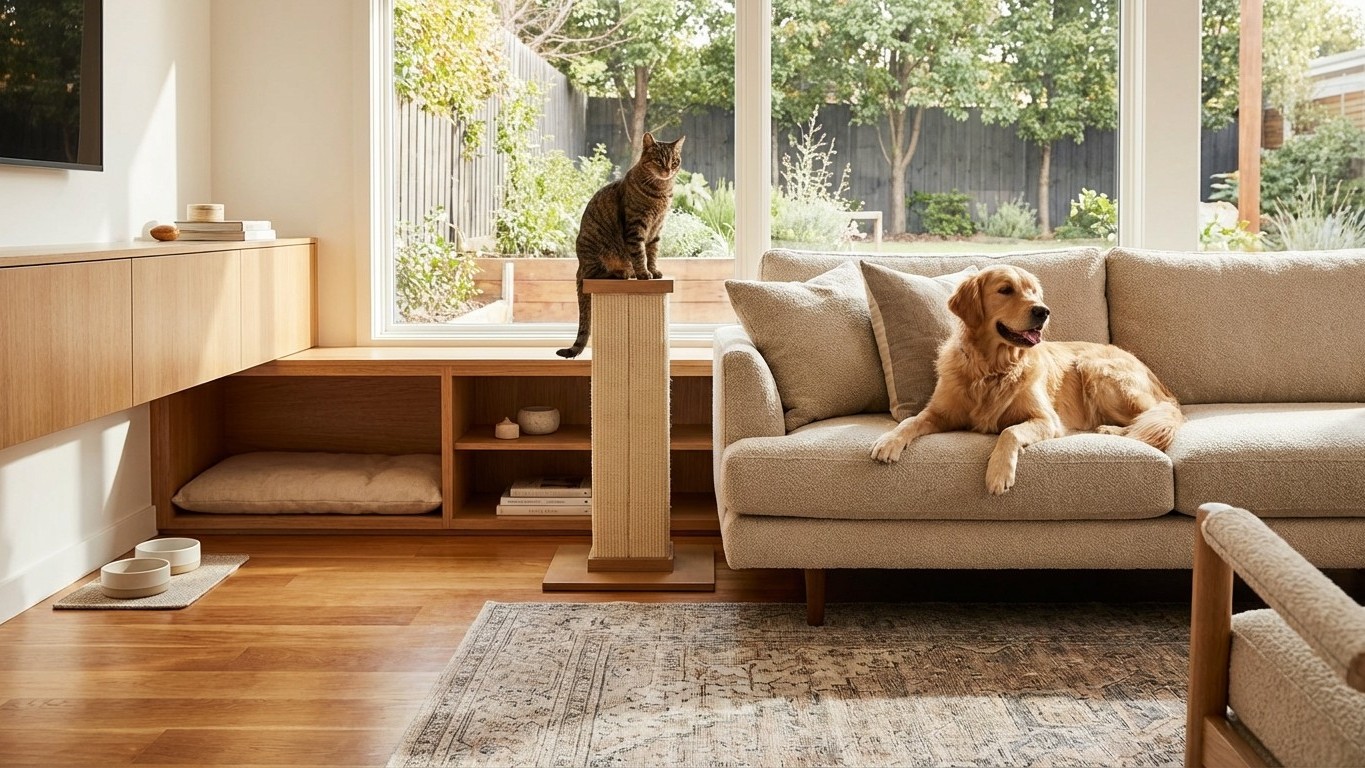
Seventy-one percent. That’s the share of American households that share their walls, floors, and sofas with at least one animal companion.
According to the 2024-2025 National Pet Owners Survey conducted by the American Pet Products Association, an estimated 94 million U.S. families own a pet.
Which means the old idea that good design and life with animals are incompatible isn’t just outdated, it’s statistically irrelevant. The real question isn’t whether you can have a beautiful home and a dog or a cat. It’s how to design one that genuinely works for everyone living under that roof.
The answer, as it turns out, has nothing to do with buying ugly furniture and resigning yourself to a lint-roller life.
Designing for pets doesn’t mean giving up your dream interior — it means creating a space that truly works for your entire household, and with thoughtful planning and the right materials, including pet friendly furniture for cats and dogs, it’s possible to build a home that is safe, stylish, and tailored to the needs of every species living there.
This guide is exactly that: a complete, expert-level roadmap to pet friendly home design that doesn’t compromise on aesthetics, longevity, or your animals’ wellbeing.
Why Pet-Friendly Interior Design Isn’t Optional Anymore
There’s a common design mistake that pet owners keep making: they buy the home they love first, then try to adapt it around their animals after the fact. The result is a constant battle, protective throws over the sofa, a litter box tucked awkwardly in the bathroom corner, scratch marks that appear almost overnight on that beautiful new hardwood floor. The fix is to invert the process entirely: design with pets as a primary user, not an afterthought, implementing thoughtful pet friendly living room design with cats and dogs from the very beginning of your planning process.
The population of pet dogs in the United States has grown from an estimated 52.9 million in 1996 to 87.3 million in 2025.
In 2025, there were 76.3 million cats in U.S. households.
These numbers tell a clear story: pets are a permanent fixture of American home life. And the design industry has responded.
With the increase of dogs and cats in the home, pet design has steadily entered interior projects, no longer simple accessories but integrated solutions: kennels coordinated with sofas, vertical paths for cats, retractable niches, and scratch-resistant materials chosen by interior designers. 2026 marks the definitive entry of pet-friendly into contemporary design.
The classic errors? Choosing materials based on looks alone (linen sofa + cat = a very short love affair), ignoring animal behavior when arranging furniture, and treating pet gear as an eyesore to hide rather than an element to integrate seamlessly. This is particularly true for essential items like litter boxes, which require thoughtful placement and design consideration. For inspiration on incorporating these necessities beautifully, explore cat litter box furniture ideas that transform functional pieces into stylish home elements. integrate.
The goal is to incorporate pet needs into the overall modern home design rather than treating them as an afterthought, which includes learning how to protect furniture from cats and dogs.
Once you shift that perspective, every decision from pet friendly home design materials to paint finish becomes simpler and smarter.
Understanding Your Animals’ Impact on the Home
Feline and Canine Behavior: What They Actually Do to Your Space
Pets interact with their surroundings in unique and often unpredictable ways. Cats will appreciate strategically placed perches or wall-mounted climbing shelves, while dogs are typically ground-bound but need ample space for movement. Both may be drawn to warm, soft areas like rugs or sofas, and both can produce messes such as muddy paws, fur, or occasional accidents.
Understanding this isn’t just helpful, it’s the foundation of every good design decision that follows.
Cats are vertical creatures. They scratch not out of spite but to mark territory, stretch muscles, and maintain their claws. A cat without an appropriate scratching surface will find one — usually your couch. Dogs, by contrast, are horizontal and social: they follow their humans, claim spots on soft surfaces, and track everything from the outdoors inside. Mud. Water. Hair. Endlessly.
Research in animal behavior shows that pets thrive when they have designated spaces that meet their instinctual needs: dogs need comfortable resting areas where they feel safe and can observe their territory; cats require vertical space, scratching surfaces, and private retreats; and both species benefit from consistent feeding areas and environmental variety that prevents boredom.
Safety, Hygiene, and Animal Wellbeing: The Non-Negotiables
A pet-friendly home protects animals from the home itself.
It’s easy to forget that the materials used to clean and maintain a home can pose risks to pets. Since pets explore the world with their mouths and paws, it’s important to select non-toxic cleaning and air freshening materials, and to avoid finishes and treatments that contain harmful volatile organic compounds (VOCs) or chemicals. Check labels to ensure paints, sealants, and flooring are safe for animals.
Houseplants deserve a specific mention here.
Common plants such as Aloe Vera, Snake Plant, Pothos, and ZZ Plant can be poisonous to dogs. Lilies, Tulips, Daffodils, and Azaleas, commonly gifted flowers, can be extremely poisonous to cats.
A beautifully styled shelf of greenery is only beautiful if it isn’t a health hazard. Research before you display.
Choosing Materials: Floors, Walls, Fabrics, and Finishes That Last
Scratch-Resistant, Stain-Proof Flooring That Looks Good Too
Flooring is where most pet owners feel the pain first. Claws, accidents, wet paws, dragged-in debris — the floor takes it all.
When choosing flooring for your home, don’t forget about your pets; you want flooring that looks good and is durable, easy to clean, and stain- and scratch-resistant.
The good news: the current market offers options that deliver exactly that without looking institutional.
Vinyl flooring is a popular option for families with pets. Luxury vinyl tile and vinyl sheet are highly durable, long-lasting, and resistant to moisture, scratches, and dents — and easy to maintain.
Current trends in pet-friendly vinyl flooring focus on natural, wood-look finishes and subtle stone textures. Popular designs closely mimic real hardwood or ceramic tile, and lighter grays, warm browns, and muted earth tones are especially favored for blending effortlessly with contemporary and rustic home styles.
Practically indistinguishable from the real thing, and entirely impervious to a Labrador at full sprint.
For those who won’t budge on real wood, engineered hardwood is the smarter play.
Engineered hardwood flooring has it all: scratch-resistant, water-resistant or waterproof, soft underfoot, warm, and with the same beautiful aesthetic as solid hardwood.
Look for floors with multiple layers of a factory-applied aluminum oxide finish — one of the strongest available, providing superior scratch resistance compared to standard polyurethane finishes.
And if you love wood but want something with an actual color advantage:
light wood floors with a low sheen hide pet hair and scratches better than darker, high-gloss floors; adding a distressed or hand-scraped finish can further hide imperfections.
Tile remains the indestructible classic.
For homes with pets, ceramic and porcelain tiles are completely waterproof, making them perfect for pet owners who deal with frequent accidents or spills. They are odor-resistant, keeping your home smelling fresh, and hard, dense tiles are nearly impossible to scratch.
The tradeoff is comfort, tile can be hard and cold underfoot, so consider adding area rugs or pet beds to create a more comfortable surface for your furry friends.
One underrated option:
cork flooring offers natural resistance to odors, scratches, and moisture, while also providing a cushioned surface that is comfortable for pets to walk and lay on.
Sustainably sourced and with a warm, organic texture, it fits beautifully into Scandinavian or biophilic interiors. For a deep dive into choosing the right surfaces throughout your home, the guide to pet friendly home design materials covers every category in full detail.
Fabrics and Upholstery: Durability Without Sacrificing Style
The sofa is the battlefield.
Leather, tightly woven fabrics, microfiber, velvet, outdoor fabrics, and slipcovers are all options pet owners should consider.
Each has its logic.
Full-grain leather is the long-game investment:
considerably more expensive, it can be a good solution where easy wiping is required — and leather will last a lifetime.
Microfiber is the everyday workhorse.
A high-quality microfiber can minimize the look of damage from a scratching cat, it shows punctures of the claw, but the fibers won’t pull, so it’s not nearly as obvious as damage to a traditionally woven fabric. It also withstands staining and is very durable in general.
Performance fabrics deserve serious attention.
Manmade non-cellulosic performance fabrics, including polyester, nylon, acrylic, and olefin, are known for their resilience and make excellent sofa fabrics for pet households.
Many furniture brands now label these explicitly as “pet-friendly” options. Structure matters too:
a well-structured sofa will hold up better over time, especially if your pet has a favorite spot to lay. Super plush, overstuffed sofas may seem cozy, but over time these designs will start to look misshapen from constant wear.
A practical styling trick that many designers use:
choosing rugs, throw pillows, and sofas in shades similar to the animal’s fur can camouflage shedding, providing a cleaner look and helping prevent the need for frequent vacuuming. A homeowner with a golden retriever can opt for beige or tan; a multi-toned or tweed fabric is a great choice for a calico cat.
Smart, and surprisingly effective.
Paint and Wall Finishes: Non-Toxic, Washable, and Pet-Safe
Walls get dirtier than most people admit. Nose prints at dog height. Splash-back near water bowls. The occasional territorial mark from a poorly placed litter box. The paint choice matters more than it seems.
Paints and finishes contain solvents and additives that evaporate into the air during and after application, known as volatile organic compounds or VOCs. In humans, high VOC exposure can cause headaches, dizziness, or respiratory irritation. In pets, the risk is even greater, especially for small animals, birds, or pets with pre-existing health issues.
The solution is zero-VOC or low-VOC formulas.
Choose finishes that are easy to clean and resist damage. Satin, eggshell, or semi-gloss finishes are typically more washable than flat or matte paints and offer better resistance to moisture and odors.
For something truly clean,
water-based zero-VOC paints (not just “low-VOC”) mean no harmful solvents are released into your home during the painting process, and the best options are nontoxic, non-allergenic, and specifically formulated to be safe for those with asthma or chemical sensitivities.
That’s good for your pets and for you.
Limewash paint, one of the oldest paint types in the world, made from crushed limestone — is naturally antibacterial due to its high alkalinity and creates a beautiful matte, slightly textured finish on interior walls.
Trending in design circles and animal-safe. Two wins in one.
Selecting Stylish, Animal-Proof Furniture
How to Choose Sofas, Chairs, and Seating That Actually Survive
Beyond fabric choice, proportions and construction define how furniture ages in a pet-heavy home.
Removable, washable covers simplify cleanup and help preserve a sofa’s appearance over time. Modular sofas allow you to rearrange or replace individual cushions, which helps even out wear and offers more cost-effective replacements than traditional designs.
A modular sectional that lets you swap a single stained panel is a far smarter investment than a one-piece sofa that requires full replacement after two years of cat traffic.
Elevated legs on seating serve a double purpose, they look sleek and make it easier to vacuum underneath, which is where pet hair collects in staggering quantities. Avoid low-slung sofas with fabric skirts that drag on the floor: they collect hair and are magnets for claws. For a full selection guide built around real-world durability, the resource on pet friendly furniture for cats and dogs is the next essential read.
Smart Solutions: Slipcovers, Protective Treatments, and Modular Design
Protection doesn’t have to be ugly.
Using protective sprays on furniture can make cleaning up after pets much easier, helping to keep stains and odors at bay and extending the life of your furniture. For areas your pet frequents, consider placing protective mats or throws that harmonize with your room’s decor. High-quality slipcovers are an excellent way to protect sofas and chairs and can be easily swapped out for cleaning or a style update.
The reversible cover idea is particularly worth noting:
consider reversible furniture covers tailored to match your decor on one side and your pet’s fur color on the other — handy for quick swaps when needed.
Practical and design-conscious at the same time. And for those wanting to go a step further, professional fabric protection treatments add an additional invisible layer against stains and odors, even on performance fabrics. More strategies for how to protect furniture from cats and dogs — including the best products and methods, are covered in full in the dedicated guide.
Multifunctional Furniture: Integrating Litter Boxes, Scratching Posts, and Beds
The integration era is here.
Pet beds, scratching posts, and litter boxes don’t have to be eyesores. Today’s market offers a range of pet furnishings that complement modern interiors — including hidden litter box furniture, stylish dog bed varieties, and designer dog crates.
From an entryway console with a hidden spot for kitty litter to a dog crate that passes as a stylish side table, pet parents can now find a bigger selection of on-trend, multipurpose, pet-centric furniture.
Custom-built furniture, like window seats with integrated pet beds or staircases with pull-out feeding drawers, can provide both function and style.
A clever pull-out drawer that can be slid out at mealtime keeps feeding stations clutter-free. Dedicating the bottom drawer of a kitchen island or installing one large enough to hold everything is a smart solution.
Designers today refer to this principle as “visual integration”:
the furniture dedicated to pets must not be added, but incorporated into the project. Practical approaches include choosing kennels coordinated with the sofa in neutral palettes and soft shapes, and using scratching posts as decorative vertical elements.
For DIY approaches and clever integrated designs, the guide to cat litter box furniture ideas offers detailed inspiration and step-by-step concepts.
Room-by-Room Design: Making Every Space Work
Living Room, Entryway, Bedroom: Strategic Zones for Humans and Animals
The entryway is ground zero. Every muddy paw, every wet dog, every post-walk debris situation starts here.
Consider entryway storage that includes hooks for leashes and bags, or a mudroom bench with a compartment for shoes and pet gear.
Indoor dog wash stations, complete with handheld showerheads, non-slip flooring, and built-in storage for shampoos and towels — make post-walk cleanups easier and reduce mess throughout the home.
Even without a full mudroom, a small designated mat, a dedicated hook system, and a waterproof bench can transform entry chaos into calm.
In the living room, the key is giving each species a clear territory.
If your cat loves looking out the window, place a comfy seat nearby. If your dog loves lounging by your side, a soft rug or small bed next to your couch might be perfect. Place soft, washable blankets in your pet’s favorite spots to protect furniture and offer them comfort.
This isn’t just animal welfare, it actively reduces the likelihood of your couch becoming the default pet bed.
Vertical space is non-negotiable for cats.
Wall-mounted furniture can take full advantage of vertical wall space, allowing for exploration without sacrificing square footage. Solid wood designs make these features durable, easy to clean, and able to blend seamlessly with the room’s existing design.
Vertical territory is also essential for cats’ mental and physical health.
A well-placed wall-mounted cat walkway doubles as a sculptural design element, it doesn’t have to look like a pet store display.
For complete room-by-room strategies with specific layout ideas for living spaces, bedrooms, kitchens, and more, the comprehensive guide to pet friendly living room design with cats and dogs walks through each space in detail.
Inspiration: What Design Integration Actually Looks Like
Sleek multipurpose furniture, well-crafted designs, and wellness-boosting sanctuaries are showing up more and more in homes — including in pet furniture and décor. From cat trees and scratchers to dog beds and crates, pet home décor continues to follow human décor trends, making it easier to seamlessly integrate into virtually every shared space.
Expect thoughtfully designed furniture that features lighter tone neutrals to evoke an open-space feel, and curved forms that create a calming sanctuary for pets while integrating seamlessly into the home.
The biophilic interior, natural materials, organic forms, earthy tones, happens to be one of the most naturally pet-compatible styles. Wood, rattan, stone, linen blends in neutral palettes: all of these work with animal fur rather than against it. A home styled around natural textures tends to show wear more gracefully, too. Character, not damage.
Daily Maintenance: Cleaning, Odors, and Prevention Routines
Handling Hair, Stains, and Odors Effectively
The secret to a fresh-smelling, clean home with pets isn’t superhuman effort — it’s the right tools deployed consistently.
Pet urine contains ammonia, bacteria, and uric acid crystals. These crystals can bond tightly to surfaces and become reactivated with moisture, which is why old stains sometimes smell worse on humid days. Cat urine odor tends to be especially strong due to higher concentrations of ammonia and other compounds.
Surface cleaning alone won’t cut it for serious incidents.
When it comes to removing pet smells, enzymatic cleaners specifically designed for pet messes are the most effective choice — they break down organic compounds and neutralize odors at the source
rather than simply masking them with fragrance.
Baking soda is a natural odor absorber — sprinkle it on carpets, pet bedding, or upholstery and let it sit overnight before vacuuming it up.
For air quality,
an air purifier with an activated carbon filter helps absorb persistent smells, making the air in your home feel fresher and cleaner. Maintain the air purifier in rooms where pets spend most of their time.
One critical note:
ammonia and vinegar should be avoided for pet stain removal on some surfaces — these substances can attract pets back to the cleaned area due to their strong scents, encouraging them to mark the spot again. Instead, opt for pet-specific cleaning products designed to neutralize odors without attracting pets.
And for painted walls that have taken a hit from repeated accidents,
a persistent baseboard or lower wall urine stain can be treated with odor-sealing paint.
Routines and Equipment That Make the Difference Long-Term
The most effective cleaning strategy is prevention.
Prevention is better than a cure: establish good hygiene practices for your pet, such as regular bathing and grooming, which can significantly reduce the likelihood of strong odors.
Regular grooming can significantly reduce the amount of shedding and dander that pets contribute to carpets and furniture. Brushing pets frequently to remove loose hair and dead skin cells helps minimize the accumulation of pet-related debris.
For litter boxes specifically:
litter boxes can contain bacteria, viruses, and even parasites, which can get stirred up into the air by a cat’s feet. Scoop out both urine and feces daily, and completely change out the litter at least once a week. Clean the box with soap and water before putting in new litter.
A clean litter box is not just a hygiene issue, it’s the single Biggest contributor to home odor in cat households. Integrate a beautiful litter box enclosure into your design rather than an open box in a corner, and you solve two problems at once.
Equipment worth investing in: a HEPA vacuum with strong suction designed for pet hair (run it at least twice a week on high-traffic areas), washable microfiber covers for furniture, and a robot vacuum for daily floor maintenance between deep cleans.
For hardwood floors, establish a regular cleaning routine, sweep or vacuum daily to remove loose pet hair and debris, and use a damp mop or microfiber cloth regularly following the manufacturer’s recommendations.
Sustainability, Ecology, and Long-Term Responsibility
Eco-Friendly Materials and Responsible Choices
A 2024 pet industry report showed that nearly 70% of millennial and Gen Z pet owners are willing to pay more for eco-friendly products.
The demand is real, and the supply has caught up.
In the past, pet owners often faced a dilemma: choose eco-friendly products or prioritize durability and style. However, as the market for sustainable pet products expands, people are finding they don’t have to compromise on quality or aesthetics when choosing sustainable options.
Sustainable flooring is taking charge, with bamboo, cork, and reclaimed hardwood options being among the most popular on the market.
For fabrics:
materials like vegan leather, organic cotton, and hemp prove to be just as tough as traditional materials, sometimes even tougher, and can bring new qualities to pet products, such as improved odor resistance, easier cleaning, and unique aesthetic appeal.
Bamboo, specifically, is known for its strength, durability, natural antibacterial properties, and hypoallergenic qualities. It is also stain-resistant and easy to clean, practically purpose-built for pet-heavy homes.
For walls,
if you love the warmth that wood wall panels bring, consider covering walls in this material and choosing panels made of sustainable materials like recycled wood, bamboo, or reclaimed wood. The investment is worth it — wooden wall panels are very easy to clean and stand the test of time.
And for paint,
traditional paints can release harmful chemicals or volatile organic compounds, opt for eco-friendly options, as these natural paints are better for your health and the environment and don’t negatively impact your indoor air quality.
Reducing the Ecological Footprint of Shared Living with Animals
The principle is simple: buy fewer, better things. A sofa chosen carefully for its material quality and durability will last a decade. A cheap one chosen for looks might need replacing in two years, sending significant waste to landfill.
Products like beds and collars are increasingly being designed to be taken apart and repaired, not thrown away.
Eco-friendly pet products are often safer and better for pets’ health and owners’ wellbeing, and they tend to last longer, which means less waste and more savings over time.
When selecting pet-specific items, look for third-party certifications: GOTS for organic textiles, FSC for wood products, CertiPUR-US for foam, and GREENGUARD Gold for low chemical emissions.
Some of the most forward-thinking pet furniture brands now offer collections in collaboration with internationally renowned designers, with a focus on sustainability using FSC-certified wood and ecological fabrics.
These aren’t niche choices anymore, they’re the direction the entire market is moving.
Creating a Beautiful, Harmonious Home That Works for Every Life in It
The homes that succeed at pet friendly home design share one trait: intention. Every surface, every fabric, every room arrangement was chosen with awareness of who actually lives there.
In 2025, pet product design has evolved to meet animal needs while complementing modern home decor. You no longer have to choose between functionality and style, today’s pet furniture seamlessly integrates into contemporary living spaces while providing superior comfort and utility.
Color strategy matters as much as material choice. Neutral palettes, warm whites, terracotta, sage, deep navy, tend to be far more forgiving than stark whites or very dark tones that show every hair and pawprint. Layered textures (a rattan side table, a wool throw, a linen-covered bench) absorb visual noise in a way that plain surfaces don’t. And strategic rugs placed in feeding zones, sleeping areas, and high-traffic corridors serve both comfort and protection simultaneously.
FAQ: Your Pet-Friendly Design Questions, Answered
How do you make an interior look elegant while still being adapted to pets? The key is integration, not compromise.
Interior designers talk about “visual integration”: the furniture dedicated to pets must not be added, but incorporated into the project.
Choose pet items in the same color palette as the rest of your décor, invest in quality over quantity, and use multifunctional furniture that serves both human and animal needs. A beautifully crafted litter box cabinet that reads as a console table, or a sculptural scratching post that functions as a decorative column, these elevate the space while meeting real behavioral needs.
Which materials are best for furniture that can withstand claws and shedding?
There’s a wide range of materials that might suit your needs as a dog or cat owner, from scratch-resistant to hair-repelling fabrics. Leather, tightly woven fabrics, microfiber, velvet, outdoor fabrics, and slipcovers are all options pet owners should consider.
For flooring, luxury vinyl plank and porcelain tile lead for durability; engineered hardwood with an aluminum oxide finish is the best option for those who love the warmth of wood. Avoid any loosely woven fabrics, open-weave textures, or delicate loop-pile rugs near cats.
How do you limit odors and stains when living with cats and dogs?
Look for enzyme-based cleaners that break down organic matter such as urine and feces — these products penetrate deep into fabrics and carpets, neutralizing odors at their source rather than simply masking them.
For prevention: regular grooming reduces shedding and dander significantly; washable slipcovers and covers mean nothing becomes permanently embedded; and HEPA air purifiers handle airborne particles. Most importantly, address accidents immediately, the longer a stain sits, the deeper it bonds.
Is it possible to have a stylish home on a budget that still works for pets? Yes. The best budget move is prioritizing wisely: spend on flooring (the surface everything rests on) and the primary sofa (the most-used piece), and save on decorative accessories. Slipcovers are significantly cheaper