
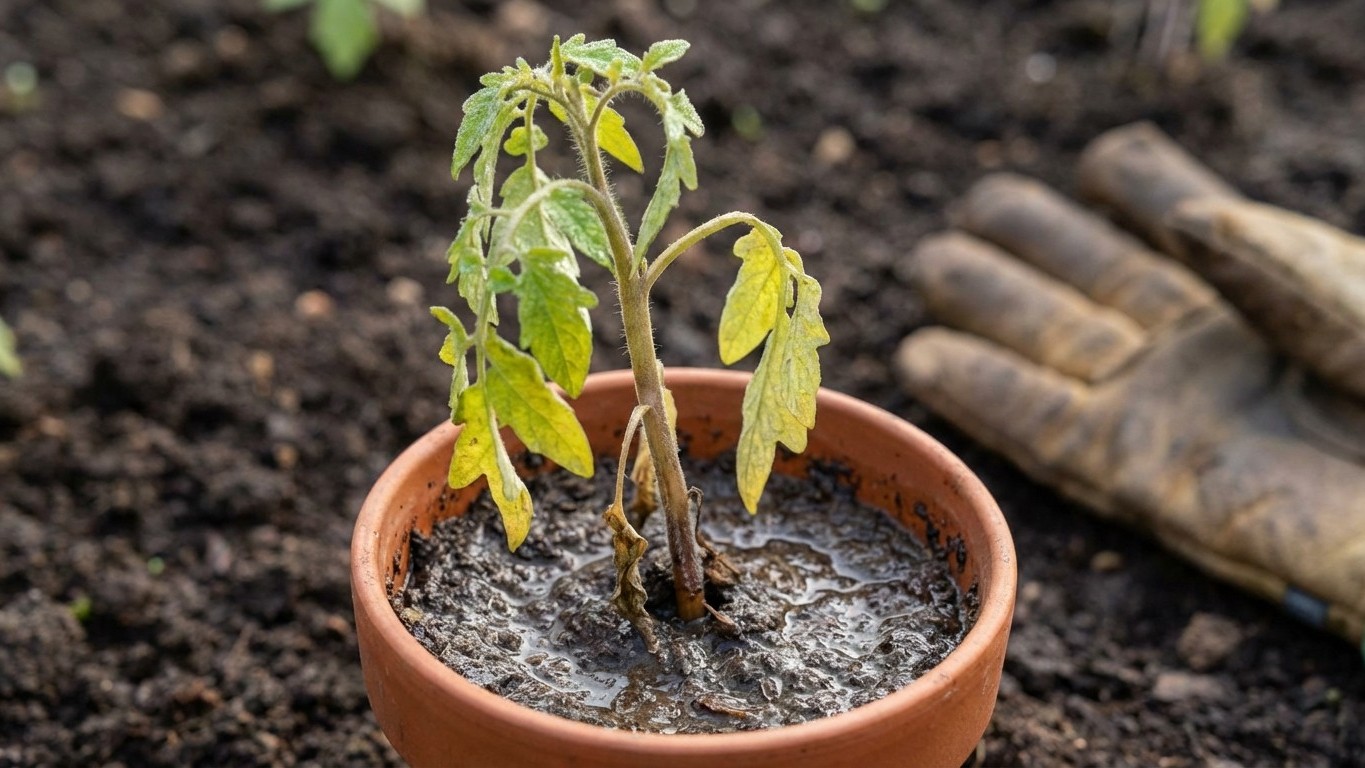
Fourteen seedlings. Two weeks. All gone. The story sounds like a Gardening horror tale, but it’s one that plays out in backyards across America every spring, and the culprit almost never is what you think. Loving your transplanted tomatoes too hard, too late in the day, is one of the fastest ways to kill them. And the maddening part? They show you the exact same symptoms whether they’re drowning or dying of thirst.
Key takeaways
- Wilting tomato leaves from overwatering look identical to underwatering—creating a deadly feedback loop most gardeners fall into
- Evening watering in cool April soil starves roots of oxygen and creates the perfect environment for fungal diseases to thrive
- A one-inch finger test and a shift from 7 PM to 7 AM watering can be the difference between total loss and a thriving garden
The Trap: Watering Looks Like Caring
Spring tomato transplants are fragile things. They’ve just been yanked out of the only environment they know, their root system is compromised, and they’re adjusting to new soil, new temperatures, new light. Transplant shock happens the moment you move a tomato plant, because no matter how careful you are, you will disturb the root system and cause some root damage that affects how the plant absorbs water and nutrients. So the instinct to compensate with extra watering is completely human. Completely understandable. And in many cases, deadly.
Tomatoes have a reputation for being thirsty plants that appreciate regular watering and consistently moist soil. However, there is such a thing as overwatered tomatoes, leading to serious root issues and potential plant death. The distinction between “consistently moist” and “waterlogged every evening” is where most home gardeners get tripped up, especially in April, when cool nights slow down the soil’s ability to drain and dry between waterings.
What’s Actually Happening Underground
Here’s the biology that makes overwatering so lethal. The root cause of plants being affected by overwatering is mainly due to oxygen starvation of the root system. Root systems need oxygen as well as water and nutrients in order to grow properly, and when the soil is waterlogged, oxygen cannot get to the roots, leading to the plant “drowning.” Think about that for a second: you’re not giving the plant too much water, you’re giving it too little air.
The primary cause of root rot is waterlogged soil, typically due to overwatering. The lack of oxygen and excess moisture create the perfect environment for fungus to spread, killing the roots and turning them to mush. Rot can spread quickly from the roots up the stem, leaving it soft and mushy. By the time you see trouble above the soil line, the damage below is often already irreversible, especially in young transplants that haven’t had a chance to establish any resilience.
The cruelest twist? Both overwatering and underwatering can cause drooping tomato plant leaves due to root health issues. Most gardeners would think that wilting leaves signify that the plant is too dry. But when tomato roots are overwatered, they simply can’t breathe, leading to those droopy leaves. So you see the wilting, reach for the hose again, and accelerate the very process that’s killing your plants. It’s a feedback loop that ends in a dead bed.
Why Evening Watering Makes Everything Worse
Watering at night feels practical. You’re back from work, the heat of the day is over, you have time. But for tomatoes, especially freshly transplanted ones in cool April soil, the timing stacks one problem on top of another.
Darkness means no sunlight, so water on leaves doesn’t evaporate quickly. Cooler night temperatures further slow down any drying process. This prolonged moisture on the foliage gives fungal spores ample time to germinate, infect the plant, and spread. Soil-borne fungal diseases can be a major problem for tomatoes, and evening moisture is essentially a welcome mat for them. Fungal diseases can thrive in moist environments, and night-time watering can increase the risk of these diseases. Reduced air circulation at night can exacerbate disease problems.
The best time to water tomato plants is early in the morning. This allows the water to reach the roots before the heat of the day and reduces evaporation. Morning Watering also helps leaves dry out quickly, reducing the risk of fungal diseases that can thrive in damp conditions. A simple shift, moving your watering routine from 7 pm to 7 am, makes a measurable difference in plant health over the course of a season.
What the Right Approach Actually Looks Like
Newly transplanted tomatoes do need regular moisture, that part is true. For the first week or ten days after transplanting, water daily. Once roots are established, reduce watering to three to four times a week. The goal is not soaking the soil repeatedly; it’s maintaining consistent moisture while letting the top layer breathe between sessions.
The simplest diagnostic tool any gardener has? Their finger. Stick your finger an inch down to check before watering; if it feels wet or smells moldy, you may be overwatering. Established plants only require water when the soil is dry to a depth of 2 to 3 inches. That’s a two-second check that can save an entire bed of tomatoes.
It’s important to water deeply and less frequently to encourage strong root development, rather than shallow, frequent watering. Deep, infrequent watering trains roots to grow downward in search of moisture, which builds the kind of resilient root system that can survive a dry week or an unexpected heat spike. Shallow, nightly watering does the opposite: it keeps roots close to the surface, dependent, and vulnerable.
Mulching is worth adding to the equation. Mulch keeps the moisture in, the weeds out, and the soil temperatures regulated. It also Prevents soil from splashing up on your plants, lowering your risk of disease. A two-inch layer of straw around the base of each plant does more for moisture management than any watering schedule, and it means you water less often while the plants stay healthier.
If you’ve already lost plants this way and are replanting, there’s one more step worth taking: the fungus that causes root rot will remain in the soil, so it’s best to avoid planting anything in the same spot for a while. Amend with fresh compost, improve drainage if the bed tends to hold water, and start with a clean slate.
The deeper lesson here isn’t really about tomatoes. It’s about the difference between responding to what a plant looks like and understanding what it actually needs. Wilting tomatoes in April might be asking for less water, not more, and a later, cooler evening might be the worst time to give it to them. The gardeners who figure that out tend to be the ones hauling in armloads of fruit come August. The rest water every evening and wonder what went wrong.