
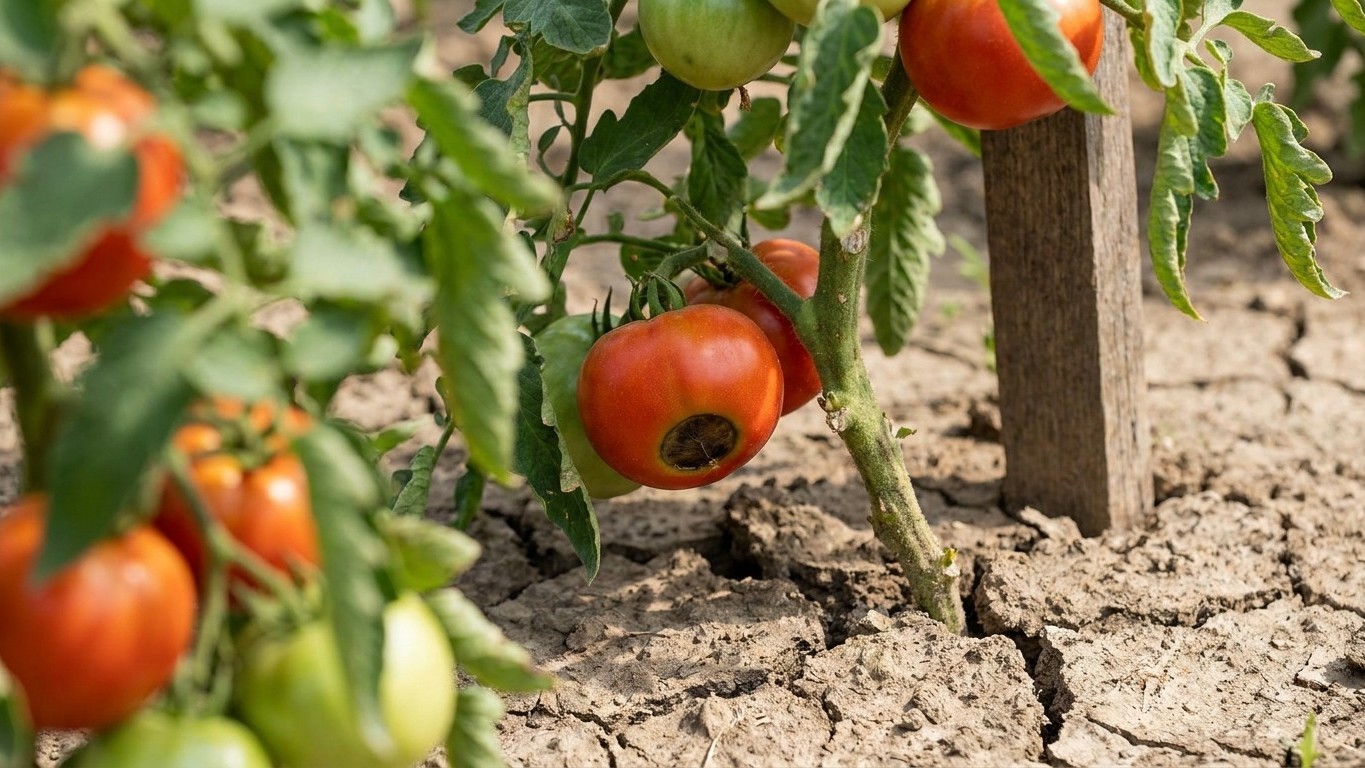
Blossom End Rot has nothing to do with how much calcium sits in your soil. That leathery brown-black patch spreading across the bottom of your tomatoes shows up even in gardens where the dirt is practically made of crushed eggshells. A nursery grower in upstate New York finally cleared this up for me after a decade of burying shells like some kind of ritual offering to the tomato gods. The problem was never supply. It was transport.
Calcium moves through a plant exclusively via water, riding along in the xylem stream from roots to leaves to fruit. Eggshells break down slowly, sometimes over years, releasing calcium carbonate at a pace so glacial it barely registers during a single growing season. Even when the mineral is technically present in the soil, a tomato plant can’t access it unless conditions for uptake are close to perfect. And those conditions, according to the grower who set me straight, are the part almost nobody talks about at the garden center.
Key takeaways
- A decade of burying eggshells never stopped blossom end rot—until one conversation with a nursery expert changed everything
- Calcium sits in soil but remains unreachable unless one critical plant system works perfectly
- The real fix has nothing to do with amendments and everything to do with how you water
Why Calcium Gets Stranded in the Soil
Inconsistent watering is the single biggest culprit. A tomato plant that dries out between waterings, then gets soaked, then dries out again, experiences wild swings in root pressure. Calcium uptake depends on steady moisture because the mineral only travels dissolved in water moving upward through the plant. Let the soil go bone-dry for even two or three days during fruit set, and you’ve effectively shut the valve, regardless of how much calcium is sitting six inches away in shell fragments.
Excess nitrogen compounds the issue. Fast-release fertilizers heavy in ammonium nitrogen push plants into rapid leafy growth, and that growth competes directly with fruit for the plant’s limited calcium supply. Leaves are closer to the roots and transpire more, so they win the race almost every time. The Cornell University Vegetable Program, which has studied blossom end rot extensively, notes that over-fertilizing with nitrogen is one of the most common grower mistakes tied to the disorder, right alongside irregular irrigation.
High salt concentration in soil, whether from over-fertilizing or naturally salty water, also interferes with root absorption. Roots take up water through osmosis, and when the surrounding soil solution is too concentrated with salts, water movement into the root slows down. Less water movement means less calcium transport, full stop. None of this has anything to do with how much calcium exists in the ground. It’s entirely about whether the plant’s plumbing system can pull it through.
The Eggshell Myth, Explained by Chemistry
Here’s the part that stung a little: eggshells are almost entirely calcium carbonate, the same compound found in agricultural lime. Breaking it down into plant-available form requires acidic conditions or microbial activity working over an extended period, and most home gardens simply don’t provide enough time within a single season. A study from the University of California’s Division of Agriculture and Natural Resources on blossom end rot management points out that soil calcium deficiency is rarely the actual cause, since most soils already contain adequate calcium reserves. The disorder is a water-and-uptake problem dressed up as a nutrient problem.
Composting eggshells first, then grinding them to a fine powder, does speed things up somewhat. But even powdered shells release calcium slower than gypsum or calcium chloride sprays, which is why commercial growers rarely rely on shells for anything beyond marginal soil amendment. I’d tossed literal pounds of shells under my plants over the years, watched the rot show up anyway, and blamed the eggs for not being calcium-rich enough. The eggs were fine. My watering schedule was the actual disaster.
What Actually Changes the Outcome
Mulching turned out to be the single most effective fix in my own garden, and it’s the first thing that grower recommended. A three-inch layer of straw or shredded leaves keeps soil moisture even through hot afternoons and cool nights, smoothing out the swings that disrupt calcium transport. Drip irrigation on a timer does similar work by removing human inconsistency from the equation entirely. No more forgetting to water for four days, then dumping a full watering can on parched roots.
Switching to a balanced fertilizer with lower nitrogen content, or one specifically formulated for tomatoes, reduces the leafy competition that starves developing fruit of calcium. Foliar calcium sprays exist and some growers swear by them, though research from Cornell suggests they offer limited benefit since calcium moves poorly through leaf tissue into fruit anyway. Soil-based fixes paired with consistent watering outperform sprays in most controlled trials.
Container-grown tomatoes face this problem more acutely than plants in the ground, since pots dry out faster and swing between wet and dry extremes within hours rather than days. Anyone growing tomatoes on a patio or balcony should treat consistent watering as non-negotiable, not optional. A self-watering container or even a simple saucer that holds reserve moisture can make a bigger difference than any soil amendment.
The first tomato plant I mulched properly and watered on a fixed schedule, instead of whenever I remembered, produced a full season without a single rotted bottom. No new eggshells were involved. The old ones I’d buried years earlier were still down there, mostly intact, quietly waiting for a chemistry that was never going to arrive fast enough to matter.