
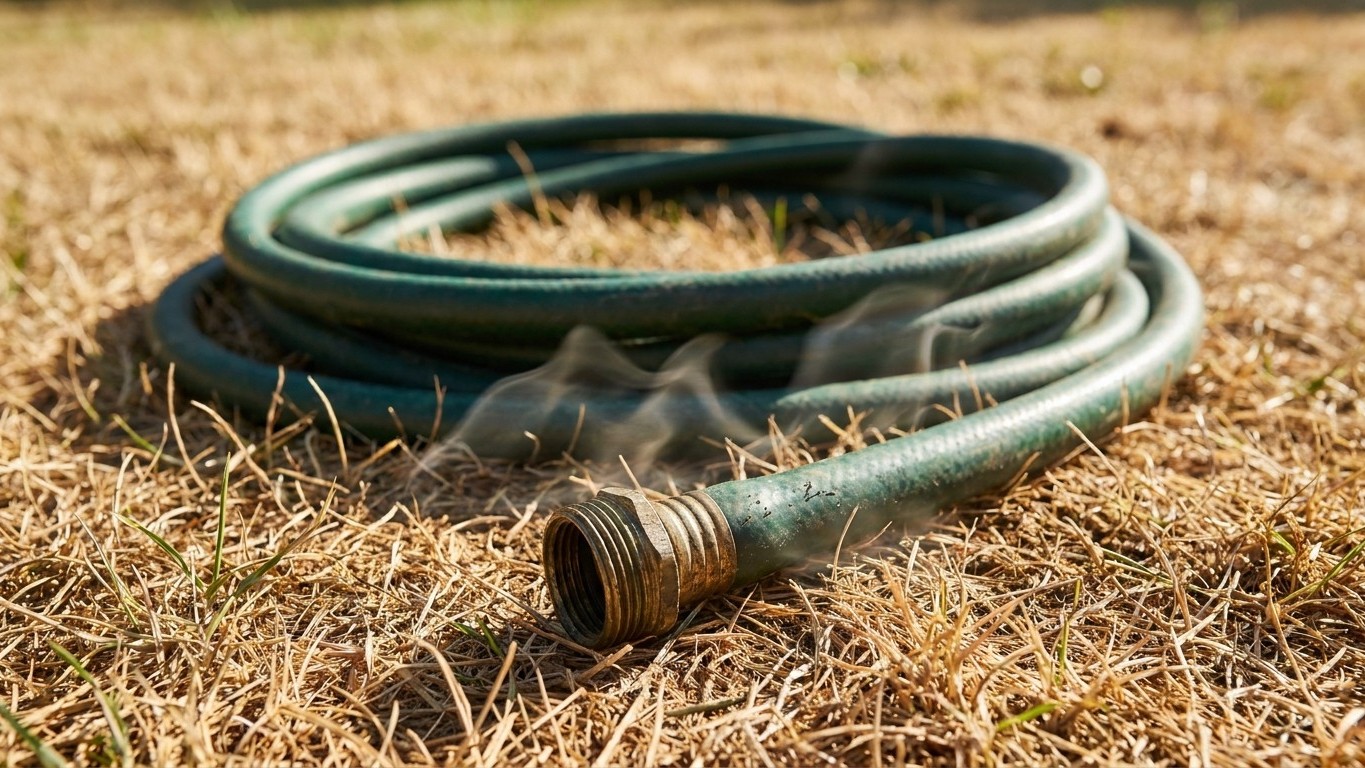
The water that sits in a garden hose after a full day of summer sun is nothing like the water coming out of your kitchen faucet. That’s the blunt warning behind a wave of testing by the Ecology Center in Ann Arbor, Michigan, whose researchers have spent over a decade cutting open hoses and analyzing what leaches into the water trapped inside them. Their conclusion, echoed by gardeners and toxicologists alike, is simple: those first few liters that spill out after a hose has been baking on the lawn can carry a genuinely unsettling chemical cocktail.
Key takeaways
- Garden hoses left in the sun concentrate toxic chemicals at levels far exceeding EPA safety standards
- Some hose manufacturers are recycling contaminated e-waste plastic, introducing heavy metals and bromines into your yard water
- One simple habit reduces chemical exposure by flushing out the most contaminated water before use
What’s actually leaching into that first burst of water
The mechanism comes down to basic chemistry. Most garden hoses are made from PVC, a plastic that’s rigid on its own until manufacturers soften it with plasticizers, mainly phthalates. PVC is rigid on its own, so manufacturers add plasticizers, primarily phthalates, to make it soft and flexible. The problem is that phthalates don’t bond chemically to the plastic; they sit within the matrix and migrate out over time, especially under heat and UV exposure. every hour that hose lies uncovered in direct sunlight, it’s quietly cooking its own plastic into your water supply.
The numbers from actual lab testing are striking. In one round of sampling, the Ecology Center found levels of lead 18 times higher than the federal drinking water standard and BPA levels about 20 times higher than the standard imposed by the National Safety Foundation in water from a garden hose it tested. A separate leaching test found lead in half of the hoses whose water was tested, with three samples containing 13, 19, and 20 ppb lead, against an EPA action level of 15 ppb for drinking water. BPA showed up too: BPA as high as 87 ppb was found in two of the hose water samples.
Phthalates are the chemical group researchers flag most often, and for good reason. Phthalates were found in 75% of PVC hoses tested, while bromine over 1000 ppm and antimony over 500 ppm were found in half of PVC hoses, with analysis suggesting recycled electronic waste vinyl was used in a number of PVC hoses, resulting in high levels of bromine, lead, antimony, and tin. That last detail is the one that surprises most people: some hose manufacturers have apparently been sourcing recycled e-waste plastic, meaning the flexible tubing coiled in your yard may share DNA with discarded circuit boards. Gardening hoses appear to be a dumping ground for highly contaminated e-waste, with over one-third of the hoses tested carrying the fingerprint of recycled e-waste being used.
Why the sun makes everything worse
Temperature is the accelerant here, not just an incidental detail. “The two critical factors are time and temperature,” according to the Ecology Center’s research director, who noted that leaching can begin after water has remained stagnant in the hose for an hour. Leave that hose coiled on the grass under a July sun for an entire afternoon, and you’ve essentially built a small chemistry experiment in your own backyard. Testing found that water left sitting in a PVC hose in the sun contained phthalate levels 4 to 20 times higher than what is considered safe for drinking water, and the first water out of the hose after it has been sitting in the sun is the most contaminated.
There’s also a less glamorous consequence of that heat: stagnation breeds more than chemicals. Warm, stagnant water in a garden hose can create an environment for algae and bacteria growth, which can lead to unpleasant odors. So that faintly rubbery, slightly sour smell you associate with “hose water” isn’t just nostalgia from childhood summers. It’s often a sign of biological growth mixing with plastic byproducts, a combination nobody wants near a salad bowl.
The fix takes about five seconds
The good news is that the most contaminated water is concentrated almost entirely in that initial surge, not the whole volume flowing through the hose. Researchers have landed on remarkably consistent, low-effort advice. Always let your hose run for about five seconds before using it, since the water that’s been sitting in the hose will have the highest levels of chemicals. That single habit, run it before you drink it, fill a kiddie pool, or spray your tomatoes, flushes out the worst of the leached compounds and replaces them with fresh water straight from the municipal line.
Storage matters just as much as flushing. Storing your hose in the shade matters because heat from the sun can increase the leaching of chemicals into the water, and if you do store it in the sun, you should let the water run cool before use. A hose reel tucked against a shaded wall, a garage hook, or even a simple decorative cover can cut down dramatically on how hot that trapped water gets between uses.
Labels are worth reading closely, though they don’t tell the whole story. If cost is a factor, look for labels such as “Lead-free” and “Drinking Water Safe,” but be careful of labels such as “lead-free couplings,” since these imply nothing about the hose itself, only the metal fittings at each end. Even hoses marketed as safe aren’t guaranteed to be phthalate-free: ten hoses labeled “Drinking water safe” were free of significant lead, bromine, antimony, and tin, yet 30% of them still contained phthalates. Polyurethane and rubber hoses sidestep the phthalate problem almost entirely, since polyurethane hoses labeled safe for drinking contained no chemicals of concern in that same round of testing.
There is one genuinely encouraging trend buried in a decade of testing: things have gotten better, not worse. The study found a large reduction in the number of metal hose fittings with elevated lead, from 40% of tested hoses in 2011 to 15% of hoses in 2015. Consumer pressure and tighter labeling seem to be nudging manufacturers toward safer formulas, even if the average hose sold at a big-box store still isn’t something you’d want your kids drinking from on a hot afternoon. The safest move remains ridiculously simple: keep the hose in the shade, run it for a few seconds before every use, and save the actual drinking water for a glass filled at the tap.
Sources : toxicfreefuture.org | turfmechanic.com