
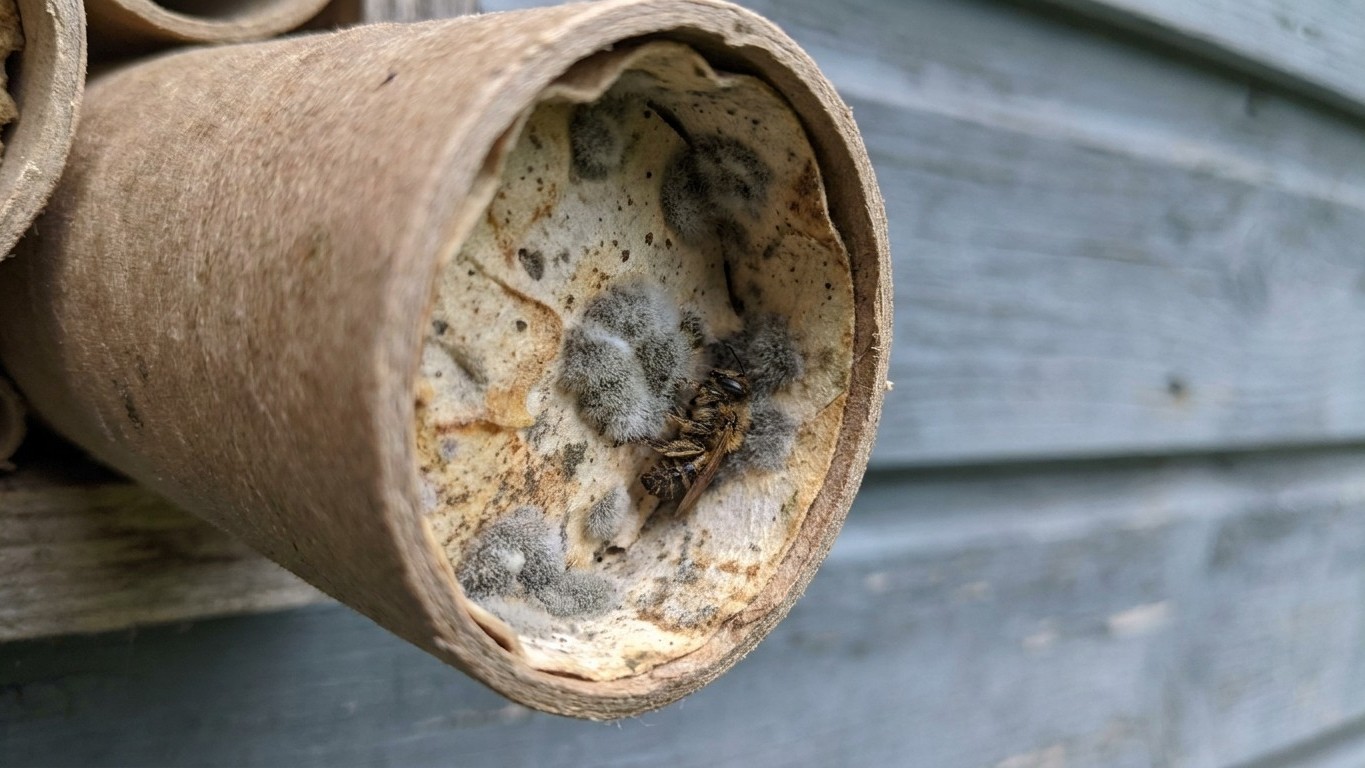
The tubes weren’t empty. But they weren’t full of bees either. What had formed inside those neat little cardboard cylinders, mounted flush against a cold, shaded exterior wall all winter, was a soft gray fuzz creeping along the paper liners, damp mud plugs that had never dried, and a handful of larvae that never made it past the chalky, mummified stage. No emerging mason bees. No cheerful buzz of activity in April. Just mold.
That outcome isn’t bad luck. It’s physics, and biology, doing exactly what they’re supposed to do when a nesting structure is put in the wrong spot.
Key takeaways
- Mason bees are cold-blooded and need direct morning sun to reach flight temperature—a north wall keeps them grounded
- Shade traps moisture inside tubes, creating the perfect breeding ground for mold that kills developing larvae
- One simple relocation to a south-facing wall, plus three small design tweaks, transforms failure into a thriving pollinator sanctuary
Why the Wall You Choose Decides Everything
Solitary bees, the mason bees and leafcutters that insect hotels are built to attract, are ectothermic. They can’t generate their own body heat the way a bird or a mammal can. Mason bees need direct morning sun to reach flight temperature, around 55°F, and a north-facing house stays too cold most mornings. A wall that never sees the sun isn’t just inhospitable, it’s functionally invisible to a female bee scouting for a nest site.
Placing the nesting units on the south-facing side of a building is key, since the bees need to warm up to around 80 degrees for their wings to function, and their dark bodies can absorb heat even when it’s only in the high 50s outside. That warmth does double duty. It gets the bees moving, and it dries out the tubes overnight condensation before it becomes a problem. When a hotel receives sunlight from early morning, it heats up quickly, the night’s humidity dries out, and it becomes active, letting insects start their day earlier and gather food. Flip that equation and shade takes over. A hotel in permanent shade remains cold and damp, and for the insects that means more fungi, more difficulty developing, and less activity.
What Actually Grows in a Damp, Sunless Tube
North-facing placement isn’t the only mistake that produces this result, but it’s one of the most common, largely because gardeners treat insect hotels like garden ornaments rather than functioning nest boxes. A wall that’s shaded and exposed to weather without warmth becomes a moisture trap. Mold becomes a problem when moisture isn’t wicked away from the nest, and because mason bees can live for ten months inside the cavity, any material that prevents water from leaving speeds up trouble. That’s a long time for a paper tube to stay damp before spring arrives.
The wood or cardboard itself often takes the hit first. Mold happens when moisture is trapped inside the housing, and seeing it usually means reassessing the rain cover or switching to more breathable materials. Once fungus takes hold, it doesn’t stay contained. It spreads along the tube walls, coats pollen stores meant to feed developing larvae, and turns what should have been a nursery into a compost heap. Water accumulating inside a bee hotel, whether from rain, snowmelt, or nearby irrigation, can lead to mold growth, structural damage, and ultimately harm the bees living inside.
There’s a second, quieter failure mode too, and it has nothing to do with rot. A shaded, north-facing hotel often just sits empty. Bees never move in at all, because they never register it as viable real estate. North- and west-facing locations rarely fill. So the “what formed inside” isn’t always mold, sometimes it’s simply nothing. Dust. Cobwebs. A vacant hotel with a great location for humans and a terrible one for pollinators.
Fixing It Without Starting Over
The good news: relocating an insect hotel is a five-minute job, not a rebuild. The recommended orientation is south or southeast, which ensures the hotel receives direct morning sunlight, warming it up and encouraging the bees to become active earlier. That single change addresses both the cold-start problem and the moisture problem at once, since a warm hotel dries faster between rain events.
Height matters almost as much as direction. Placing the structure three to five feet above ground keeps it clear of splashback and curious pets, and a bit of tilt helps too, since mounting the cavities tilting slightly down will prevent rainwater from entering and creating harmful mold. A roof overhang isn’t optional decoration either. The hotel needs to be protected from strong winds and heavy rain, with a roof or overhang extending at least two inches to keep it dry.
Material choice closes the loop. Swap anything plastic or glass for options that breathe. Untreated wood blocks, bamboo canes, and reeds are breathable choices that help prevent mold and fungus, while plastic, glass, or metal tubes trap moisture and can lead to diseases that kill developing larvae. And don’t treat the hotel as a permanent, maintenance-free fixture. Inspecting for mold at the end of each summer, removing and replacing tubes, and swapping nesting blocks every couple of years keeps mite and parasite buildup from taking over.
A hotel screwed to the wrong wall isn’t a lost cause, it’s a diagnostic. The mold, the empty tubes, the failed larvae all point to the same fix: chase the morning sun, add an overhang, and give the wood room to breathe. Move it before next February, before the first mason bees start scouting for a place to raise their young, and that same structure that grew nothing but fungus one year can be humming with activity by the following spring.
Sources : bloomingexpert.com | backyardgardenlover.com