
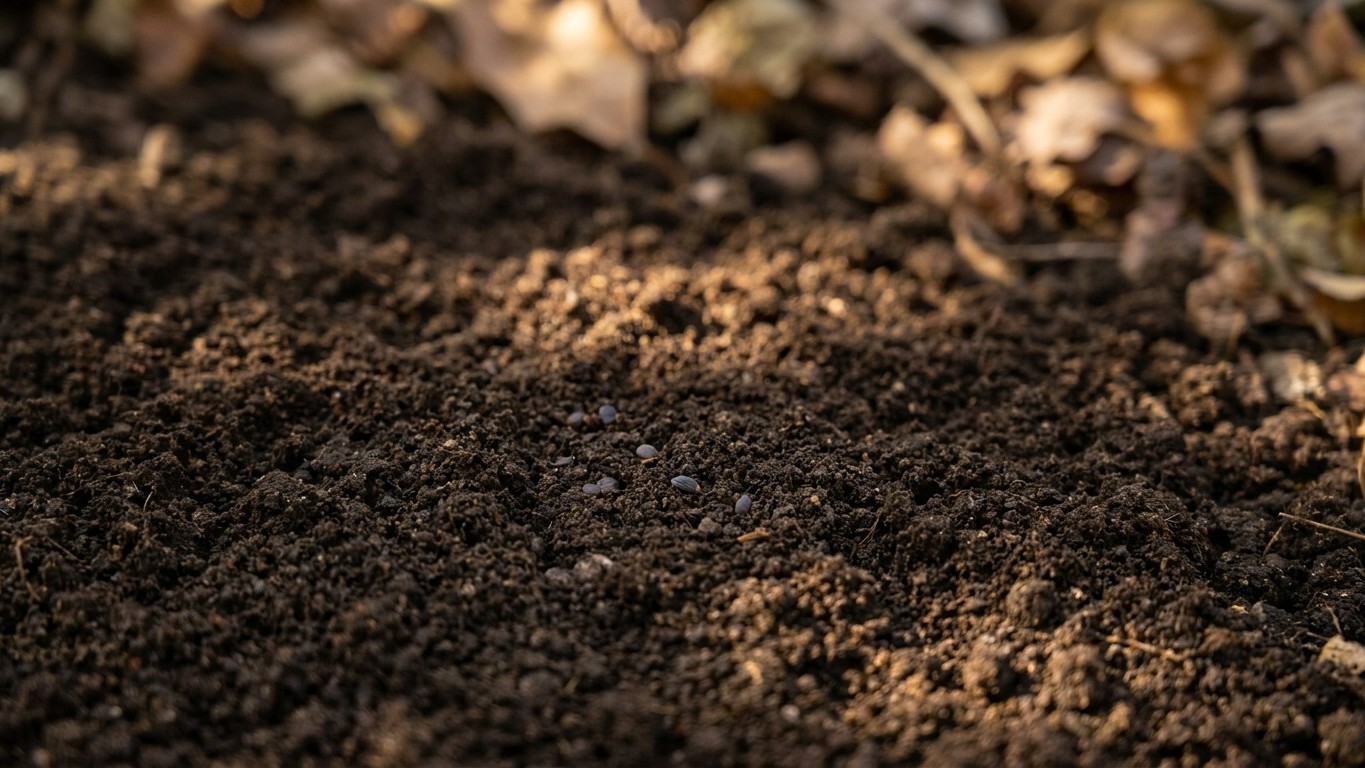
Ten days is usually enough to see the first green fuzz of phacelia poking through freshly raked soil. Not this time. A gardener who sowed Phacelia tanacetifolia in mid-September to blanket a few empty vegetable beds found nothing but bare dirt a week and a half later, and the reason has less to do with bad luck than with a calendar that had already closed.
Phacelia is often praised as the easiest green manure around: fast, cheap, and generous with biomass. But “fast” has limits, and those limits are set by soil temperature and daylight, not by wishful thinking.
Key takeaways
- A phacelia sowing can sit dormant for weeks longer than expected, and ten days of bare soil doesn’t mean failure—it might mean you’re watching the normal germination window unfold
- September’s shrinking daylight and cooling soil create a narrow window: germinate too slowly and the plant runs out of time to establish before frost arrives
- There’s a hidden temperature sweet spot for phacelia—too cold or too warm and seeds simply won’t sprout, making late-season timing riskier than gardeners realize
Why Ten Days Wasn’t Enough
Under good conditions, phacelia seed needs real patience before it shows itself. Lacy phacelia seeds germinate in 15 to 30 days without treatment, and germination is inhibited by high and low temperatures, with seeds growing best when soil temperatures sit between 40 and 68°F. Ten days into a September sowing simply falls inside the normal waiting window, sometimes at the very start of it. That alone explains a lot of the disappointment.
What makes a mid-September sowing riskier isn’t the germination window itself, it’s the shrinking runway that follows. Phacelia typically flowers 6 to 8 weeks after sowing, and even when the goal is just ground cover rather than bloom, the plant still needs several uninterrupted weeks of mild weather to build the dense, weed-smothering canopy it’s known for. Sow in the second week of September, wait the better part of a month for seedlings to establish, and there may only be a handful of decent growing weeks left before the cold arrives. Some guides count the second week of September as already pushing the edge, with the safer intercropping window running from late July to early September, sown at 8 to 10 kg per hectare in field conditions, a rate that scales down for garden beds but underlines the same point: earlier is better.
Cold does the rest of the damage. Phacelia has a reputation for toughness, but it isn’t indestructible. It traps residual nitrogen in the soil, structures the surface layer, and freezes as soon as temperatures drop to -5 to -6°C (roughly 21 to 23°F). In many temperate regions, a September planting is racing against the first real cold snap of autumn, and germination alone can eat up half the available time before that snap arrives.
What Actually Happens in the Ground
Bare soil isn’t neutral. It’s actively losing something every week it sits empty. Cover crop advocates point out that exposed earth sheds organic carbon faster and is far more vulnerable to erosion and nutrient loss than soil with living roots in it, which is exactly why gardeners reach for a quick green manure in the first place. The irony of a late phacelia sowing is that the bed stays bare during precisely the weeks it was meant to be protected.
Seed-to-soil contact matters more than most people expect, too. The seeds are small and need good seed-to-ground contact for germination, and they also need darkness, not sunlight, to sprout. A seed sitting on top of compacted or crusted September soil, disturbed by early autumn rain or left slightly exposed, can simply stall. Add cooling soil temperatures on top of that, and ten days without visible growth stops being surprising and starts being expected.
Salvaging a Late-September Bed
None of this means the season is a write-off. A few adjustments can still turn a stalled sowing into usable cover before the first hard frost.
- Rake lightly and re-firm the seedbed, then water gently to restore the seed-to-soil contact that thin, dry topsoil often loses by mid-September.
- Switch expectations from “flowering cover crop” to “winter-kill mulch”: even a thin, un-flowered stand of phacelia still contributes root structure and a bit of surface protection before it collapses with the first freeze.
- Consider a faster-germinating companion or substitute. White mustard, for instance, is prized precisely because it sprouts within days rather than weeks, making it a more forgiving choice once September is already underway.
- Blend in a legume like crimson clover or vetch if nitrogen enrichment matters, since phacelia alone doesn’t fix nitrogen from the air, it only recycles what’s already in the soil.
That last point deserves emphasis, because it’s a common misconception. Phacelia does not fix nitrogen from the air, and if the goal is to add nitrogen to the system, a legume such as clover, fava bean, or vetch needs to be part of the mix, since phacelia alone recycles nitrogen rather than contributing new nitrogen. For a bed that simply needs covering before winter, that’s fine. For a bed that needs feeding, it’s worth pairing phacelia with something leguminous.
Getting the Timing Right Next Year
The real fix isn’t a trick for late September, it’s a earlier date circled on next year’s calendar. The dependable sowing window for phacelia as a cover crop runs from late July to early September, which gives the plant enough warm soil and daylight to establish before growth slows. Gardeners in milder climates have more room to experiment, but even there, the first two weeks of September function as a soft deadline rather than a suggestion.
One detail worth remembering for next season: phacelia’s germination isn’t just slowed by cold, it can be blocked entirely at the other extreme. Germination rates increase with rising soil temperatures above 37° to 68°F, but at soil temperatures greater than 68°F, the percentage of germination decreases, with total inhibition occurring at 86°F. That narrow band, cool enough to sprout but not cold enough to stall, is exactly why late-summer sowing works so well and late-September sowing so often disappoints.
Sources : ncbi.nlm.nih.gov | ecofriendlyhomestead.com