Most bare hollies are simply the wrong sex. Holly plants are dioecious, meaning each plant is either male or female, and only the females bear berries. A glossy, vigorous male will never produce a single red fruit, however well you treat it.
No fertilizer, pruning trick or pep talk will change that.
- Only female holly plants produce berries, and they require a male plant nearby for pollination.
- Some cultivar names reverse expected patterns—’Golden King’ is female and ‘Golden Queen’ is male.
- Improper pruning in late winter removes flower buds, while deep shade and heavy nitrogen fertilizer reduce fruiting.
The male-and-female problem
Even a female holly needs company. Her flowers must be pollinated before they can swell into berries, and the pollen comes from a male plant carried by bees and other insects. Keep a male within a few hundred feet at most (a neighbor’s tree counts, which is why hollies in dense suburbs often fruit while those on isolated acreage sulk). One male can serve several females, so you rarely need more than one.
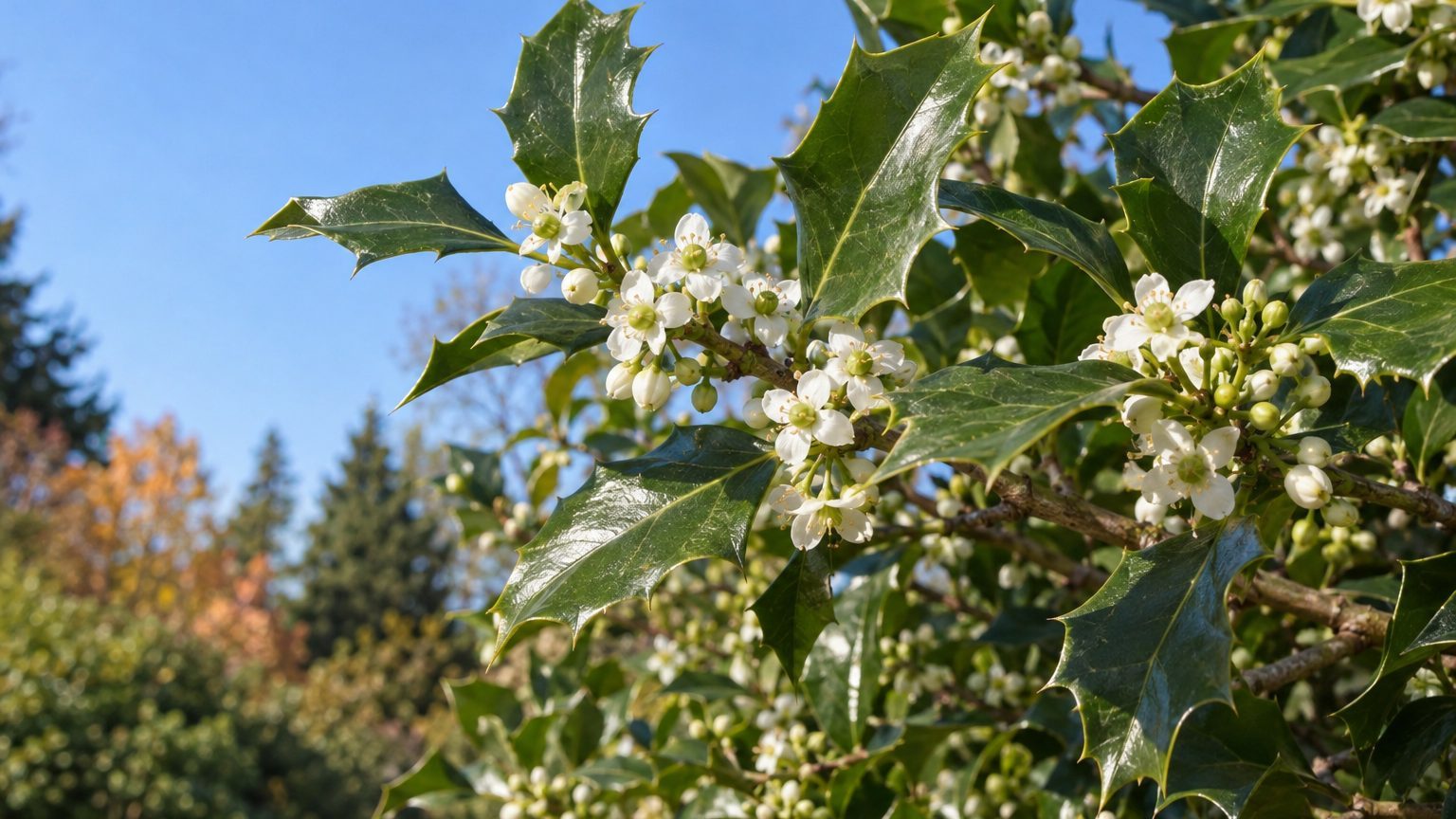
Telling the two apart means waiting for flowers, usually in spring, and looking closely. Female blooms have a small green bulb in the center, the ovary that becomes the berry. Male blooms sit in little clusters and show prominent, pollen-dusted stamens instead.
Compatibility matters too. The male needs to bloom at the same time as the female, and it generally needs to be a closely related type. An American holly and a Japanese holly flower on different schedules, so one won’t rescue the other. Match species, then match bloom time.
Names that lie
Nurseries often name cultivars in pairs, and some are helpful. ‘Blue Prince’ is male and ‘Blue Princess’ is female. ‘China Boy’ is male and ‘China Girl’ is female. Logical, memorable, done.
Then there are the English hollies, where tradition wins over logic. ‘Golden King’ is female and ‘Golden Queen’ is male, and ‘Silver King’ and ‘Silver Queen’ follow the same reversed pattern.
Yes, the King bears berries and the Queen does not.
Gardeners who assume the name tells the story end up with a lovely variegated shrub that will never fruit. The safest habit is to check the botanical cultivar information on the tag rather than trusting the name. Better still, buy in fall or winter when females are loaded with berries, or ask the nursery to confirm sex in writing. A few female cultivars, such as ‘J.C. van Tol’, are known to set fruit with little or no pollination, which makes them a useful choice for a single-tree yard.
When the sex is right and the branches are still empty
Age comes first. A holly grown from seed or sold very young may need several years to flower at all, and seedlings can’t be sexed until they bloom. If you planted a tiny sapling two springs ago, patience is a legitimate diagnosis.
Pruning is the next suspect. Shearing at the wrong time can remove the wood that carries flower buds, and a hard cut in late winter or spring can wipe out a year’s crop before it starts. Prune lightly, and do structural cuts just after flowering or while the plant is dormant, depending on the species. A late frost during bloom can also kill flowers outright, and a cold, rainy week keeps pollinators home. Some years the whole neighborhood’s hollies underperform for exactly that reason.
Growing conditions count as well. Deep shade reduces flowering, and heavy nitrogen feeding (the kind lawn fertilizer runoff delivers) pushes leafy growth at the expense of fruit. Drought stress in summer can also cause developing berries to drop.
Sometimes the berries came and went. Robins, cedar waxwings and other birds can strip a holly in a few days once a hard freeze softens the fruit.
Deciduous hollies add a wrinkle. Winterberry (Ilex verticillata) is famous for bright red stems of fruit on bare branches, but it is just as dependent on a male with matching bloom time. Pairings such as the female ‘Winter Red’ with the male ‘Southern Gentleman’ exist for this reason, and garden centers often label them as partners. Japanese holly (Ilex crenata) is another case: it does fruit, but the berries are small and black and hide among the leaves, so many owners never notice them.
Berries take months to develop and color, so a spring diagnosis pays off in December. Check the flowers in May, confirm you have both sexes within range, and you will know before summer whether the plant needs a partner.