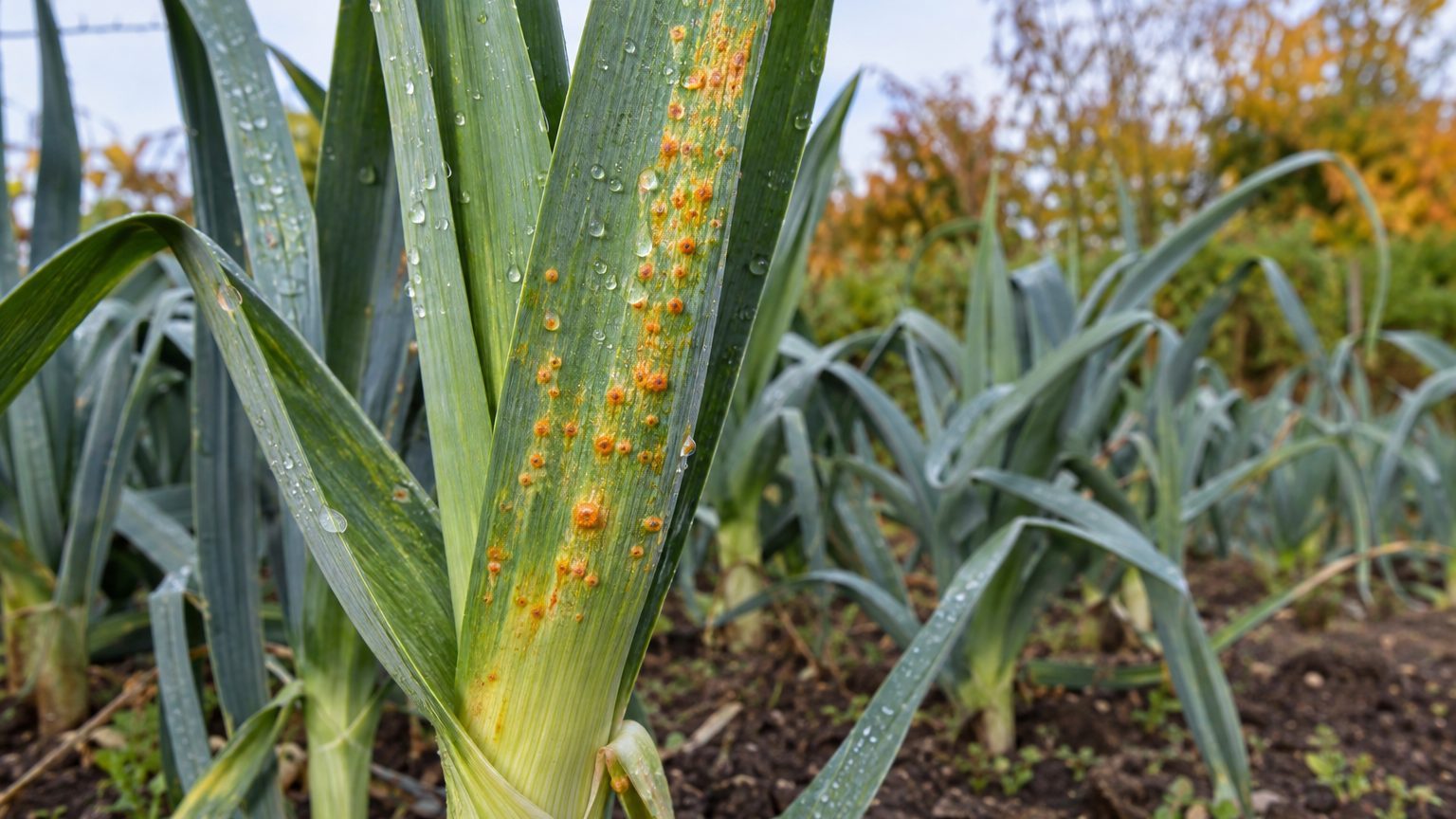
Yes, you can eat them. The orange spots on your leek leaves are a fungal disease called rust, and it doesn’t make the plant toxic. What it does is spoil the leaves and, in bad years, shrink the harvest.
Trim, wash, cook, and dinner is safe.
- Leek rust is caused by the fungus Puccinia allii and appears as orange pustules that release fine orange powder when rubbed.
- Cool, damp autumn weather between 50–63°F combined with morning dew creates ideal conditions for rust to spread rapidly.
- Rust is not toxic to humans; trimming outer leaves and rinsing stalks thoroughly makes leeks safe to eat and cook.
What those orange spots actually are
Leek rust is caused by a fungus, Puccinia allii. It appears as small, raised pustules, orange to rust-colored, often lined up in streaks along the leaf blade. Rub one with a fingertip and a fine orange powder comes off on your skin, which is the clearest way to tell rust from sunscald or pest damage. Each pustule can release thousands of spores.
The same fungus attacks garlic, onions, shallots, and chives, so a leek bed rarely suffers alone. Late in the season the pustules often darken to brown or black as the fungus switches to a tougher spore type built to survive winter.
Other problems can look similar at a glance. Thrips leave silvery flecks, leek moth larvae chew translucent “windows” into the leaves, and white tip disease turns leaf ends pale and papery. None of them leave orange dust on your fingers.
Why it shows up in autumn
Rust thrives in cool, damp weather. Temperatures in the 50s and low 60s °F, combined with long stretches of wet leaves from dew, fog, or drizzle, are its ideal setup, and September and October deliver exactly that after a hot summer that kept the fungus in check.
A few hours of morning dew is enough.
Spores travel on wind and splashing water, and rust fungi in general can ride air currents over long distances. A neglected clump of chives next door or a stray volunteer onion can seed your whole row. Crowded planting, overhead watering, and heavy nitrogen feeding make things worse, because soft, lush growth stays wet longer. Where winters are mild, the fungus can also persist on living plants all year, which explains why some gardeners fight it every fall.
Infected debris left in the bed is the other reservoir. Dead leaves from this year’s crop become next year’s starting point.
Are the leeks still safe to eat?
Rust is a plant pathogen, not a human one. Gardening extension programs across the US treat it as a cosmetic and yield problem rather than a food-safety concern, and the fungus doesn’t produce toxins that threaten people who eat the plant.
At harvest, peel off the outer leaves and cut away the green tops if they are heavily spotted. Rinse the stalks well, since spores cling to surfaces. The white and pale green shaft, the part most cooks want anyway, is usually clean underneath. Badly rusted leaves tend to be tougher and less flavorful, and a stressed plant often puts out thinner stalks, so expect a smaller yield rather than a spoiled one.
Toss the spotted leaves in the trash, not the compost pile.
Keeping next year’s leeks clean
Rotation does the heavy lifting. Keep onions, garlic, leeks, and chives out of the same bed for three to four years, pull volunteer alliums, and clear every scrap of leaf debris once the crop is out. Space plants so air moves between them, and water at soil level in the morning so foliage dries fast.
Some leek varieties show better tolerance than others, so seed catalog descriptions are worth reading closely. Fungicide options for home gardens are limited, and any product must be labeled for alliums, so check the label and your local extension office before spraying anything.
Timing matters more than panic. Rust that arrives in October on leeks already near full size barely dents the harvest, while an outbreak in July, when the plants are still building their stalks, is the one that can cost you real weight.