
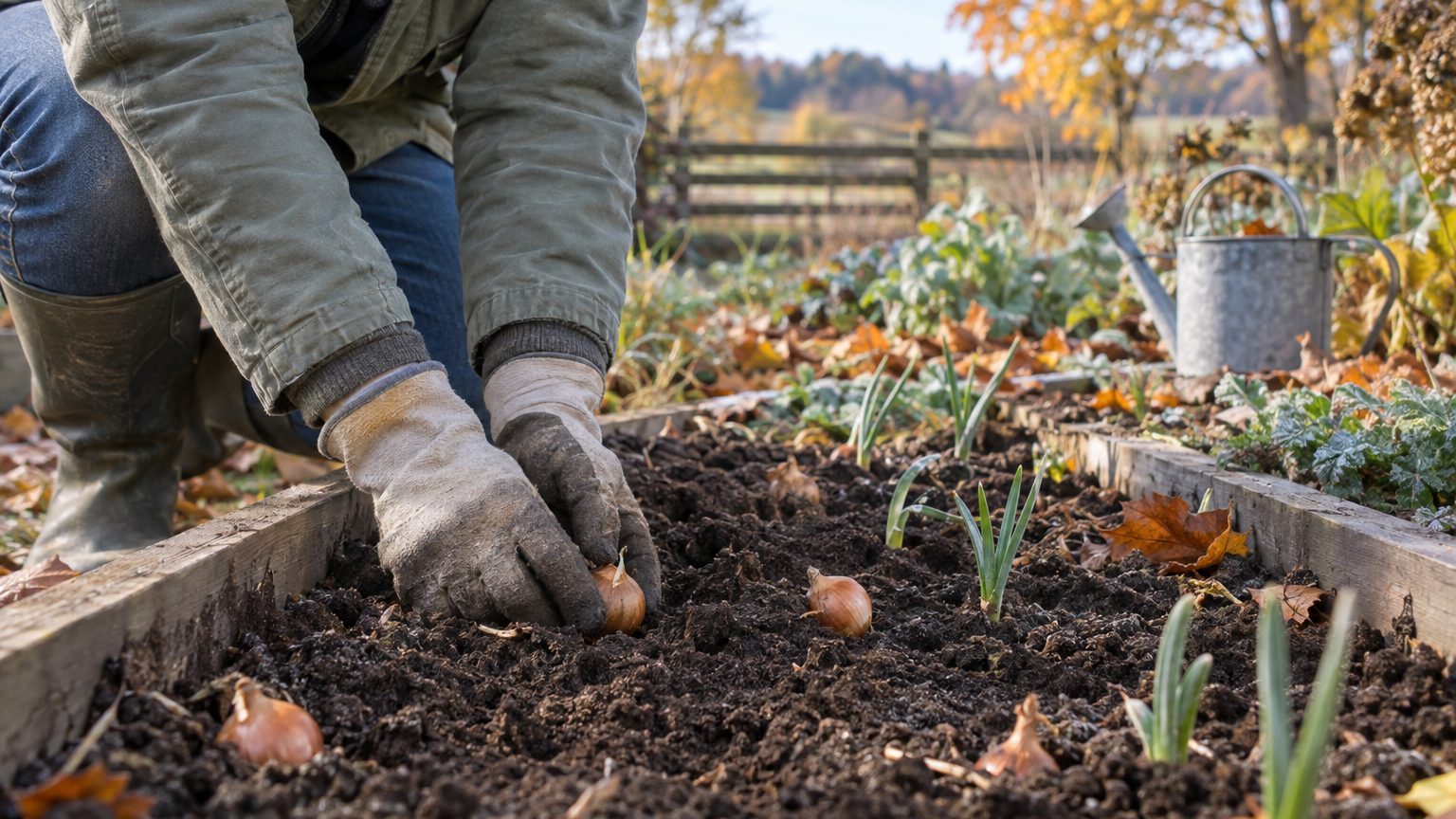
Mid-September to late October. That is the window for planting autumn onion sets in most of the UK, and the exact week depends on how far north you garden and how cold your soil gets.
The sets you buy for autumn are not the same as the ones sold in spring. They are bred to settle in before winter, sit tight through the cold, and swell when the days lengthen. Plant the wrong type at the wrong time and you get a row of flowering stems instead of bulbs.
- Autumn onion sets are planted from mid-September to late October across most of the UK.
- Soil temperature around 5°C to 10°C is a better guide than the calendar.
- Only sets labelled as autumn or overwintering varieties should be planted in autumn.
- Autumn-planted onions are harvested from late May through July and store for a shorter time.
The right window, region by region
In the mild south and south-west of England, early October to early November is the sweet spot. Further north, in Scotland, northern England and exposed upland plots, aim for mid-September to early October so roots establish before the ground chills. The goal is a set that has rooted and produced a short green shoot, perhaps two to three inches, before hard frosts arrive.
Soil temperature is a better guide than the calendar. Roots keep growing down to around 5°C, so a cheap soil thermometer is worth the few pounds. If it reads above 10°C in late October, you are fine to plant a little later; if it has already dropped near 5°C, you are cutting it fine.
Too early is its own mistake.
Sets planted in warm September soil can race ahead, producing a lot of top growth that gets knocked back by frost and, worse, is more prone to bolting in spring. Too late, and the sets sit in cold, wet soil where they can rot or simply heave out of the ground. Aim for steady, modest growth rather than a head start.
Which varieties actually overwinter
Only varieties sold specifically as autumn or overwintering sets should go in now. Spring types such as Sturon or Stuttgarter Giant are bred to grow in warming conditions, and they sulk or bolt if given a winter. Check the packet; reputable suppliers label them clearly.
Reliable overwintering choices in UK catalogues include Radar, Senshyu Yellow, Electric (a red onion) and Shakespeare. Radar is a popular all-rounder with good hardiness. Senshyu Yellow is a Japanese type that has been grown in British gardens for decades and tends to store reasonably well, though autumn-planted onions never keep as long as spring ones. Electric is a red variety that copes with the cold but is better eaten within a few months than stored into the new year.
Expect an earlier harvest, typically from late May through July, which plugs the gap before main-crop onions are ready. That is the real payoff of autumn planting: bulbs when the shop-bought ones are at their dullest, and ground freed up for leeks, beans or brassicas. The trade-off is shorter storage life, so eat the autumn crop first.
Shallots and garlic follow the same logic, and you can plant them in the same bed on the same weekend. Many gardeners treat October as a three-in-one job.
Preparing the bed and planting properly
Onions want full sun and soil that drains well. Heavy clay that sits wet through winter is the biggest killer of autumn sets, so on stubborn ground use a raised bed or a ridge about 6 inches high, or dig in grit and well-rotted compost a few weeks ahead. Avoid fresh manure, which encourages soft growth and can invite rot, and do not plant where onions or other alliums grew in the last three to four years, to keep onion white rot at bay.
Rake the surface to a fine tilth and, if your soil is acidic, check the pH: onions prefer around 6.5 to 7. A light dressing of general-purpose fertiliser a week before planting is plenty.
Plant sets with the tip just showing, or barely covered, about 4 inches apart in rows 10 to 12 inches apart. Push gently rather than forcing them in; a hard shove can damage the base plate where roots emerge. Birds love to tug freshly planted sets out of the soil, mistaking them for something edible, so cover the bed with fleece or netting for the first few weeks.
Then check them after the first frosts.
Frost lifts shallow sets out of the soil like corks. Walk the rows after a cold snap and press any loosened bulbs back in with your thumb, otherwise they dry out and die.
Stopping them bolting
Bolting means the plant sends up a flower stalk instead of swelling a bulb, and once a thick central stem appears the onion is effectively finished for storage. The trigger is temperature stress: a plant that grows too big before winter, then experiences a cold spell followed by warmth, may decide it has completed a winter and should flower. Large sets are the main risk, which is why many growers pick smaller ones, roughly 10 to 14 mm across, for autumn planting.
The fixes are mostly choices made at planting. Buy certified heat-treated sets, which are processed to reduce bolting. Do not plant too early. Do not feed with nitrogen in autumn or winter, because lush growth makes things worse. In spring, a modest feed once growth restarts is enough.
Even careful gardeners lose a few. If a flower stalk does appear, snap it off at the base and use that onion first; it will not store, but it is perfectly edible. Keep weeds down too, because onions have shallow roots and compete badly, and water in dry spells in spring, since stress from drought can nudge them toward flowering.
Harvest when the tops flop over and yellow. Lift the bulbs on a dry day, let them dry in the sun or a airy shed for a week or two, and use them within a few months. Autumn onions are the first of the year, not the last.
One practical nuance: if you miss the window entirely, do not force it in November on waterlogged ground. Hold the sets back, or plant them in modules in a cold frame, and transplant when conditions allow. A late, well-rooted set usually beats an early rotten one.