
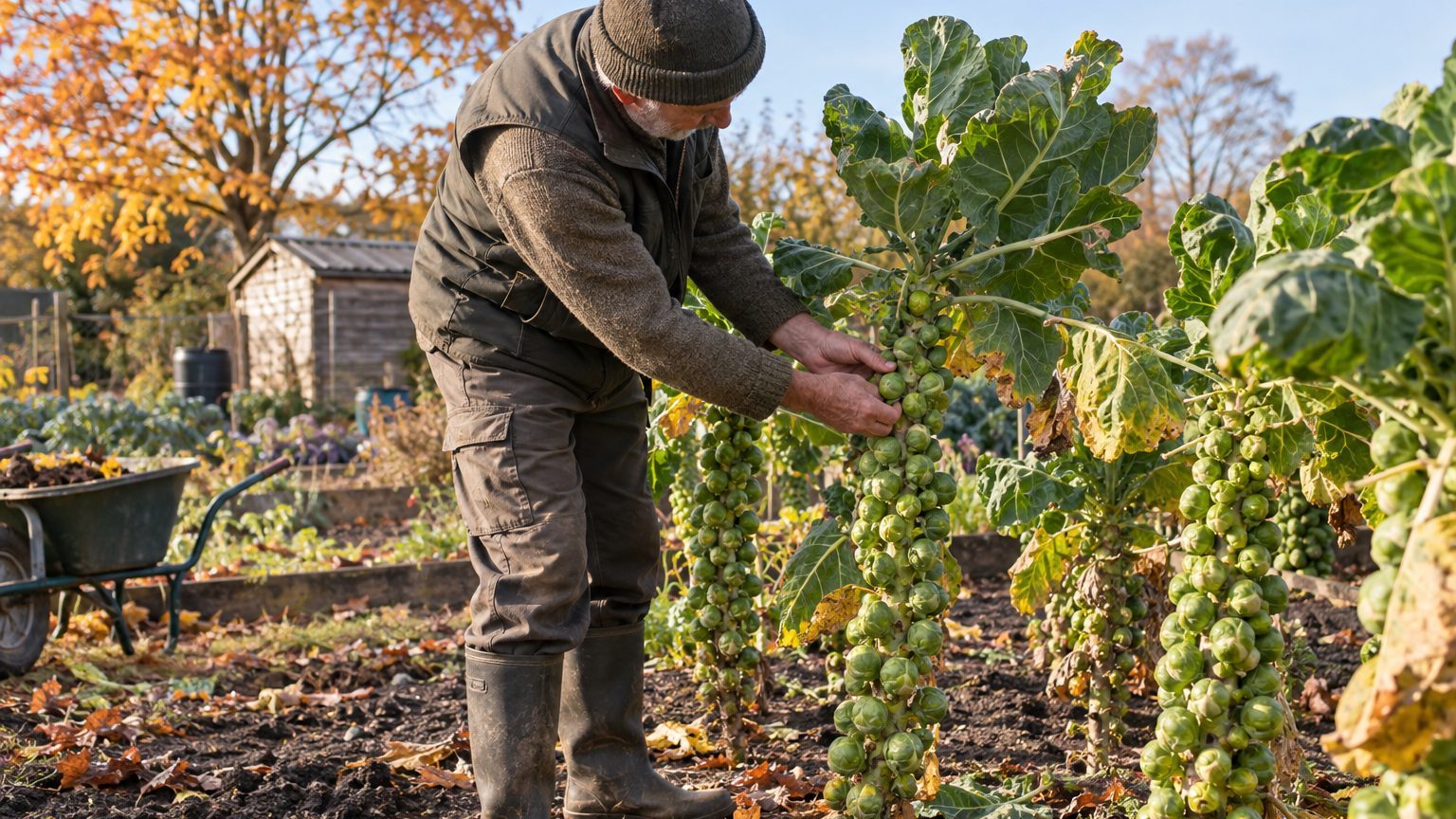
Loose, open Brussels sprouts, the kind that look more like tiny floppy cabbages than tight green marbles, almost always trace back to three things: soil that is too soft, too much nitrogen, and uneven watering. Fix those and the stalk fills with firm buttons.
Gardeners call the problem “blown” sprouts. The leaves haven’t finished wrapping around the growing point, so the bud stays ragged, bitter-tasting and half empty.
- Soft, freshly dug soil lets tall plants rock in the wind, which stresses the stem and loosens the buds.
- Excess nitrogen pushes the plant into leaf growth instead of packing dense sprouts.
- Irregular watering makes buds swell too fast, so the inner leaves split open before they can wrap tight.
Soft soil: the anchor problem
Brussels sprouts are tall. A mature plant can reach three feet or more, with a heavy crown of leaves on top and a stem studded with sprouts along its length.
That height needs a firm footing. When the bed has just been dug over, forked up or loaded with fluffy compost, the roots sit in air pockets, and the plant rocks in every autumn gust. Each wobble stresses the stem, and stressed plants make loose buds.
Old-school growers knew this. Many of them deliberately firmed the ground by treading it down with their heels before planting, then pressed it again around each transplant.
Firm soil wins.
If you grow in a raised bed or a freshly amended plot, rake the surface level, walk over it (or press with the flat of a board), and let it settle for a couple of weeks before transplanting. When you set seedlings in, plant them deeper than they were in their pots, up to the first true leaves, and firm the soil around them with your hands until the plant resists a gentle tug. Mounding a little soil around the base later in summer, or staking taller varieties, adds extra insurance in windy sites.
Too much feed: all leaf, no bud
Nitrogen is the usual culprit in the feeding department. It drives leafy growth, and Brussels sprouts respond so eagerly that a generous dose can produce a huge, lush plant with sprouts that never tighten up. The plant is putting its energy into foliage and into stretching, not into packing dense buds.
Rich soil from a previous crop of beans, a thick layer of fresh manure, or a high-nitrogen lawn-style fertilizer can all tip the balance. Gardeners who feed the plants “to be safe” every two weeks often get the worst results of all. Extension services generally recommend a moderate application of nitrogen at planting and, if needed, one side-dressing a month or so later, rather than continuous feeding.
Soil testing beats guessing. A basic test through a county extension office costs little and tells you whether you need to add anything at all. Many garden beds, especially those fed with compost year after year, already hold plenty of nitrogen, and adding more only produces those floppy, open heads.
Potassium and phosphorus matter too, since they support sturdy stems and firm buds. A balanced, slow-release feed or well-rotted compost worked in before planting does more good than any mid-season boost.
Timing counts as well. Late feeding, after midsummer, pushes soft new growth just when the plant should be shifting its energy into sprouting. Stop fertilizing by about midsummer, and the stalk can start forming tight buds as the nights cool.
The watering mistake behind blown sprouts
Irregular watering is the quiet saboteur. A dry July followed by a soaking August, or a sudden deluge after weeks of neglect, makes the plant swing between stress and rapid growth. Buds that swell too quickly can split or open, because the inner leaves can’t keep pace with the outer ones.
The aim is steady moisture, not a swamp. Brussels sprouts like roughly an inch of water a week, delivered deeply, and more during hot, dry spells. A light sprinkle every evening does the opposite of what you want: it keeps the surface wet and the roots shallow, so the plant struggles whenever the topsoil dries out.
Mulch helps enormously. Two to three inches of straw, shredded leaves or grass clippings (without herbicide) keeps the soil temperature and moisture even, and it suppresses weeds that compete for water. Pull the mulch back an inch or so from the stem to prevent rot.
Check the soil with a finger.
If the top two inches feel dry, water slowly at the base, ideally with a soaker hose or drip line. Avoid watering overhead late in the day, since damp foliage overnight invites fungal disease in crowded plantings.
Other factors, and what to do right now
Heat plays a part. Brussels sprouts are a cool-season crop, and buds that form during hot weather tend to be loose. That’s why timing matters: in most of the US, sowing so that the sprouts mature in the cool of fall, after the first light frosts, gives the tightest results. Frost also sweetens them, since the plant converts starches to sugars as temperatures drop.
Variety matters too. Some older, open-pollinated types are naturally looser, while many modern hybrids have been bred for uniform, dense sprouts. If you’ve struggled for years, check the seed packet for traits like “firm” or “high-yielding” and for days to maturity, then match it to your climate.
Spacing is the last piece. Crowded plants compete for light and water, while plants set about 18 to 24 inches apart have room to build strong stems. Tight spacing often leads to spindly plants and weak buds.
Already have loose sprouts on the stalk this October? You can still improve the harvest. Stop all feeding, firm the soil around the base, water evenly, and keep mulch in place. Some growers also “top” the plant, snipping off the crown about three to four weeks before harvest, which redirects energy into the buds below and encourages them to swell and tighten at the same time.
Loose sprouts are still edible. They’re often a touch more bitter and a little leafy, but roasted hard with olive oil until the edges crisp, they taste perfectly good. Next season, a settled bed, a restrained hand with Fertilizer and a hose on a schedule will do more for your crop than any extra product from the garden center.
One last detail from experienced growers: the lowest sprouts on the stalk, which form first, are usually the firmest, and the ones near the top open up if the plant keeps growing in a warm autumn.