
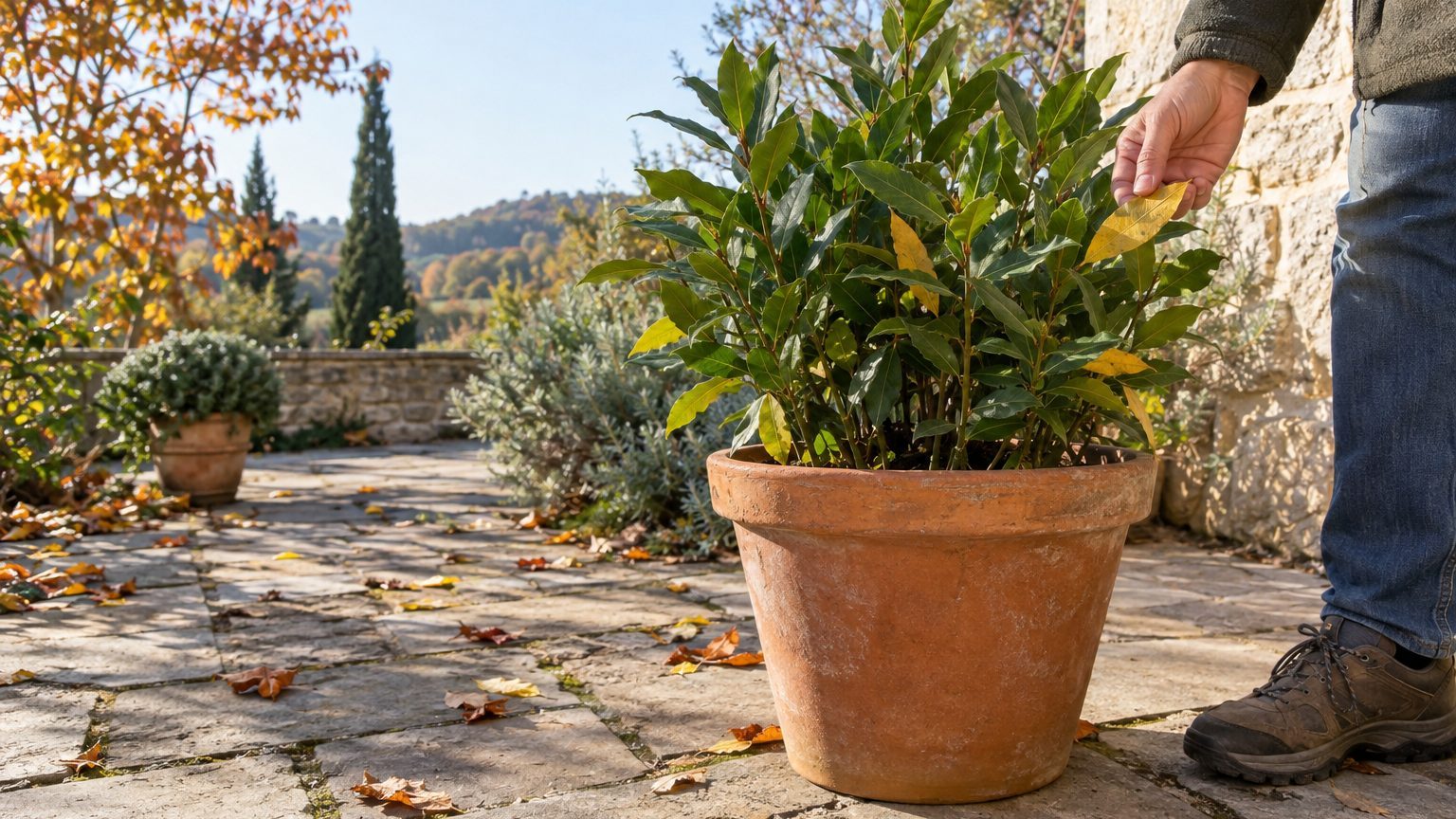
A bay tree with yellow leaves is sending a message, and the color pattern is the only translator you need. Yellowing that starts on the oldest leaves means something different from yellowing at the tips, and both differ from a tree that went blotchy after one frosty night.
Laurus nobilis is a tougher plant than its fussy reputation suggests. It has survived in Mediterranean hillsides for centuries, which is exactly why most problems in pots trace back to us rather than to the tree.
- Yellowing that begins on the oldest, lowest leaves usually signals hunger, while a whole-canopy yellowing with limp leaves usually signals too much water.
- Cold damage shows as yellow-brown scorching on the exposed side and often appears days or weeks after a frost.
- Waterlogged soil feels wet on a finger test two inches down, and healthy bay roots are pale and firm.
Overwatering: the most common culprit
Bay comes from dry, rocky ground with sharp drainage. In a pot of dense, soggy compost, its fine roots run out of oxygen, and a root that cannot breathe cannot feed the leaves above it.
The signs show up as a general, dull yellowing across the whole canopy, often with leaves that feel limp or slightly swollen rather than crisp. Lower leaves may drop in clumps. Check the saucer: if water sits there after an hour, you have found a likely cause.
Test before you assume. Push a finger two inches into the compost, or lift the pot (a waterlogged container is surprisingly heavy). If the soil clings wet to your skin, hold off on watering, even if the surface looks dry.
Roots tell the final story.
Slide the plant out of its pot. Healthy bay roots are pale and firm, while rotting ones turn brown or black, feel mushy and may smell sour. Trim away the damaged sections with clean shears, repot into a gritty mix (roughly one part horticultural grit or perlite to three parts multipurpose compost), and make sure the pot has real drainage holes. Raising the container on pot feet keeps those holes from clogging against a patio.
As a rough guide, water a potted bay thoroughly when the top two inches have dried, about once a week in summer and far less in winter. A tree that is dormant in a cold, damp month may need watering only every two or three weeks.
Hungry compost: when the pot runs empty
Potted trees live on a finite supply. Multipurpose compost typically holds enough nutrients for six to eight weeks, after which the plant depends on what you add. A bay that has sat in the same container for three or four years without feeding is, to put it bluntly, starving.
Hunger looks different from drowning. Yellowing tends to begin on older, lower leaves while new growth at the tips stays green but small, and the whole tree looks pale and stalled. Nitrogen shortage gives an even, light-green fade. Iron or magnesium shortage, more common when the compost is alkaline or tired, produces yellow leaves with green veins still visible, like a faint leaf skeleton.
The fix is easy and cheap. From spring to late summer, feed every two to four weeks with a balanced liquid fertilizer, or work a slow-release granule into the surface in April. If veins stay green while the blades yellow, an iron-rich feed labeled for acid-loving or ericaceous plants (used according to the label) often brings color back within a few weeks.
Stop feeding by September. Soft new growth pushed out in autumn is exactly what the first frost will burn.
Repotting matters as much as feeding. Every two to three years, move the tree up one pot size or, if you want to keep it compact, scrape away the top few inches of compost and refresh them, then trim a little of the root mass. A bay stuffed into a pot with roots circling the edges will yellow no matter how carefully you fertilize.
Cold damage and wind: the winter signature
Bay tolerates a light chill but not a hard, sustained one. It generally handles temperatures down to about 20°F once established, yet young plants, potted specimens and trees in exposed spots can suffer well before that. Roots in a container freeze faster than roots in the ground, since there is no soil mass to insulate them.
Cold damage has a distinct look. Leaves turn yellow-brown or scorched, often at the edges and tips, and the damage is usually concentrated on the side facing the wind or on the top of the plant. It appears days or even weeks after the cold snap, which fools many gardeners into blaming something else. Dry, crispy brown margins in late winter are the classic giveaway.
Do not cut it back right away.
Wait until new growth appears in spring, usually April or May, then prune out any dead wood to a healthy bud. Plants often shed damaged leaves and resprout from older stems, sometimes from the base. Scratch a twig gently with a fingernail: green underneath means alive.
Prevention is straightforward. Move pots against a south-facing wall, wrap containers in bubble wrap or horticultural fleece, and raise them off cold ground. In regions that regularly dip below the low teens, bring potted bay into an unheated garage or bright porch for the coldest weeks, watering sparingly.
Reading the clues together
Few trees read perfectly. A bay can be both overwatered and underfed, which is common when someone compensates for a sick-looking plant by pouring on more water. A short mental checklist sorts the cases quickly:
- Whole canopy yellow, soil wet, limp leaves: too much water.
- Older leaves pale, new growth small, veins sometimes green: hunger.
- Brown-yellow edges on one exposed side after a freeze: cold or wind.
Timing helps too. Problems that arrive in midsummer point to water or food, while those that surface in late winter or early spring point to the cold. And if none of these fit, look for sooty mold or small, flat, scale-like bumps on the stems. Bay sucker, a tiny insect, curls and thickens leaf edges and leaves yellow, blistered patches, though a healthy tree usually shrugs it off.
One more detail, which most guides skip: some yellowing is simply aging. Bay is evergreen, but each leaf lives only about three years, and a few old ones turning yellow at the base of the plant in late summer is normal housekeeping rather than a crisis.