
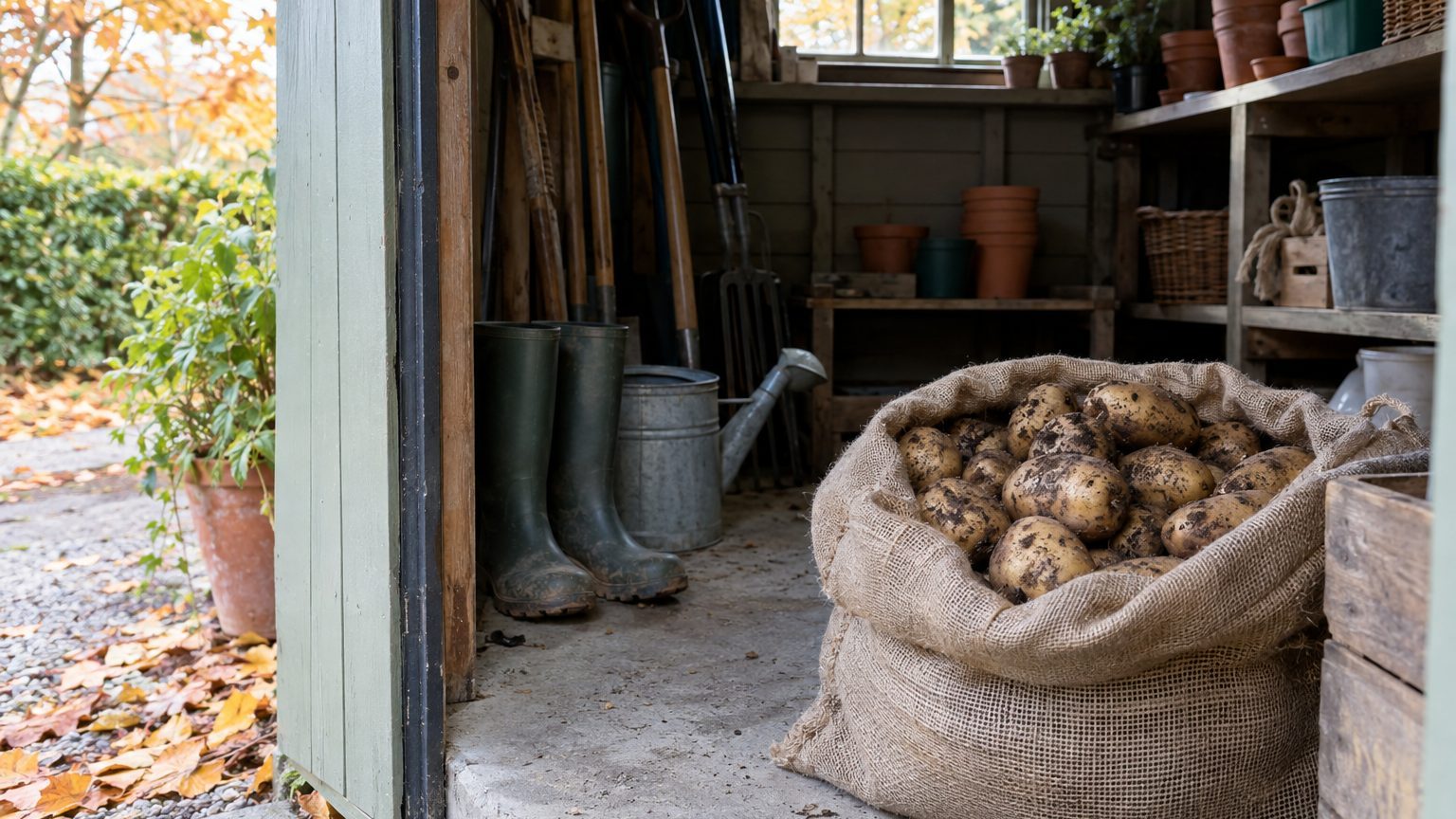
Potatoes stored at 4°C to 10°C in total darkness can last five to seven months. Leave them on a bright kitchen shelf and they will sprout and turn green within weeks. For UK gardeners lifting a crop in September or October, the gap between those two outcomes comes down to four things: how you dry them, what you store them in, how cold the room is, and how much light gets in.
- Potatoes keep five to seven months at 4°C to 10°C in total darkness.
- Curing for about ten days in a dark, dry, airy space toughens the skins.
- Hessian and paper sacks breathe, while sealed plastic traps condensation.
- Below about 4°C, starch converts to sugar, so the fridge is a poor choice.
Drying and curing: the step most people skip
A freshly lifted potato has soft, thin skin that bruises if you look at it sharply. Storing it straight away traps moisture against that skin, and moisture is where rot begins.
Lay the tubers out on a dry day and let the soil dry on them for an hour or two, no more. Sun is the enemy here, since even a few hours of bright light starts the greening process. Then move them somewhere dark, dry and airy, such as a shed, garage or spare room, spread out in a single layer for about ten days. This is called curing, and it lets the skins toughen and any small nicks heal over.
Don’t wash them.
Brush off loose soil with your hand or a soft brush, and leave the rest. Damp soil residue protects the skin better than a scrubbed surface, and water on stored potatoes invites fungal problems like blight and soft rot.
Sort as you go. Any tuber with a spade slice, a fork puncture, a green patch or a soft spot should be set aside for eating within the week. One damaged potato in a sack can spoil its neighbours through spreading rot, which is the old “one bad apple” proverb, only with more mud. The sound, unblemished ones are your winter keepers.
Sacks, boxes and the case against plastic
Hessian sacks are the traditional answer, and they remain hard to beat. They are breathable, they block light, and they cost very little. Paper sacks, sold by many allotment suppliers and garden centres, do the same job and are often what the commercial growers’ own potato bags are made of.
Plastic is the mistake. Sealed bags and tubs hold condensation, and condensation turns a store into a compost heap by Christmas. If you only have Supermarket plastic bags, punch plenty of holes or, better, decant the potatoes into something that breathes.
Cardboard boxes and wooden crates also work, provided you cover them with a layer of old hessian, newspaper or a blanket to keep light out. Don’t overfill. A sack holding 12 to 25 kg is manageable, while a towering pile compresses the lower tubers and restricts air flow, so smaller containers are safer than one giant heap.
Check the store every few weeks. It takes five minutes, and it is the single habit that separates people who still have potatoes in March from those who find a sticky, foul-smelling mess at the bottom of the sack. Pull out anything soft or sprouting, and wipe away any dampness you find.
Temperature: cold, but not too cold
The sweet spot sits between about 4°C and 10°C. Much warmer and dormancy breaks, so the potatoes sprout, shrivel and go rubbery. Much colder, and a different problem appears.
Below about 4°C, the starch in potatoes begins converting to sugar. The tubers taste oddly sweet, and when fried or roasted the extra sugar caramelises too fast, giving dark, bitter chips. Research from food safety bodies, including the UK’s Food Standards Agency, has linked this browning to higher acrylamide formation, which is why the agency advises against keeping potatoes in the fridge.
So the fridge is out.
British outbuildings do a decent job, as long as they stay frost-free. An unheated garage or a cool, dry cellar usually hovers in the right range through autumn, but a hard January freeze can reach a shed. Frosted potatoes turn black and mushy inside once they thaw. If a cold snap is forecast, throw an old duvet or a few layers of bubble wrap over the sacks, or temporarily shift them indoors to a cupboard against an inside wall.
Humidity matters too. Aim for cool and moderately humid, roughly 85 to 90 percent, which is why a dry heated utility room often causes shrivelling by midwinter. A damp garage has the opposite problem. Most households have to pick the lesser evil, and for most UK homes a cool, dark, slightly airy spot beats a warm, dry one.
Why light turns potatoes green
Green potatoes are not a cosmetic issue. When a tuber is exposed to light, it produces chlorophyll, which is the green pigment. Light also triggers the production of glycoalkaloids, mainly solanine and chaconine, natural compounds the plant uses to defend itself against pests.
The two processes run in parallel but are separate. Chlorophyll is harmless, and it simply shows you where light has reached. The glycoalkaloids are the concern, because at high levels they taste bitter and can cause nausea, vomiting and stomach cramps. Greening is a useful warning sign, though it is not a perfect measure of how much toxin is present.
The Food Standards Agency’s advice is simple: store potatoes in a cool, dark place, and cut away green areas before cooking. If a potato is extensively green or tastes bitter, throw it out. Peeling thickly removes much of the toxin, since the compounds concentrate in the skin, the sprouts and just beneath the surface.
Sprouts deserve the same treatment. Small, short sprouts can be snapped off and the potato used, but if the tuber has gone soft and wrinkled with long, leggy shoots, it belongs in the compost bin. Never eat the sprouts themselves.
Storing apples nearby is a common mistake. Apples give off ethylene gas, which encourages sprouting in potatoes, so keep the two in separate spaces. Onions are sometimes blamed too, with old advice claiming they spoil potatoes, though the stronger reason to separate them is simply that both prefer different humidity levels.
Seed potatoes are a separate matter. If you want to plant next spring, those are deliberately kept in light, in egg boxes or trays, to produce short, sturdy green shoots in a process known as chitting. Anything you plan to eat belongs in the dark.
One last practical detail for allotment growers: maincrop varieties, the later-maturing types such as those sold as “good keepers”, generally store far better than first earlies, which are bred for flavour and speed rather than longevity. Eat your earlies and salad potatoes first, within a few weeks of lifting, and reserve the sacks for the maincrop.