
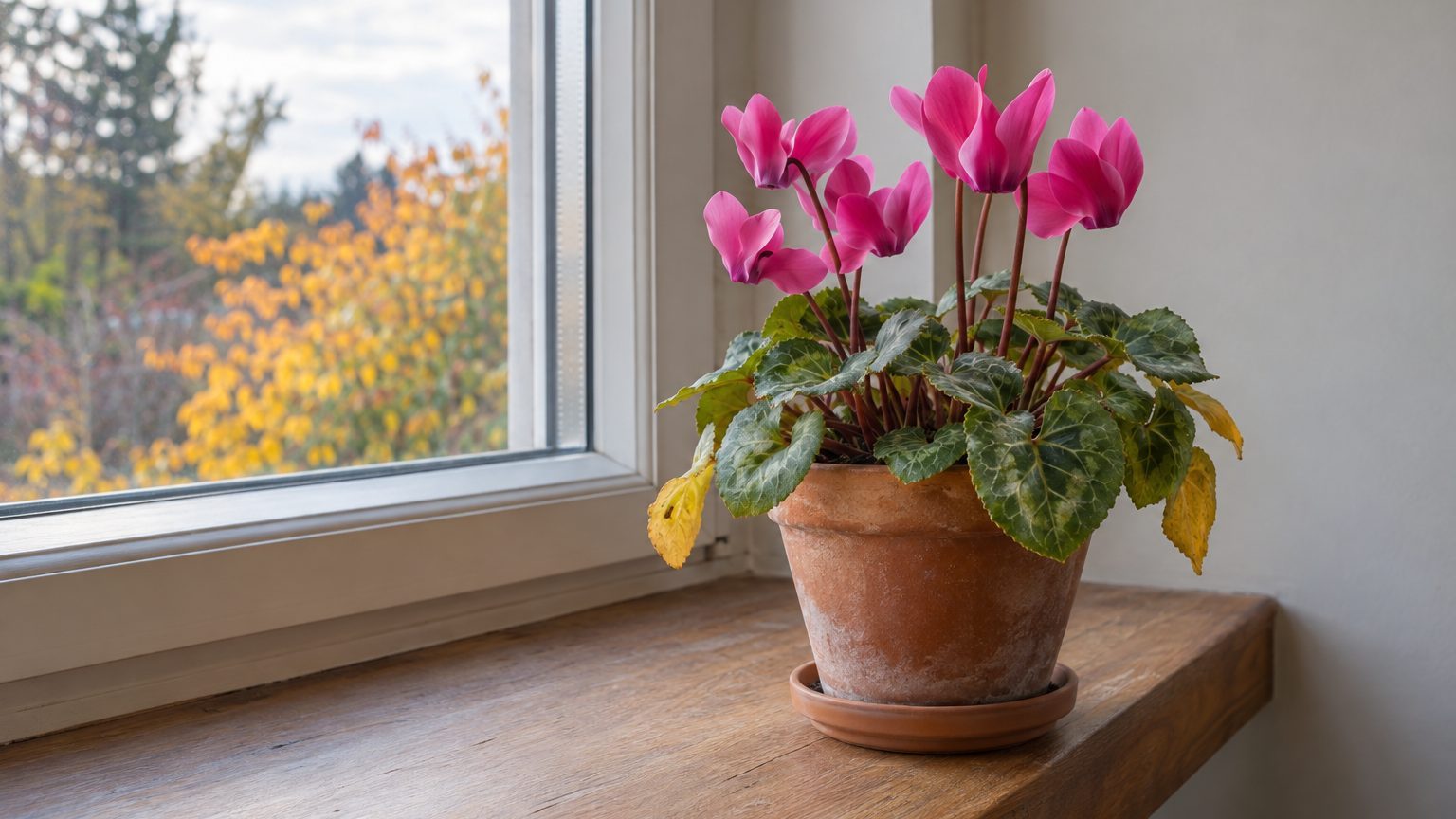
Yellow leaves on a cyclamen usually mean one of three things: too much water, too much warmth, or a plant that is simply heading into its natural summer sleep. The trouble is that all three look almost identical at first glance, and the wrong fix can finish off a plant that only needed to be left alone.
- Overwatering rots the tuber from the inside, usually starting near the base of the plant.
- Heat above about 65°F stresses cyclamen and causes yellowing and drooping even when the soil is damp.
- Yellowing that begins after flowering is natural dormancy, and the plant needs to be dried out and rested.
Overwatering: the most common culprit
Cyclamen grow from a tuber, a flattened, corm-like storage organ that behaves like a small sponge. When the soil stays wet, that tuber rots from the inside, and the first visible sign is often a leaf or two turning yellow near the base.
Watch the stems too. If they go soft, translucent or mushy at the point where they meet the tuber, rot has already started.
Water from the top is the classic mistake.
Pouring water onto the crown, the center where leaves and flower stalks emerge, lets moisture pool against the tuber’s top, which is exactly where decay begins. The better method is to water into the saucer, let the plant drink for 15 to 20 minutes, then tip out whatever is left. Check the pot’s weight before you water again: a thirsty cyclamen feels noticeably lighter, and the top inch of soil should be dry to the touch.
A pot without drainage holes is a quiet saboteur. Those decorative ceramic cachepots look lovely on a console table, but a cyclamen sitting in an inch of standing water will sulk within a week or two. Keep it in its plastic nursery pot, slip it inside the pretty one, and lift it out for every watering.
Heat: why a warm living room is hard on cyclamen
Florist’s cyclamen (Cyclamen persicum) come from the Mediterranean, where they flower through cool, damp winters and rest through hot, dry summers. Indoors, that wiring matters. The plant is happiest when daytime temperatures sit around 60 to 65°F and nights drop a little below that.
Most American homes run warmer. A living room kept at 72°F, with a plant parked beside a radiator, a heating vent or a sunny south-facing window, can push a cyclamen into stress within days.
The signs are specific. Leaves yellow and droop, flowers collapse on limp stems, and the whole plant looks wilted even though the soil is damp. Many owners read that as thirst and add more water, which compounds the problem by adding rot to heat stress.
Moving the pot is often enough. A bright spot near a north- or east-facing window, away from vents and out of direct afternoon sun, can bring a struggling plant back within a couple of weeks. An unheated entryway or a cool bedroom works well too, and a cyclamen kept there will often bloom for months longer than one kept in the warmest room of the house.
Dormancy: the sign most people misread
Here is where good growers lose plants through kindness. After flowering, usually from late spring into early summer, a healthy cyclamen begins to yellow on purpose. Leaves fade one by one, flowers stop forming, and the plant looks like it is dying.
It is resting.
The tuber is storing energy for the next cycle, and if you keep watering as though nothing has changed, you invite rot into a plant that wanted to be dry. The telltale difference from overwatering is timing and pattern. Dormancy arrives after a long bloom period, progresses evenly across the whole plant, and leaves a firm, plump tuber. Rot can strike at any point in the year, often affects the plant unevenly, and leaves the tuber soft or smelling sour.
When yellowing begins after flowering, cut back on water gradually and let the foliage die back naturally. Once the leaves are gone, remove them, stop watering almost entirely and move the pot to a cool, shaded spot, such as a covered porch or a closet shelf with some airflow. Some growers lay the pot on its side to keep rain or condensation off the tuber.
Resist the urge to toss it. The rest period typically lasts two to three months, and the tuber needs that gap to produce the next round of flowers.
Waking the plant back up
When you spot tiny new leaves pushing from the tuber, usually in late summer or early autumn, it is time to restart. Repot into fresh, well-draining potting mix, choosing a container only slightly larger than the tuber, with about an inch of space around it. Set the tuber so its upper third sits above the soil line; burying it completely invites rot all over again.
Then water lightly, increasing slowly as growth picks up. A diluted liquid fertilizer, applied every two weeks or so once buds appear, supports flowering. Use a formula higher in potassium, which is what tomato feeds tend to offer, and go easy on nitrogen, which pushes leaves at the expense of blooms.
Not every yellow leaf is an emergency, either. Older outer leaves yellow now and then as the plant renews its foliage. Remove them by twisting the stem gently at its base rather than cutting, which leaves less stub for mold to colonize. If only one or two leaves go at a time and the center looks healthy, the plant is fine.
A quick diagnostic can save you guesswork. Lift the plant out of its pot and look at the tuber and roots. Firm, pale tissue means you are dealing with heat or dormancy, while brown, mushy or foul-smelling patches mean rot. In that case, trim away the damaged tissue with a clean knife, let the cut surface dry for a day, and repot into fresh mix with far less water going forward.
One last nuance: a healthy, well-kept tuber can live for many years, and mature specimens of the species often bloom for a decade or more. Most supermarket cyclamen end up in the trash after a single season, not because the plant is short-lived, but because it was watered like a tropical and never given its summer nap.