
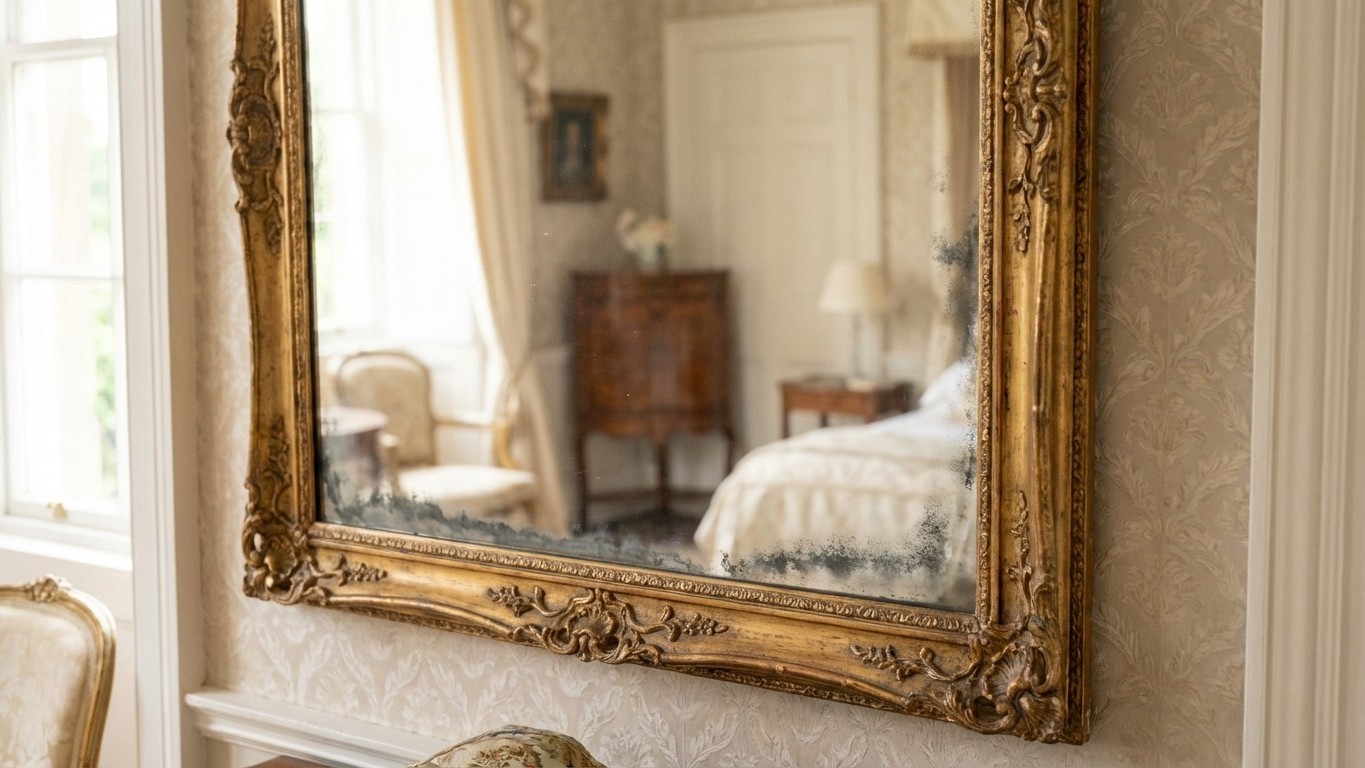
Sarah thought she’d found the perfect vintage Mirror at an estate sale—ornate frame, stunning size, and an unbeatable price. It wasn’t until she got it home that she discovered the silvering was peeling behind the decorative elements, creating unsightly dark spots that completely ruined the reflection. “I almost regretted it,” she admits, “but I learned what to look for next time.”
The secondhand mirror market is booming, with vintage and antique pieces commanding premium prices for their unique character and craftsmanship. However, mirrors present unique challenges that even experienced thrift shoppers often overlook. Unlike other Furniture pieces, mirrors involve complex materials and manufacturing processes that can fail in ways that aren’t immediately obvious to the untrained eye.
The Hidden Science Behind Mirror Deterioration
Understanding how mirrors age is crucial for any potential buyer. Traditional mirrors consist of a glass surface backed with a thin layer of silver or aluminum, protected by multiple coats of paint or backing material. Over time, moisture, temperature fluctuations, and chemical reactions cause this delicate system to break down in predictable patterns.
The most common issue is silvering deterioration, which appears as black spots, cloudy areas, or complete loss of reflectivity in certain sections. This damage typically starts at the edges where the protective backing has been compromised, allowing moisture to seep Changes-everything-based-on-your-sofa-stain-type”>Changes-everything”>Between the glass and the reflective coating. Once this process begins, it accelerates rapidly, making a seemingly minor flaw expand into a major eyesore within months.
Edge damage is particularly insidious because it’s often hidden by the frame or mounting hardware. Many buyers focus on the visible surface area, missing the critical junction where the glass meets the frame. This oversight can lead to purchasing a mirror that will continue deteriorating long after the transaction is complete.
The Frame Deception: When Beauty Hides Structural Problems
Ornate frames often mask serious structural issues that can compromise both the mirror’s stability and your wall’s integrity. Weight distribution becomes critical with larger mirrors, and many vintage pieces were designed for different mounting systems than what’s commonly available today. A beautiful carved wooden frame might hide rot, loose joints, or missing hardware that makes safe installation impossible.
The mounting system itself deserves careful scrutiny. Original hardware may be corroded, bent, or simply inadequate for modern drywall construction. Some antique mirrors were designed to lean against walls rather than hang, and retrofitting them with hanging hardware can stress the frame beyond its limits. Always examine the back of the frame for signs of previous repairs, added hardware, or structural modifications that might indicate ongoing problems.
Frame materials also interact differently with environmental Changes. Wood expands and contracts with humidity changes, potentially cracking the glass or loosening the silvering. Metal frames can corrode and stain both the mirror backing and your wall. Understanding these material interactions helps predict how a mirror will behave in your specific environment.
Size, Weight, and Installation Reality Before-buying”>Checks
The romance of finding the perfect oversized mirror often clouds practical judgment about installation requirements. A mirror that looks manageable in a spacious antique shop can become a logistical Nightmare in Your Home. Beyond the obvious weight considerations, think about doorway clearances, stair navigation, and ceiling height restrictions.
Professional installation costs can quickly erode the savings of buying secondhand, especially for mirrors requiring specialized mounting hardware or wall reinforcement. Heavy mirrors need substantial wall anchoring that may require opening walls to add blocking or using expensive toggle bolt systems. Calculate these additional costs before committing to a purchase.
The weight-to-size ratio also affects long-term stability. Some mirrors appear substantial but are Actually quite light due to thin glass or hollow frame construction. Conversely, mirrors with thick glass or solid frames can weigh far more than Expected, requiring upgraded mounting systems that weren’t part of your original budget.
Smart Shopping Strategies for Mirror Success
Successful mirror hunting requires systematic evaluation techniques that go beyond aesthetic appeal. Start by examining the mirror from multiple angles under different lighting conditions. Natural light reveals flaws that artificial lighting might hide, while side lighting exposes surface irregularities and edge damage.
Test the reflection quality by standing at various distances and checking for distortion, color shifts, or clarity issues. A good mirror Should provide a clear, undistorted reflection from its entire surface. Any waviness, color variation, or blurring indicates manufacturing defects or age-related deterioration.
Don’t hesitate to ask about the mirror’s history and storage conditions. Mirrors stored in basements, attics, or other environments with high humidity or temperature fluctuations are more likely to have hidden damage. Similarly, mirrors that have been frequently moved or handled roughly may have micro-fractures or loose silvering that will worsen over time.
The most successful secondhand mirror purchases combine careful inspection with realistic expectations about restoration costs. A mirror with character and minor flaws might be worth buying if you factor in professional restoration expenses. However, understanding the true cost of ownership—including potential repairs, professional installation, and ongoing maintenance—ensures that your vintage treasure remains a source of pride rather than regret.