
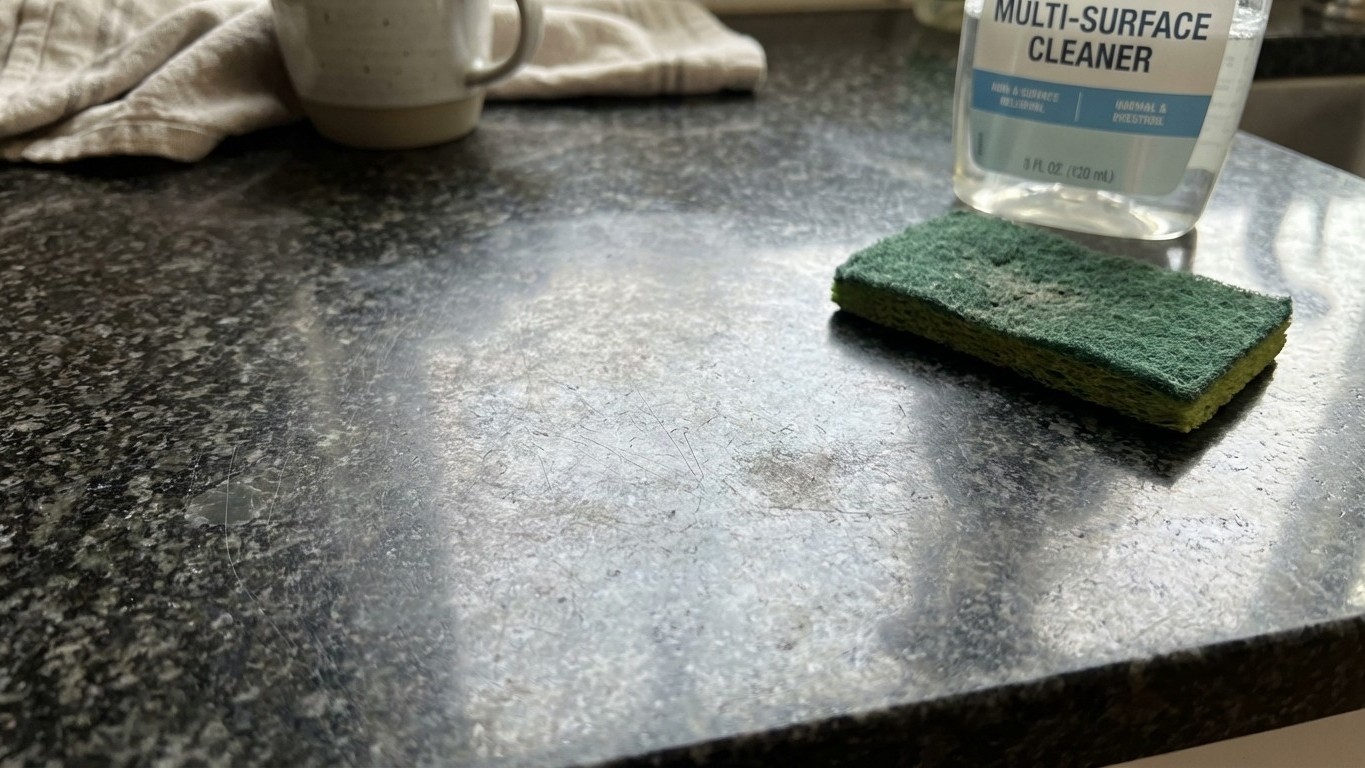
Squeaky clean. That’s how your countertop looks after you finish wiping it down each night. If you could bottle that sense of satisfaction, you would. There’s only one problem: that daily cleaning ritual, the quick swipe with an all-purpose spray, the rough scrub with your go-to sponge—might actually be wearing down the very surface you’re proud to keep spotless.
Key takeaways
- The daily cleaning routine might be silently damaging your countertop.
- Common cleaners and scrubbing tools could be causing microscopic scratches and surface erosion.
- Simple changes in how you clean can save your countertop from premature wear and costly repairs.
The Mistake Hiding in Plain Sight
It seems harmless enough. Spray, wipe, repeat. Most Americans, surveyed in a 2025 home habits poll, listed “cleaning Kitchen counters daily” as their top after-dinner chore. Yet this well-meant routine is quietly sabotaging the finish and durability of countless countertops. The culprit? Using the wrong tools, and the wrong cleaners, day after day.
Picture a granite, quartz, or even laminate surface. Each material shines in the showroom, promising years of use. Yet years often turn into months when the cleaning strategy ignores the simple facts of chemistry. Acidic sprays, abrasive sponges, and even the classic dish soap all come with risks. The wrong sponge, especially those with scrubbing pads, creates tiny scratches invisible at first glance. Over time, these micro-grooves collect grime and moisture. The result: dullness sets in, stains cling, and, for materials like marble, etching can become permanent. Three years down the line, and your “low-maintenance” surface looks tired. All because you wanted it sparkling clean.
“All-Purpose” Isn’t Always Safe
Walk down any grocery aisle: cleaners labeled “safe for kitchens,” “multi-surface magic,” “ultra-degreaser.” That last one? It’s often loaded with harsh solvents or acids. These ingredients cut through grease, yes, but also strip away surface sealants, react with stone minerals, and even fade synthetic finishes. Anyone who’s watched a quartz counter slowly lose its luster understands: shine isn’t forever, especially when it’s up against chemicals never meant for porous or delicate materials.
Years ago, a friend boasted about her pristine white marble island. Coffee rings? Banished. Tomato sauce splatters? Mere memories. Yet one spring, she noticed faint spots where her nightly vinegar-based spray hadn’t just cleaned, but etched the stone itself. Vinegar, the natural darling of DIY cleaning recipes, alters the surface at a molecular level. That “fresh” scent was masking slow, invisible erosion, a chemistry lesson written right into her countertop.
Scratching Below the Surface
Stainless steel or plastic scrubbers earn their place, on tough pots and pans, not on a counter’s polished top. But old habits die hard. One careless swipe with a green abrasive pad, and you’ve started a domino effect that ends with a countertop that never quite looks clean again. Even paper towels, marketed as “soft,” contain micro-abrasive fibers. Multiply that by hundreds of wipes per year (over 300 for many homes), and the math adds up.
The scratching doesn’t just mar appearances. It creates a playground for bacteria, mold, and stains. An unblemished surface is easy to disinfect; a scratched one never lets go of the day’s grime entirely. Health concerns aside, the wear and tear are financial, too. Replacement or refinishing isn’t cheap. The price, for many, equals several months’ rent in a major city, just to restore what seemed simple to maintain.
Reversing Course: Habits That Actually Protect
Is there a fix? Absolutely. It starts with a soft cloth, microfiber, ideally, never the same rag you used on last week’s car wash. Warm water usually does the trick for daily wipe-downs. For tougher messes, a cleaner designed for your specific countertop material matters much more than a one-size-fits-all bottle. Stone needs pH-Neutral formulas, not acidic or alkaline offenders. Even laminate appreciates gentler, diluted soaps.
Think of it this way: Would you clean antique wood with a scouring pad? Treat your countertop like the investment it is. Use trivets for hot pans, clean spills promptly, and skip the “just in case” dousing of strong bleach or miracle sprays. The companies making the world’s most popular countertop materials have published updated care guidelines since 2024, emphasizing routine, not aggressive, maintenance.
There’s an odd beauty in restraint. Less scrubbing, gentler cleansers, a little patience: the recipe for longevity. One manufacturer, tracking user claims over five years, found that most warranty voids stemmed not from kitchen calamities, but routine misuse, an overzealous approach to cleaning doing the real damage.
Sound like a lot to relearn for just a countertop? Perhaps. But it’s really about the everyday rituals we bring into our homes. Sometimes, what feels clean isn’t always kind.
Ironically, the messiest moments, a birthday cake surrounded by frosting smears, the aftermath of a failed attempt at homemade curry—are rarely what ruin our surfaces. It’s the quiet, invisible erosion of good intentions, layered night after night, that leaves its mark.
So the next time you reach for that old sponge and a “miracle” spray, pause for a second. Maybe living beautifully means leaving some things gently untouched. If our countertops could talk, would they ask for a lighter hand, or simply a little less help?