
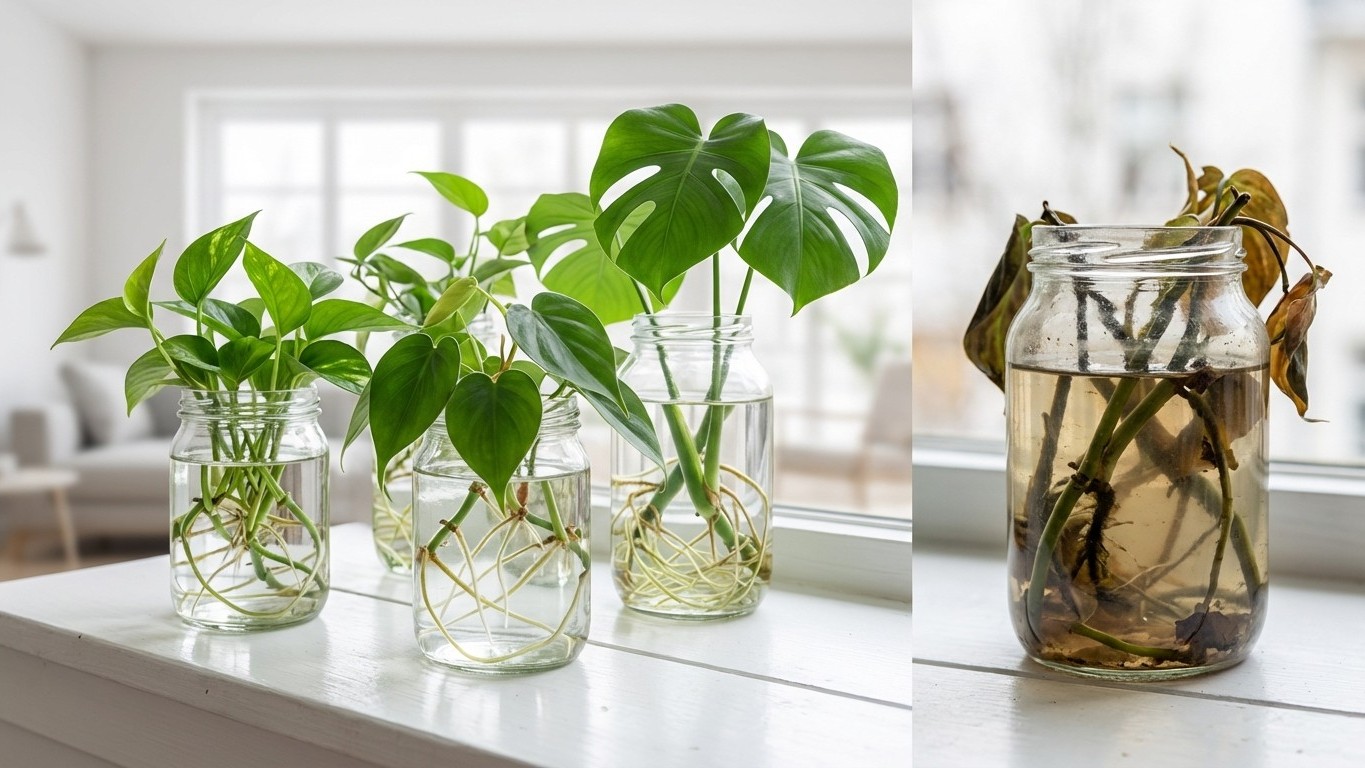
Sarah stared at her windowsill in frustration. Another batch of pothos cuttings had turned brown and mushy, their once-promising roots now a slimy mess floating in murky water. Like countless plant enthusiasts Before her, she was making the most common—and most devastating—Mistake in plant propagation: using the wrong type of water.
The excitement of propagating plants often blinds us to a fundamental truth that commercial nurseries have known for decades. While we assume that water is simply water, the liquid coming from our taps carries a cocktail of chemicals that can spell doom for delicate new roots. Chlorine, fluoride, and various minerals that make our drinking water safe can create a hostile environment for vulnerable cuttings trying to establish their first fragile root systems.
When cuttings sit in chlorinated tap water, the Chemical doesn’t just affect taste—it actively inhibits root development and Creates conditions where harmful bacteria thrive. The chlorine essentially burns the tender root tips, causing them to turn brown and rot from the bottom up. Meanwhile, the high mineral content in hard water can create salt buildup that further stresses the cutting, making it nearly impossible for healthy roots to form.
The Science Behind Successful Root Development
Understanding why cuttings fail requires a closer look at what happens during those crucial first weeks of propagation. When you place a cutting in water, the plant begins redirecting its energy toward survival, attempting to grow new roots from the nodes along the stem. This process requires precise conditions: the right pH balance, adequate oxygen, and an environment free from harmful chemicals and bacteria.
Fresh cuttings are essentially open wounds, making them incredibly susceptible to infection. In nature, plants don’t typically propagate in standing water—they develop roots in moist soil with proper drainage and air circulation. When we force them into water propagation, we’re asking them to adapt to an unnatural environment, which means every factor becomes critical.
The temperature of the water also plays a crucial role that many overlook. Cold water shocks the cutting and slows cellular activity, while water that’s too warm becomes a breeding ground for bacteria. Room temperature water that’s been allowed to sit for 24 hours gives cuttings the best chance of success, as it allows chlorine to evaporate naturally while reaching an optimal temperature.
The Simple Solution That Changes Everything
The remedy for this common propagation problem is surprisingly simple, yet it makes all the difference between success and failure. Instead of using water straight from the tap, successful propagators rely on filtered, distilled, or rainwater. These alternatives provide the clean, chemical-free environment that cuttings need to develop strong, healthy roots.
Rainwater represents the gold standard for plant propagation. Its naturally soft composition and slightly acidic pH create ideal conditions for root development. Collecting rainwater in clean containers during storms provides an endless supply of the perfect propagation medium. For those in Apartments or areas with limited rainfall, distilled water from the grocery store offers a reliable alternative that costs mere pennies per cutting.
The transformation in success rates when switching from tap water to distilled water is often dramatic. Cuttings that would have rotted within a week suddenly develop robust root systems within days. The water stays clearer Longer, and the familiar smell of decay is replaced by the fresh scent of healthy plant growth.
Creating the Perfect Propagation Environment
Beyond water quality, successful propagation requires attention to several other critical factors that work together to create an optimal environment. The container itself matters significantly—glass jars allow you to monitor root development, while opaque containers can sometimes provide better conditions by blocking light that might encourage algae growth.
Changing the water regularly remains essential, even when using distilled water. Every three to four days, refresh the water completely, gently rinsing the cutting’s developing roots under lukewarm running water before placing it in fresh distilled water. This Simple routine prevents bacterial buildup and ensures adequate oxygen reaches the developing root system.
Light conditions also significantly impact propagation success. While cuttings need bright, indirect light to photosynthesize and maintain energy for root development, direct sunlight can stress them and heat the water to dangerous temperatures. A spot near a north-facing window or several feet back from a south-facing window typically provides ideal conditions.
The revelation about water quality transforms not just individual propagation attempts, but entire approaches to plant collecting and sharing. Armed with this knowledge, plant enthusiasts find themselves successfully rooting species they’d previously considered difficult or impossible. The confidence that comes from understanding the science behind propagation opens doors to experimenting with more challenging varieties and sharing successful techniques with fellow plant lovers.
Next time you prepare to propagate your favorite plant, remember Sarah’s lesson: skip the tap and reach for distilled water instead. This simple change, backed by solid science and proven by countless successful propagators, might be the difference between watching your cuttings rot and celebrating a windowsill full of thriving new plants ready to find homes throughout your space.