
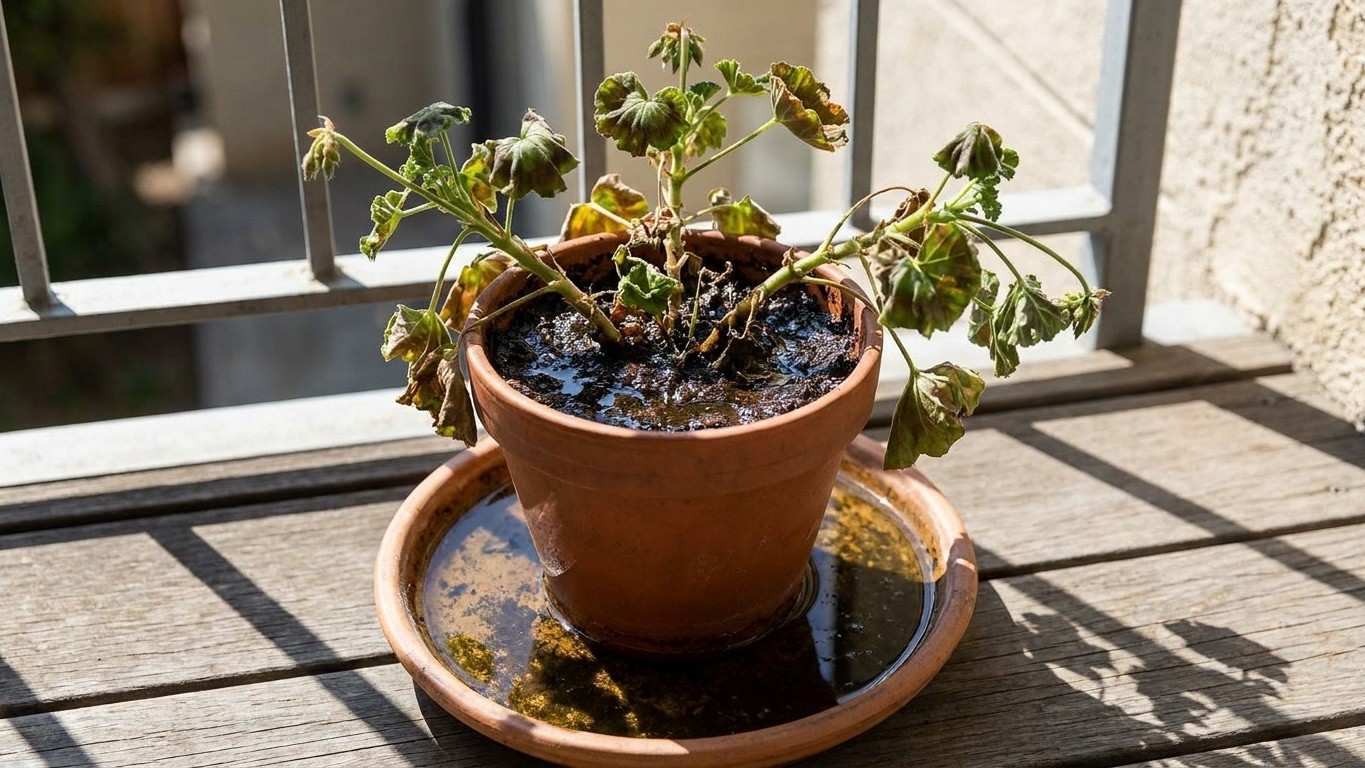
Seven days. That’s all it took for a well-intentioned habit to turn into a plant funeral. The saucers under my balcony pots seemed like a smart backup during a brutal heat stretch: fill them with water, let the roots sip from below, skip a few watering sessions. Instead, by the time I noticed the wilting, discolored leaves and the mushy stems, the damage was already done. What I thought was insurance against drought turned out to be the exact opposite.
Key takeaways
- A gardener’s attempt to protect plants during extreme heat with full saucers resulted in total plant death in just seven days
- Roots need oxygen as much as water, and standing water cuts off air circulation, causing invisible rot before leaves ever show damage
- The same instinct that seems lifesaving during a heat wave—leaving extra water nearby—is flagged by horticulturists as one of the most common fatal mistakes
Why “helpful” water becomes a death sentence
Roots don’t just need moisture. They need oxygen too, and that’s the part most of us forget when we’re trying to outsmart a heat wave. The roots can get no oxygen because they are literally drowning in water, since the pores between soil particles fill with water instead of oxygen, suffocating the roots and eventually causing rot and plant death. A saucer that never gets emptied does exactly that: it turns the bottom of your pot into a stagnant pool.
The mechanism is almost mechanical in its cruelty. Roots need both water and oxygen to function, and when water lingers in a saucer, the soil at the bottom of the pot stays saturated, cutting off air circulation. Over time, roots begin to suffocate and rot, leaving the plant weak, discolored, and prone to collapse. That’s not a slow decline you can catch in time either. Once the rot sets in, the plant is already fighting a losing battle underground, invisible until the leaves start telling the story above soil.
The saddest part? Plants rarely recover from root rot. There’s no dramatic rescue mission once the roots have gone soft and brown. Prevention was always the only real option, and I’d skipped it entirely in the name of convenience.
The heat wave trap that fools even careful gardeners
Here’s what makes this mistake so tempting during a scorcher: Everything about a heat wave screams “give them more water.” And in one sense, that instinct isn’t wrong. With intense heat domes bringing record-shattering temperatures across the US, potted plants are already at a disadvantage, getting hotter and drying out far quicker than those planted in the cool ground, and when root zones bake in a heatwave, the results are swift and devastating. So the logic of “leave extra water nearby” feels sound. It just targets the wrong problem.
Overwatering during a heat wave isn’t a hypothetical risk, it’s one horticulturists flag constantly. While keeping your container garden hydrated is crucial, overwatering can be just as harmful as underwatering, since overly wet soil can lead to root rot and fungal diseases, especially during heat waves when the soil takes longer to dry out. The heat that dries out the top inch of soil doesn’t dry out the saturated mess sitting in a full saucer underneath. That water just sits there, day after day, quietly working against the plant.
Garden experts have been saying this for years, and it hasn’t changed. “Good drainage is also key; make sure containers have drainage holes and aren’t sitting in saucers full of standing water,” garden consultant Sara Rubens says. It’s a simple rule, but one that’s easy to ignore when the forecast says triple digits and you’re heading out for a few days.
What actually keeps container plants alive in a heat wave
The fix isn’t complicated, but it does require breaking the saucer habit. Extension horticulturists are blunt about the timing: experts advise checking and emptying the saucer at the latest shortly after watering, with some recommending checking the saucer about 30 minutes after watering and always pouring away excess water to prevent root rot. That 30-minute window matters more than people think. Water sitting overnight doesn’t stay put either. If you use saucers, dump standing water within 30 minutes of watering, because water left overnight in a saucer wicks back into the root zone through capillary action and keeps the bottom of the pot perpetually wet.
Timing your actual watering sessions matters just as much as emptying the saucer afterward. During a heatwave, containers often need to be watered in the early morning and in the evening, because the soil dries out. Watering at midday wastes half your effort to evaporation anyway, and it stresses foliage that’s already struggling with the heat. A moisture meter takes the guesswork out of the equation entirely. One gardener describes the moisture meter as a plant lifesaver, noting that another advantage of using the meter is that it keeps you from overwatering which can also kill the plant.
Container choice plays a role too, something I hadn’t considered before this whole ordeal. Even the container itself can add to the problem, since plastic heats up and doesn’t breathe while metal pots trap heat, according to Salmeri. Terracotta and stone breathe better and stay cooler, though they dry out faster, which means the watering schedule still needs adjusting rather than compensating with a permanent water reservoir underneath.
If you’re heading out of town during a heat wave and can’t rely on someone to check saucers daily, better options exist than leaving standing water behind. Grouping pots together, using self-watering containers with proper wicking systems, or asking a neighbor to do a quick 30-minute dump-and-check routine all beat the “fill it and forget it” approach. The irony is that the fix takes less effort than what I was doing, not more. I just have to remember that a saucer is a catch basin, not a reservoir, and the difference between those two things is exactly what separates a thriving balcony garden from a week-long funeral procession for my geraniums.
Sources : aol.com | thegardenbeds.com