
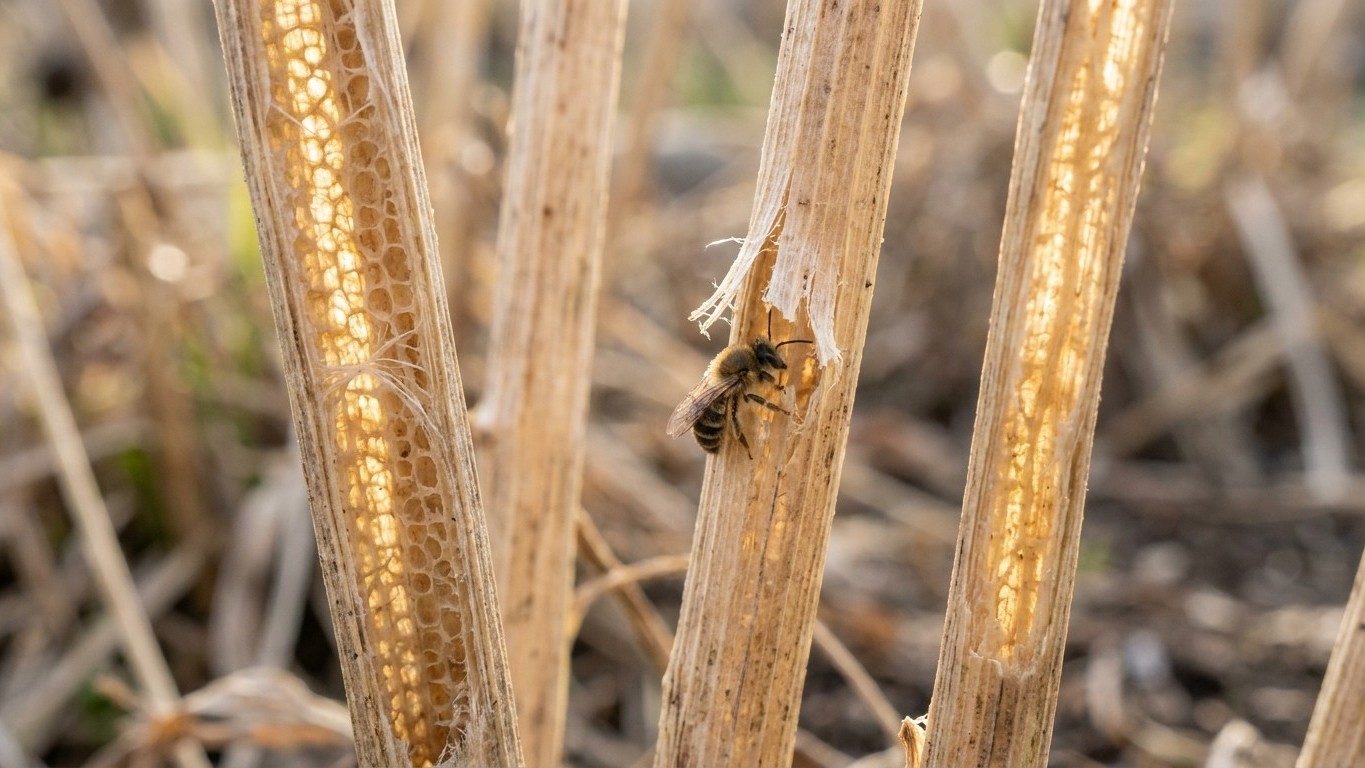
An August cleanup felt harmless. The perennials had gone leggy and brown weeks earlier, so cutting them flush with the soil seemed like basic garden hygiene, not a decision with consequences. But that tidy border came at a cost that didn’t show up until the following spring, when the usual buzz of early bees never arrived and the songbirds skipped right past the empty beds. What left with those stems wasn’t debris. It was habitat.
Key takeaways
- Hollow perennial stems aren’t waste—they’re active nesting sites that cavity-dwelling bees have already claimed
- Butterflies, moths, and other insects overwinter inside those ‘spent’ stems and seed heads; August cutting can eliminate eggs and pupae mid-development
- Late-summer cutting removes the winter food source that keeps finches, chickadees, and juncos alive through January scarcity
The stems were never just “spent”
Hollow and pithy perennial stalks, the kind left behind by coneflowers, bee balm, and Joe-Pye weed, aren’t inert once the blooms fade. Many hollow or pithy plant stems provide places for cavity-nesting insects, such as small carpenter bees, to call home. Cut those stems to the ground in August and you’re not tidying up a finished plant. You’re demolishing a structure that solitary bees were already lining up to use.
The timing makes it worse. Most butterflies and moths overwinter as a caterpillar or pupae, and the generation that matures in late summer lays eggs that hatch, become pupae and overwinter in leaf litter and spent flower stems, grasses and leaves. An August chop doesn’t just remove future shelter. It can eliminate eggs and larvae that were deposited on those very stems days or weeks earlier. Some overwintering happens even more literally on the plant itself: many butterfly species overwinter as chrysalises on standing dead plants, including some swallowtails, sulphurs, elfins, and skippers.
Then there’s the seed problem, which is easy to overlook because it’s about food rather than shelter. In the winter months when food is scarce, gardens full of withered fruit and dried seed heads can provide birds with a reliable food source. Finches picking through coneflower cones, chickadees working over rudbeckia, juncos scratching under dried stalks: the seedheads of perennial plants provide food in the winter for seed-eating birds such as finches, chickadees, juncos, and sparrows. Cut the stems down in late summer, before seeds even fully mature and disperse, and that food source simply doesn’t exist come January.
Why “later” matters as much as “whether”
None of this means perennials should never be cut. The consensus among extension horticulturists isn’t “never touch a stem,” it’s “wait.” Spring temperatures need to hover in the 50s for several days before cutting back perennials that were left standing for winter, because this allows overwintering insects a chance to leave their winter homes. An August cut skips that entire window. It’s the equivalent of tearing down an apartment building while the tenants are still asleep inside.
There’s also a structural reason late-summer cutting backfires that has nothing to do with wildlife. The fallen debris acts as a natural mulch, providing an extra layer of protection for the crown and root system of the perennial, and most perennials are pretty winter-hardy, but it doesn’t hurt to have a little extra blanket. Strip that insulation away three or four months before the first hard frost and the crown sits exposed through the coldest stretch of the year, right when it needs the buffer most.
Not every plant deserves a pass, and that distinction matters. Around plants that contracted severe disease or a significant pest outbreak, it may be best to remove debris once autumn frosts have killed stems and foliage, but for all other plants, especially native species, leaving that material in place provides ecological benefits that can outweigh the risk of harboring a pest or pathogen. Powdery mildew on garden phlox, blackspot on anything susceptible: that’s a legitimate reason to remove foliage promptly. A perennial that simply looks faded is not.
What to actually do with an August border
If the border looks unkempt in August, the fix isn’t demolition. Deadheading, snipping off individual spent blooms while leaving the main stem structure intact, cleans up the visual mess without erasing the insect housing underneath. For plants that are aggressive self-seeders and threatening to take over a bed, removing just the seed heads (not the whole stem) controls spread while still leaving stem habitat standing.
A defined edge does more for the “tidy” look than a full chop ever will. Cutting an edge to define the boundaries of a landscape or garden bed from the lawn, patio, or walkway gives gardens a neater look through fall, winter, and early spring. A crisp line at the border’s edge reads as intentional even when the interior looks a little wild. That contrast, tidy edge, loose interior, is close to the visual trick professional landscapers use to make naturalistic plantings look designed rather than neglected.
Come spring, the cutback finally happens, but with a twist that most gardeners never learn until it’s explained. Cut stems back to varying heights between 8 to 24 inches, since these dead stems provide nesting cavities for bees, and the new growth will mask these stems. Uneven stubble isn’t sloppy pruning. It’s deliberately staggered housing that keeps working for another full season while the fresh growth quietly hides it. Leave the cut material in a brush pile at the edge of the yard rather than the compost bin, since stacking the trimmings in an out-of-the-way location allows any remaining insects time to exit.
The border that looks the messiest in late summer, brown stalks, dried cones, collapsing foliage, is usually the one doing the most work. A garden groomed to catalog-perfect in August is often a garden that goes silent by March.
Sources : cbs2iowa.com | milorganite.com