
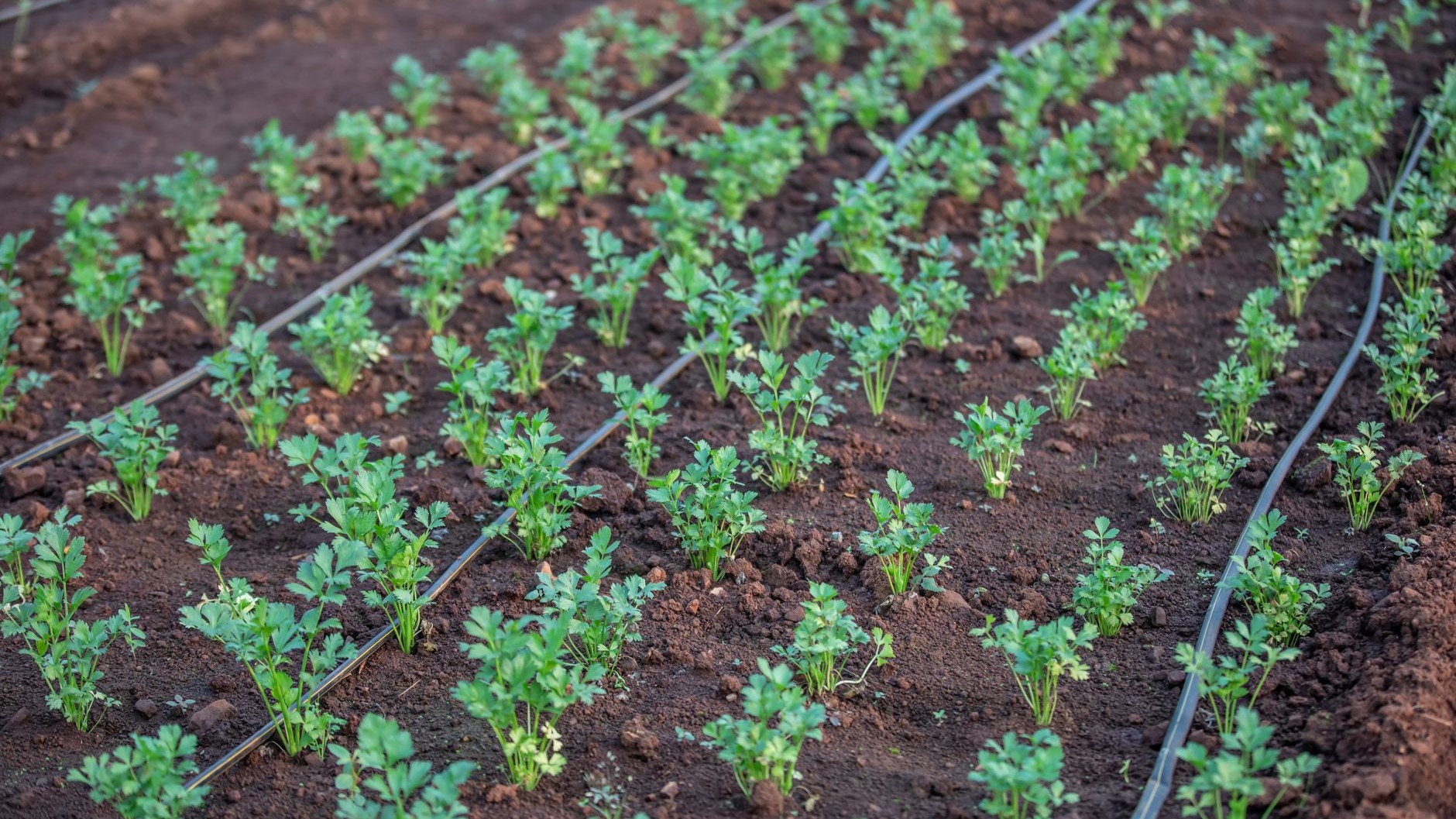
A drip line rated for 2 liters per hour rarely fails all at once. It fades. Week after week, the flow creeps down, from a steady trickle-turned-stream to something closer to a slow weep, and because the emitter sits six inches under mulch or turf, nobody notices until the tomatoes wilt or the lawn browns in patches that don’t match the sprinkler map. The timer clicks on, the pump hums, the controller shows a green light. Everything looks fine. That’s precisely the trap.
Buried emitters don’t announce their decline the way surface drippers do. A cracked hose on top of the soil leaves a puddle within minutes. A subsurface emitter losing capacity leaves nothing, because whatever water does escape gets absorbed by the surrounding soil before it ever reaches daylight. The failure is invisible by design, which is exactly why so many gardeners assume the irrigation timer is the culprit when the real problem is millimeters below the surface, inside the emitter itself.
Key takeaways
- What’s really clogging your subsurface emitters may surprise you—and it’s not what gardeners typically blame
- Why invisible failures stay hidden: the soil absorbs every trace of water loss before it reaches daylight
- A five-year research finding reveals exactly where 70% of clogging accumulates, and it’s not inside the emitter channel
What’s actually choking the water path
Inside every drip emitter is a labyrinth, a zigzag channel engineered to slow water down and regulate flow. That labyrinth channel is narrow, with a cross-section of around 1 mm, which makes the flow sensitive to clogging. It doesn’t take much debris to narrow that already tiny passage into something far less generous.
Research on subsurface systems has quantified just how much material can build up. A five-year study on a corn irrigation system in the North China Plain found that the proportions of clogging substances in the emitter flow channels, outlet, and intrusion root dry weight were 28.9%, 69.3%, and 1.8% of the total clogging substance dry weight, respectively. In plain terms: nearly seven out of ten grams of gunk found in these emitters had accumulated right at the exit point, not from roots pushing in, but from soil particles and mineral residue settling where the water meets the ground.
That finding cuts against a common assumption. Gardeners often blame roots first, imagining thirsty tendrils homing in on the moist emitter. Roots do play a role, but a five-year sugarcane trial found that root intrusion accounted for less than 5.0% of total clogging, while slight clogging (70.1%±8.41%) and partial clogging (20.0% ± 6.99%) caused by chemical, physical and biological fouling showed the stronger link to declining performance. Calcium carbonate is one of the worst offenders. One controlled trial found that the average flow rate got reduced by 40% due to CaCO3 clogging after just 70 days of exposure to hard water. Add in fine silt, dissolved iron, or manganese, and you get a mineral crust building up quietly on the inner walls of the channel, shaving off flow rate a fraction of a percent at a time.
Why the surface stays bone dry
Even when clogging is well underway, most gardeners see nothing because the mechanism itself works against detection. Soil acts like a sponge and a filter simultaneously: any water that does escape a partially blocked emitter gets pulled sideways and downward by capillary action long before it could pool visibly. A wet patch on the surface requires either standing water from a major leak or saturation strong enough to overcome the soil’s absorption capacity, and a slow-motion clog rarely produces either.
There’s also a mechanical wrinkle involving pressure-compensating emitters, the type designed to deliver a constant flow rate regardless of small pressure changes along the line. These emitters use a flexible membrane that flexes to maintain output, but the very mechanism meant to keep flow steady can mask a partial blockage until it’s severe. Patent filings on emitter design describe the reverse problem too: the exit port of a subsurface emitter can become clogged due to grit which often enters the exit port due to back siphoning, meaning that every time the system shuts off, a small vacuum can pull soil particles backward into the very opening meant to push water out. It’s a mechanism working against itself, twice a day, every time the timer cycles.
Catching the drop before the plants do
The fix isn’t a smarter timer. It’s treating flow rate as something you measure, not assume. A handful of practical habits make the difference between catching a slow decline early and Discovering it only when a hedge starts dying from the inside out.
- Check actual output with a measuring cup at a few emitters each season rather than trusting the rated liters-per-hour number on the packaging.
- Flush the lines regularly. Flushing the system by removing end caps or adding flush valves allows water to automatically drain after every use, which helps remove deposits or loose debris that may build up in the line.
- Install or maintain an inline filter. A filter removes debris that can clog the emitters or drip tubing, and a clean filter is cheaper than replacing a buried line.
- Watch the water source. When irrigation water or soil has high amounts of manganese, iron, or hydrogen sulfides, it can favor the development of algae and bacteria, which in turn can favor plant roots growing toward the emitter and clogging it.
- For new installations, look for emitters built with root-intrusion protection. Copper shield technology naturally protects the emitters from root intrusion without chemicals, which sidesteps at least one slice of the clogging problem from the start.
None of this requires digging up an entire yard on suspicion alone. A single test emitter, dug up and inspected once a year, tells you more about system health than any smart controller ever will. If the flow at that one point has dropped noticeably, the rest of the line is very likely following the same quiet trajectory, mineral crust by mineral crust, one irrigation cycle at a time.
Sources : sciencedirect.com | sciencedirect.com