
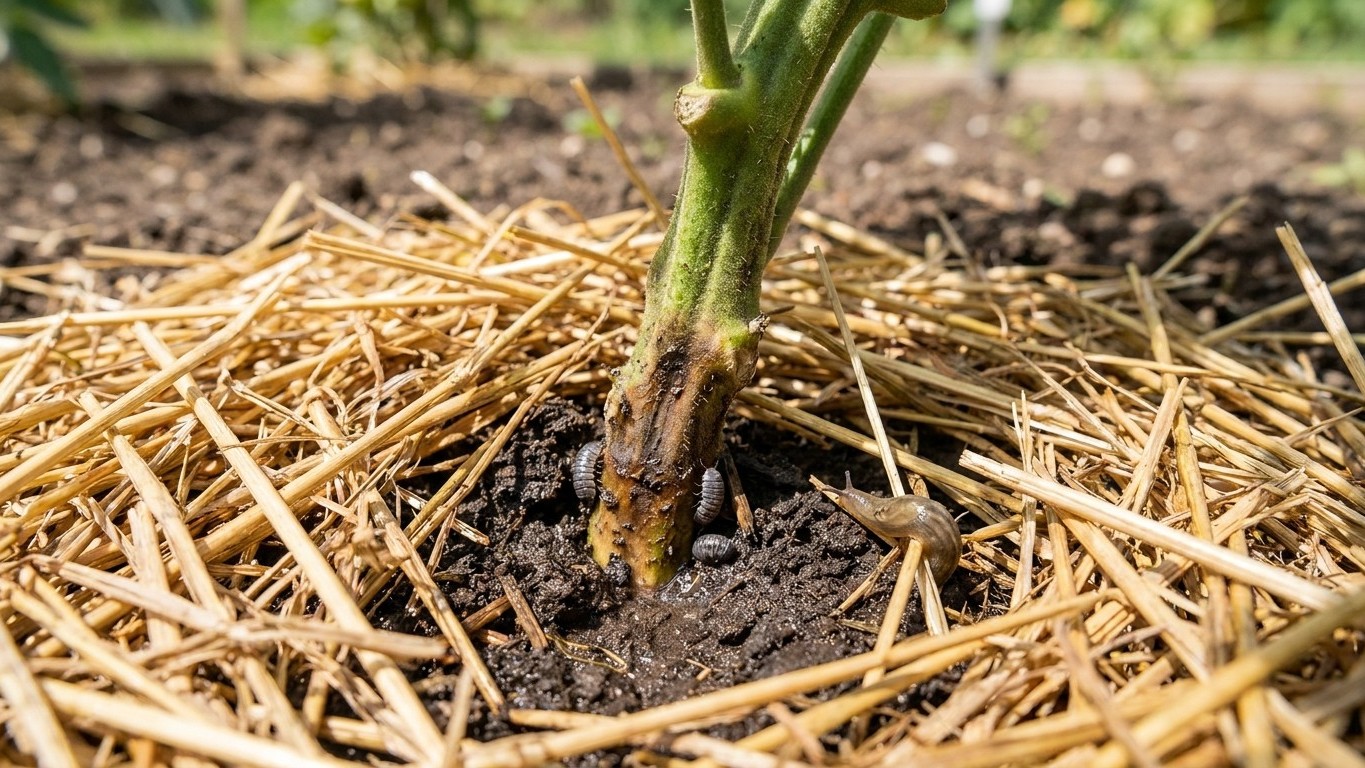
Pulling back that straw a month later revealed a soggy, blackened ring right where the stem met the soil, riddled with pillbugs and slug trails, the tissue soft enough to pinch off with two fingers. That’s crown rot in progress, and it’s one of the most common mistakes gardeners make with organic mulch.
The instinct makes sense on paper. Straw holds moisture, blocks evaporation, and keeps the topsoil from turning to dust in July. But piling straw right up against the main stem of the tomato plant traps moisture against the stem, leading to rot or providing a cozy hiding spot for slugs and pests. That gap gardeners always mention isn’t a cosmetic detail. It’s the difference between a plant that thrives and one that quietly rots from the ground up.
Key takeaways
- Straw piled against tomato stems creates a dark, damp breeding ground for crown rot and soil-borne fungi
- Softened tissue from rot becomes an all-you-can-eat buffet for slugs, pillbugs, and cutworms hiding in mulch
- A visible 1–2 inch bare soil gap around the base isn’t cosmetic—it’s the difference between thriving plants and silent collapse
Why the stem needs breathing room
Tomato stems aren’t built like tree bark. The tissue right at the soil line, sometimes called the crown, stays soft and vulnerable for the plant’s entire life. Extension pathologists have a name for what happens when mulch smothers that spot: tomatoes, eggplant, and other crops are prone to crown rot caused by oomycetes, water molds that thrive in wet soils and don’t require a wound to infect, and can cause older plants to lose vigor, collapse, and die, with discolored roots showing chocolate brown lesions extending into the lower stem. That’s essentially what I found when I peeled the straw away, tissue that had gone from green and firm to mushy and discolored, weeks before I noticed anything wrong above ground.
The mechanism behind it isn’t complicated. Constant moisture, limited airflow, and warm temperatures provide ideal conditions for fungal pathogens to thrive, and soil-borne fungi often become active when mulch prevents the soil from drying between irrigation cycles or rainfall. Landscapers actually have a nickname for the exaggerated version of this mistake around trees: piling mulch high against tree trunks, creating what many landscapers call a mulch volcano, traps moisture against the bark and creates ideal conditions for rot. Do the same thing at the base of a tomato plant with a hollow, herbaceous stem, and the damage shows up faster, sometimes in weeks rather than seasons.
What’s actually eating the base
The rot softens the tissue, and that softened tissue becomes an all-you-can-eat buffet. Gardeners who’ve dealt with this describe the same lineup of culprits. On one gardening forum, a grower complained about mysterious pests devastating young tomato seedlings, and the advice that followed pointed straight at the mulch itself: ringing new transplants with a cut-open can or plastic jug protects the small plant especially from cutworms but also to some extent from other ground pests like slugs, earwigs, and pillbugs, most of which are exacerbated by mulch around the plants when they are small.
Pillbugs and slugs don’t usually attack healthy plant tissue outright, they’re opportunists drawn to the dark, damp microclimate mulch creates, and they finish off what the rot has already softened. Cutworms are the more brutal offenders, capable of severing a healthy stem at the soil line overnight, and a straw pile pushed against the plant gives them exactly the cover they need to work undetected. That’s precisely the kind of damage that gets mistaken for disease when it’s really just a hungry insect with a good hiding spot.
Getting the gap right
The fix isn’t complicated, but the exact numbers matter more than most gardeners assume. Multiple extension resources converge on a similar range: place a 3 to 6 inch layer of straw around your tomatoes, but avoid touching the stems or leaves of plants since this can increase the likelihood of fungal problems. Some growers prefer a tighter margin, applying a 2–3 inch layer, and keeping straw 1–2 inches clear of the main stem to prevent crown rot. Either way, the principle holds: a visible ring of bare soil around the base, not a snug collar of straw hugging the stem.
Straw quality matters too, and it’s an easy detail to overlook when you’re grabbing whatever bale is cheapest at the feed store. Use straw, not hay, since hay contains viable weed seeds while straw is the dried stem of a grain crop and is largely seed-free. Buying from a source you trust avoids trading one problem (crown rot) for another (a bed full of unwanted seedlings next spring).
Depth matters as much as distance. Extension horticulturists studying root rot pathogens in general keep repeating the same caution regardless of the plant: do not apply more than three inches of mulch, since excessive mulching can lead to over wet soils, which favor root rot fungi growth and reproduction. A thick, packed layer holds water like a sponge pressed against the stem, even if it technically isn’t touching the plant. Fluffing the straw loosely rather than tamping it down flat helps air move through and lets the top layer dry between waterings.
None of this means mulch is the enemy. Left with proper clearance, straw still does real work: it keeps soil-borne fungal spores from splashing onto lower leaves during rain, evens out the wet-dry swings that crack fruit and cause blossom-end rot, and keeps ripening tomatoes off bare dirt. The trick is treating that ring of bare soil around the stem as non-negotiable, not an afterthought you’ll get to eventually. A cut-open tin can pressed an inch into the soil around a young transplant, the same trick some gardeners use against cutworms, doubles as a permanent reminder of exactly where the mulch line should stop.
Sources : gardengreenland.com | mulchsmartkc.com