
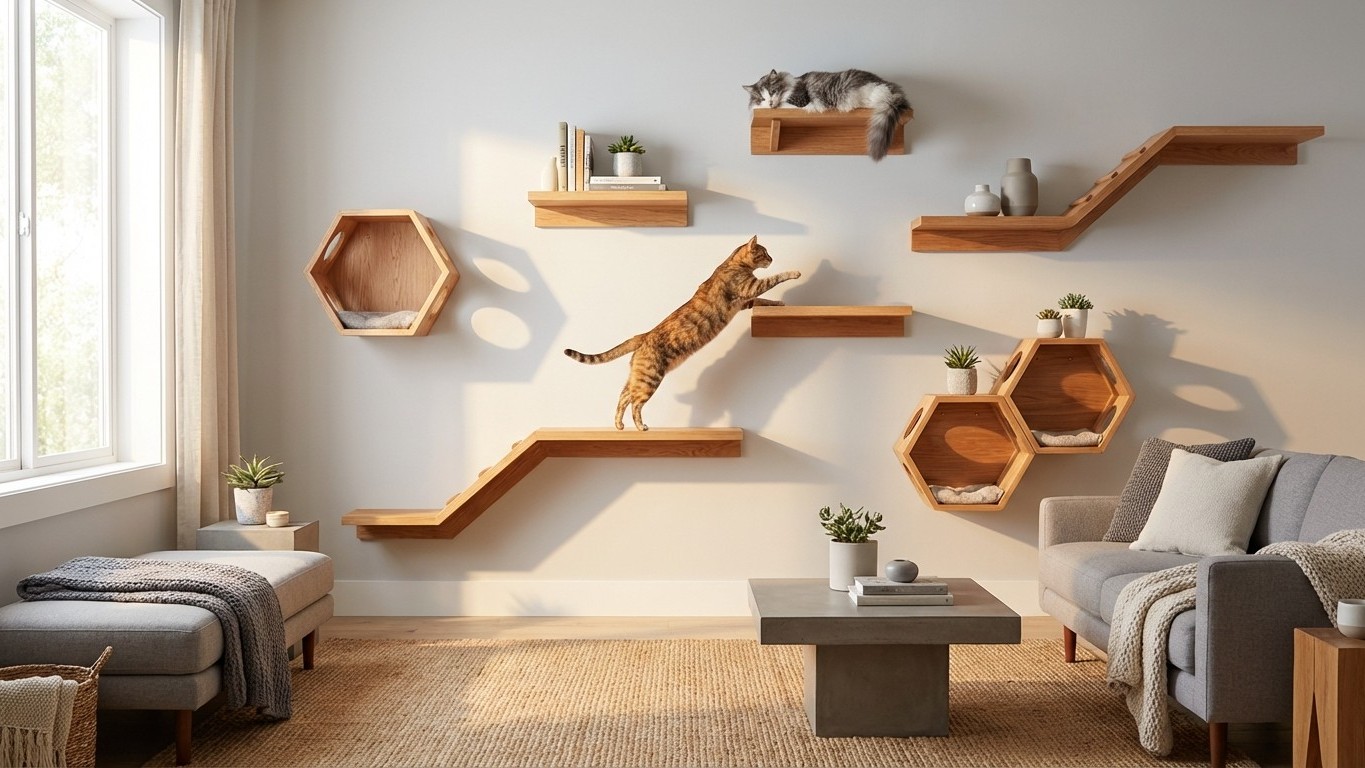
Your cat is already halfway up the bookcase. Again. Before you reach for the squirt bottle, consider this: that vertical ambition is not a behavioral problem.
Cats are natural climbers. In the wild, they use trees to scout for prey, avoid predators, and nap in peace. Indoors, without tall trees, walls, curtains, and bookcases become their stand-ins.
A cat wall, with its network of shelves, walkways, and climbing modules, is the most elegant answer to that instinct, and one that can genuinely upgrade your living space rather than compromise it. This guide covers everything from the science of spacing to the aesthetics of integration, so you can build a setup your cat will actually use and your guests will actually admire.
Why a Cat Wall Changes Everything (For Them and for You)
Vertical Space as a Wellness Investment
Indoor cats often lead sedentary lives, which can lead to weight gain and health issues. A cat wall encourages climbing, jumping, stretching, and balancing — activities that promote full-body movement and help maintain a healthy weight.
Think of it as their version of a gym membership, except they’ll actually use it every day.
Vertical spaces encourage natural behaviors like exploring, hunting, and perching. Physical activity releases happy neurotransmitters like dopamine and endorphins, which can reduce frustration and curb destructive behaviors, such as scratching furniture or excessive meowing.
The social dimension matters too, especially if you live in a multi-cat household.
A cat climbing wall relieves stress by giving cats personal territory. Shelves prevent arguments by allowing each cat to claim their own vertical space.
Fewer standoffs at the food bowl. Less hissing in the hallway. Three weeks of installing a proper wall system sometimes resolves tensions that months of treats and pheromone sprays couldn’t touch.
The Floor Space Equation
Living in a small home or apartment can be crowded enough, without adding bulky cat trees and towers to the mix. So how do you enrich your cat’s life without sacrificing your own comfort? While you can’t add more rooms to expand your cat’s territory, you can build up instead. Cats like being up high anyway, so cat shelving really makes a lot of sense.
A well-designed cat wall reclaims floor space while adding a layer of visual texture that reads more like architectural detail than pet furniture, if you choose materials and placement wisely. More on that shortly.
This shift is also reflected in broader market trends:
approximately 48% of cat owners prefer vertical and modular furniture to save space, particularly in apartments and smaller homes.
The Components: Shelves, Walkways, and Full Climbing Courses
Shelves: The Foundation of Any Cat Wall
Floor toys are fun, but they don’t scratch the itch of wanting to be above it all. Cat climbing shelves act like the branches of an indoor tree. Cats love to perch, watch the world, and nap in spots where they feel secure but still in control.
Basic wall shelves, single planks, staggered at varied heights, form the backbone of any system. Shape matters more than most people realize.
Honeycomb-style hexagonal shelves or triangle-based wall units offer both function and architectural appeal.
A series of floating rectangular shelves in walnut stain can read like contemporary wall art; hexagonal modules add geometric interest.
Platform depth is a non-negotiable parameter.
Platform size directly affects your cat’s comfort and safety. Large cats need room to turn around without precarious balancing. Minimum platform depth should measure 10 to 12 inches, with 12 to 14 inches being ideal for cats over 18 pounds. The platform width should be at least 24 inches so your cat can stretch out fully.
Walkways and Bridges: Connecting the Dots
Individual shelves are resting points. Walkways are what make a cat wall a genuine circuit.
If you’re building an indoor climbing wall for your cat, think of it as a three-dimensional puzzle. You want to give your cat options, but you also want to set them up for success. Cats love routes — they prefer gradual height increases over giant leaps.
A horizontal bridge connecting two shelves at the same level creates a patrol route; a ramp between two different heights guides less athletic or older cats upward without forcing a jump.
Incorporate wider “landing pads” into the route, especially at turning points. These wider shelves act as safe zones where your cat can rest or plan their next move.
Corner sections deserve particular attention:
corner walls are great for creating L-shaped runs that feel secure, and they often have more internal structure to support heavier mounts.
Full Agility Courses: Scratching Posts, Hideouts, and Play Zones
The most engaging cat walls combine all three functions: movement, rest, and play.
A complete wall-mounted furniture set can include a cat bridge, cat wall bed, scratching post, and cat shelf, so cats can sleep, jump, and scratch.
Sisal-wrapped vertical poles double as both scratching surfaces and climbing grips — a two-in-one that reduces the number of separate elements cluttering the wall.
Some cats, the “bush dwellers,” prefer access to shelves that are more enclosed with the ability to see but not be seen.
For these cats, a small cubby or enclosed hammock tucked into the route is worth far more than a simple flat shelf.
The goal, ultimately, is variety. A system that offers perching, scratching, hiding, and observation keeps cats mentally engaged throughout the day, not just for the first excited week after installation.
Choosing the Right Materials: Beauty and Durability Are Not Opposites
This is where most first-time buyers get it wrong. They buy something visually appealing, install it, and find that their cat avoids it — because a smooth lacquered surface offers zero grip.
Big cats need space to balance and land safely. Shelves with soft textures (like felt or carpeted surfaces) help them grip with their paws and feel secure, while rounded edges prevent knocks and scrapes.
Solid wood or plywood are strong and reliable options for shelves and perches. Make sure the wood is at least ¾ inch thick for structural integrity. Avoid particleboard or medium-density fiberboard (MDF), as these materials tend to crumble under pressure or moisture.
For brackets,
durable materials like powder-coated steel brackets and high-quality engineered wood or eco-felt last longer and don’t warp or split over time.
On the surface side,
berber carpet, faux fur, sisal, marine carpet, and astroturf all provide good traction.
Beige carpeted towers are fading from contemporary homes. Natural wood tones in warm espresso, rich chestnut, and light oak dominate the market. These finishes complement modern interior design trends while providing cats with the sturdy, natural textures they instinctively prefer.
Cats experience their world through touch. Smooth wood surfaces for confident leaps, soft plush for afternoon naps, and rough sisal for satisfying scratches create a rich sensory environment.
Combining all three in a single wall system is the ideal approach.
For a broader perspective on integrating pet-friendly materials throughout your home, see our guide on pet friendly home design cat dog furniture — it covers flooring, fabrics, and furniture choices that hold up to real feline life.
The Safety Framework: Fixation, Spacing, and Load Calculations
A collapsing shelf is not just an inconvenience.
Cats are agile creatures, but their acrobatics can put significant stress on wall-mounted structures. A poorly installed shelf or perch can collapse under a cat’s weight, resulting in injuries such as broken bones, sprains, or concussions.
The engineering principle is simple but frequently misunderstood: you are not just supporting your cat’s body weight.
The biggest mistake in cat wall furniture installation is underestimating load requirements. You’re not just supporting your cat’s static weight. You’re supporting their dynamic weight, the force created when they jump onto or off the shelf at speed. A twelve-pound cat creates significantly more force during landing than twelve pounds of static weight. Add in the shelf’s own weight, and you need hardware rated for at least three times your cat’s weight per mounting point.
How to Fix Shelves Correctly in Any Wall Type
Not all walls can support wall-mounted cat shelves the same way. Drywall alone won’t hold your cat’s weight safely. Plaster walls are denser but can crumble if you use the wrong anchors. Concrete and brick require specialized drill bits and mounting hardware.
The first step is always identifying your wall material, knock on it. A hollow sound means drywall over studs; dense and solid means concrete, brick, or plaster.
For standard American drywall construction:
most construction in the US uses drywall over wall studs, wooden or metal 2x4s that act as the wall frame. Since these studs are sturdy, furniture is designed to be installed into them. Wall studs are typically spaced 16 inches from center to center, though some homes have 24-inch spacing.
For drywall installations, use heavy-duty toggle bolts or anchor directly into studs with lag screws. For plaster, use expansion anchors designed for dense materials. For concrete or brick, use sleeve anchors with appropriate masonry bits.
Each mounting point should be rated for at least 50 pounds. This sounds excessive for a small shelf and a medium cat, but it accounts for dynamic loading, aging hardware, and safety margins that matter over years of use.
Spacing Rules That Make or Break Adoption
A shelf installed too high without a logical path up is just wall decoration.
A single shelf mounted at seven feet with no intermediate access points is decorative art, not functional cat furniture. Cats need graduated steps to reach high spaces comfortably. Start lower than you think. The first shelf should be accessible from the floor (18–24 inches high) or from nearby furniture like a sofa or credenza.
For wall-mounted cat shelves, keep vertical spacing between 12–18 inches for older or cautious cats, and up to 24 inches for young, athletic cats. Horizontal gaps between offset shelves should stay under 24 inches.
Larger gaps create decision paralysis. Cats will approach, calculate the distance, and walk away. You’ve built a climbing wall that they don’t trust.
Use painter’s tape to mock up your entire route before drilling a single hole.
Plan the entire vertical route before drilling a single hole. Map it out with painter’s tape on the wall.
After installation:
test the furniture by applying pressure equal to or greater than your cat’s weight. Gently push and pull to check for wobbling or looseness. If the structure feels unstable, reinforce it with additional hardware or move it to a more secure wall.
Integrating a Cat Wall into Your Interior Design
The era of carpet-covered plywood towers that clashed with every room they inhabited is over.
Modern cat furniture has evolved beyond basic carpeted towers into sophisticated pieces that honor both your cat’s instincts and your home’s design aesthetic. Cat furniture in 2026 is no longer an afterthought. Pet parents are seeking pieces that seamlessly integrate into their living spaces while meeting their cats’ behavioral needs.
The biggest visual mistake is installing cat wall furniture that announces itself as pet equipment rather than blending as intentional design. Brightly colored plastic perches, carpet-covered shelves in colors that match nothing, obvious “cat shapes” like paw prints or fish silhouettes — these signal “pet product” in ways that undermine your interior design.
The solution is choosing finishes that mirror your existing furniture.
Choose shelves that mirror the material or finish of your existing furniture (oak, walnut, matte black, etc.). This creates a seamless look across the room.
One of the key reasons people opt for modern design cat furniture is its ability to blend in effortlessly with modern home décor. Unlike traditional bulky cat trees, modern cat furniture is designed with clean lines, neutral colors, and elegant materials that complement any room. Whether you choose a mid-century modern cat condo or a more minimalistic piece, modern design furniture elevates your home’s aesthetic without sacrificing the comfort your cat deserves.
Harmonizing with Other Pet-Friendly Furniture
A cat wall works best as part of a coherent pet-friendly ecosystem rather than an isolated installation.
If your home features a blend of mid-century and vintage decor, you can design cat wall furniture to seamlessly blend in, so it’s not immediately obvious that they are designed for cats.
Think about sightlines: a wall installation above a low sideboard or daybed becomes a natural launch point, integrating human and feline furniture into a single visual composition.
Position shelves near windows for natural light access, integrate them with existing furniture as launchpads, and avoid placements that disrupt human traffic or daily activities.
For those thinking holistically about how cats live within a designed space, from their climbing routes to their rest areas to their litter zones — the guide on cat litter box furniture ideas explores how to integrate all feline needs into a single cohesive design approach. And for the litter side specifically, our piece on cat litter box furniture ideas covers enclosures that are both beautiful and practical.
Installation in Practice and the DIY Option
For the hands-on approach, the DIY route is more accessible than it looks.
The most important element in designing high-mounted DIY cat shelves is ensuring they’re safe and secure. Installing a lofty ledge for your kitty requires boards and brackets that sustain your cat’s weight and don’t impede their movement. You’ll need a wooden board at least ½ inch thick, 12 inches deep, and 18 inches wide, with sturdy L brackets.
You can request rounded corners for your board or purchase child safety foam edge protectors, which can reduce the chances of your kitty getting scratched when they’re vaulting on and off the shelves.
Once the wood is cut and sanded, the surface finish is key:
bare wood can be slippery. Cover each shelf with non-slip materials like berber carpet, faux fur, or sisal. Not only do these add traction, but they also encourage lounging.
A practical DIY tip: use sanded pine boards, shelf brackets, and carpet runners for simple, sturdy cat shelves.
For those who prefer a hybrid approach,
combining custom-built shelves with a few professionally made pieces like hideouts or bridges offers a balanced solution. Use pre-made anchors and ramps where safety is the highest priority.
Maintenance is ongoing:
after installation, check the tightened hardware weekly at first, then monthly. Don’t allow small issues to become dangerous. Regularly verifying security should be part of lifelong cat-shelf maintenance.
To explore how hidden enclosures for other feline furniture can be built with the same precision, the article on hidden litter box cabinet design offers detailed construction guidance that translates directly to wall-mounted woodworking projects.
Getting Your Cat to Actually Use It
Installation is only half the challenge.
Cats are naturally cautious creatures. If something moves under them when they expect it to be solid, they may avoid it in the future. That means your carefully-installed shelf could become a permanent no-go zone or, worse, a point of injury.
Before introducing your cat, verify that nothing wobbles. Then:
introduce your cat slowly, using catnip, toys, or treats to guide them. Allow them to explore at their own pace without forcing them. Some cats take a few days to warm up to new vertical spaces.
Consider your cat’s personality type.
Tree dwellers prefer to survey their territory from off the ground and are the types who will try to find the highest point in the house, like the tops of cabinets or the fridge.
These cats will adopt a new wall system within hours. Bush dwellers need more encouragement — enclosed elements and lower entry points help.
Some cats prefer high perches for observation, while others may be reluctant to climb. For timid or older cats, start with lower platforms (2–4 feet off the ground) and gradually increase the height as they gain confidence.
FAQ: What to Verify Before You Drill
How do I mount shelves without damaging my walls?
For stud mounting, use 2.5–3 inch wood screws that penetrate at least 1.5 inches into the stud. For drywall, use heavy-duty toggle screws or drywall anchors rated for the combined weight of the furniture and your cat.
Filled holes are standard patch-and-paint territory after removal.
What’s the best material for durability and looks?
Solid wood or high-grade plywood provides the structural strength necessary to support larger weights safely. Baltic birch plywood resists warping and offers exceptional strength. Oak, maple, and other hardwoods also work beautifully while providing durability.
How do I make sure my cat actually uses the wall? The route has to make sense.
Plan the complete vertical pathway before installing any cat wall furniture, using painter’s tape to map routes that include entry points, multiple exits, and spacing appropriate for your cat’s age and ability. Maintain 12–24 inch vertical spacing between shelves, depending on your cat’s athleticism, and never exceed 24 inches for horizontal gaps. Larger distances create hesitation and reduce usage.
For multi-cat households, anything specific?
Make sure the layout allows for multiple escape routes to prevent territorial conflicts in multi-cat households.
Multiple access routes prevent territorial bottlenecks where dominant cats block pathways. Providing several climbing options reduces stress and promotes peaceful cohabitation.
A cat wall isn’t a weekend project you complete and forget. It’s a living part of your home that adapts as your cat ages, your household changes, and your design tastes evolve.
Each piece can be part of a modular system, meaning you can mix and match components to suit your cat’s needs and your available wall space. Build a simple lounging zone or an elaborate climbing course — the possibilities are nearly endless, and you can always add on or rearrange as your space or your cat’s preferences evolve.
The question worth sitting with: what does your own wall say about what you value in the life you share with your cat?