
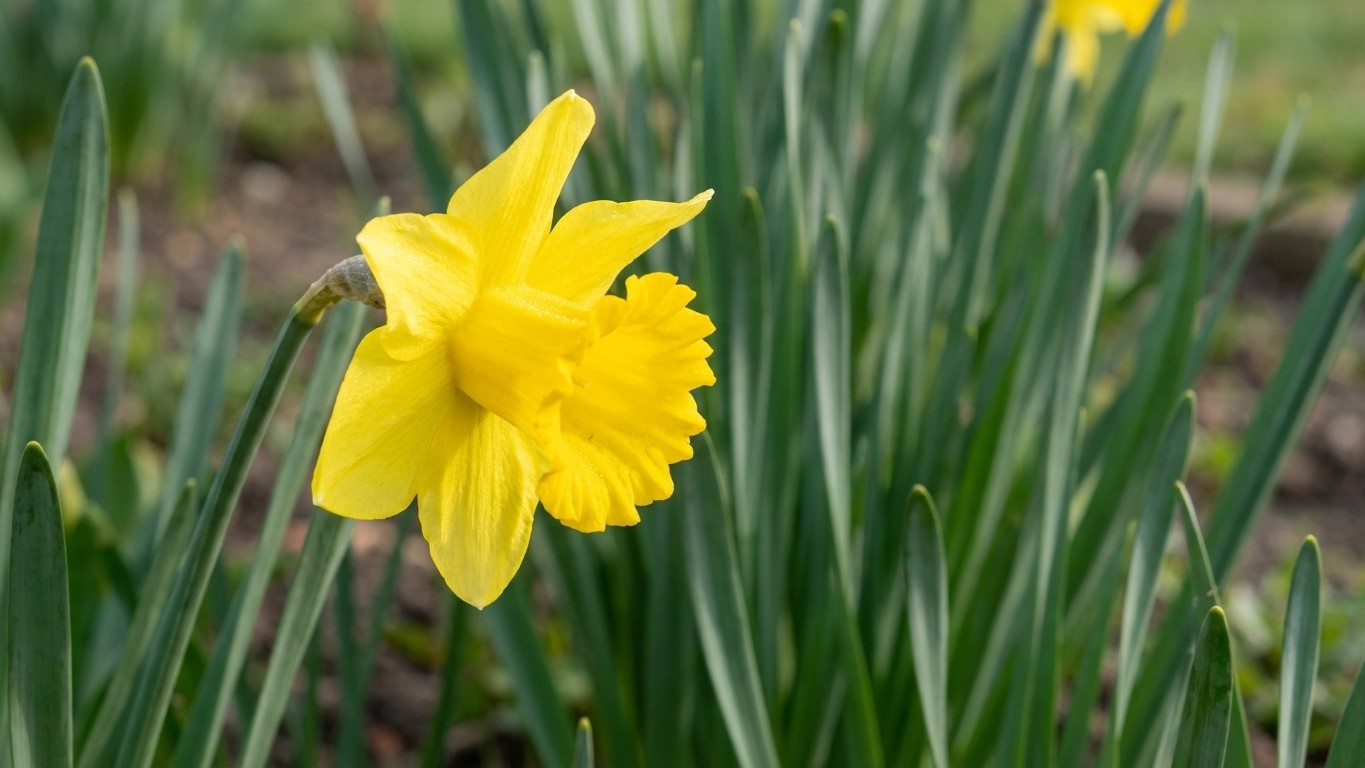
The daffodils have just peaked, their trumpets blazing yellow across the yard, and you’re already reaching for the shears. Tidy garden, right? Not so fast. That one well-intentioned snip could be the reason you end up staring at a patch of green leaves next spring, and nothing else.
Daffodils need a minimum of six weeks of foliage growth after blooming to generate energy for a flower next spring. Cut the leaves off right after flowering, and you will get some leaves next year, but no blooms. That’s the deal. The plant you’re looking at post-bloom isn’t dead. It’s working.
Key takeaways
- Daffodil leaves aren’t just unsightly—they’re the plant’s power source for next year’s blooms
- One common garden trick (braiding the leaves) actually does more harm than leaving them alone
- There’s a simple hand-test to know exactly when it’s safe to remove the foliage
The Bulb Is Running on Empty, and the Leaves Are the Pump
Plants that grow from bulbs store most of their power for blooming well in advance of when they actually bloom. For spring bulbs like daffodils, the energy to bloom must be built and stored the previous growing season. Think of it like a rechargeable battery: the bloom drains it, and the weeks after are the only window to recharge it. Cut the foliage now, and you’re yanking the charger out of the wall.
One of the primary functions of daffodil leaves is photosynthesis. These long, slender leaves act like little solar panels, absorbing sunlight and converting it into energy. This energy is then stored in the bulb, fueling the plant’s growth and ensuring its ability to produce next year’s blooms. That untidy heap of floppy green straps is, biochemically, doing the most important work in your garden right now. It just doesn’t look like it.
After daffodils have bloomed, the dying leaves are used by the plant as energy to form next year’s flowers. The plants, both the flower stalk and the leaves, will absorb nutrients for about four to six weeks after the flowers die back, enjoying the sunlight and spring showers. Those nutrients travel back down the leaves into the bulb, recharging it for the following year.
The Two-Step Most People Skip
Here’s where it gets specific, because cutting the foliage isn’t the only thing you need to time correctly. Remove daffodil blooms as soon as they fade, otherwise the bulbs will exert considerable energy attempting to create seeds. However, remove only the bloom and stem, not the leaves. Deadheading is good. Wholesale cutting is not. These are two completely separate acts, and conflating them is exactly where most gardeners go wrong.
The dying and decaying blooms of daffodils continue to use resources from the plant as long as the flowers remain on the stem, resources that instead should be helping to save and store power for next year’s bloom cycle. So yes, pull off that spent flower head. Just leave everything below it alone.
The University of Missouri Extension put it plainly. “The plants are collecting the groceries for next year’s flower,” said David Trinklein, a horticulture specialist. “The longer we can encourage spring-flowering bulbs to photosynthesize, the better the flowering performance will be next year.” The groceries. That image alone should make it easier to resist reaching for the pruners.
What Happens If You Braid or Bundle the Leaves
Half the gardening internet has shared photos of neatly braided daffodil leaves, rubber-banded into tidy little columns, a trick meant to camouflage the post-bloom mess. It’s aesthetic. It’s organized. And it quietly sabotages the whole process.
Tying or twisting the leaves in any way prevents energy from making its way back to the bulb. Braiding daffodil foliage, as well as tying it up with rubber bands or knotting it to make it appear tidier in the garden, can hinder the process of nutrients traveling back down the leaves into the bulb to form next year’s flower. The Royal Horticultural Society agrees, noting that knotting is not recommended as it reduces leaves’ ability to function and may cause or increase the risk of “daffodil blindness”, the condition where plants come up with foliage but no flowers at all.
As one horticulture specialist noted, tying the leaves into columns means “only the outer leaves will get sun and the light will be at a very poor angle. Therefore, photosynthesis will be minimal, at best.” You might as well have cut them. The effect is nearly identical.
So what do you do instead? If you don’t like the unsightliness of the slowly decomposing leaves, plant other Perennials or shrubs nearby. Hostas, peonies, coreopsis, hydrangeas, ninebarks, and elderberries are all good choices. As the leaves of those plants start to fill in, they’ll gradually cover some or all of the dying daffodil leaves. The trick isn’t to hide the leaves by binding them, it’s to distract from them with something prettier growing alongside.
The Right Moment to Cut, and How to Know When It’s Come
Before removal, leaves should be allowed to die back naturally until they are at least yellow. Daffodil leaves should not be cut back until after they have turned yellow. They use their leaves as energy to create next year’s flower. That’s straight from the American Daffodil Society, and it’s as close to a hard rule as this topic gets.
A good field test: if the foliage comes away when you pull it gently with your hand, it’s ready to be cut back. That gentle tug is more reliable than any calendar date, since the timeline varies by climate and variety. The length of time it takes the foliage to die back depends on bulb type, weather, and other factors, but the foliage of daffodils usually dies back four to six weeks after blooming. In warmer regions, that might mean early June. In cooler ones, the leaves can linger well into July.
For those who want a concrete system, the University of Arkansas Extension offers a clever workaround: wait until the last spring bulb in your garden has finished blooming, then count out six weeks on your calendar and mark the date. When that date rolls around, you’ll know every bulb has had at least six weeks of growth and they can all be cut back. One date. All bulbs. Simple.
Once the foliage is genuinely done, premature removal reduces plant vigor and bulb size, resulting in fewer flowers next spring. After the foliage has turned brown, it can be safely cut off at ground level and discarded. That’s also the moment to consider a light fertilizer, a balanced fertilizer applied after the blooms fade, with equal parts nitrogen, phosphorus, and potassium, helps the bulb rebuild.
There’s something almost counterintuitive about good bulb gardening. The season of real effort happens after the beauty is gone, in those weeks of floppy, yellowing leaves that most of us want to erase as quickly as possible. The flowers you’ll have next March are being decided right now, in the quiet work happening underground. Patience, in this case, is quite literally the seed of next spring’s garden.