
The disappointment is crushing: you carefully Divided your prized peonies last spring, replanted them with hope, and now face another season of sparse blooms or worse—complete failure. you’re not alone in this frustration, and the culprit isn’t your gardening skills but rather a fundamental misunderstanding about when these magnificent perennials should be divided.
Peonies operate on their own schedule, one that conflicts with our natural gardening instincts. While most perennials respond well to spring division when new growth emerges, peonies march to an entirely different rhythm. Their success depends on a narrow window that occurs when the plant appears dormant but is actually preparing for its most critical growth phase.
The Science Behind Peony Division Timing
Understanding why timing matters requires looking beneath the soil surface. Peonies develop their root system and set their buds for the following year during late summer and early fall. This underground activity happens while the foliage may still look robust above ground, making it invisible to casual observation.
When you divide peonies during their active root development period—typically from late August through September in most temperate zones—you’re working with their natural cycle rather than against it. The plant has sufficient time to establish new root connections and recover from transplant shock before winter dormancy sets in. More importantly, the energy reserves stored in the roots haven’t yet been depleted by spring growth, giving divisions the best possible start.
Spring division, by contrast, interrupts the plant just as it’s channeling stored energy into new shoots and leaves. This creates a perfect storm of stress: the plant must simultaneously recover from root disturbance while supporting new growth, often resulting in weak plants that may not bloom for several years.
Recognizing the Perfect Division Window
The optimal division period reveals itself through subtle plant signals that many gardeners overlook. Late summer foliage begins showing the first hints of decline—not disease or pest damage, but a natural softening and slight color change that indicates the plant is shifting its energy below ground. The stems lose some of their rigidity, and leaves may develop a less vibrant appearance.
Soil temperature provides another crucial indicator. When soil temperatures consistently remain between 55 and 65 degrees Fahrenheit, typically six to eight weeks Before your area’s first hard frost, conditions are ideal for root establishment. This temperature range encourages active root growth without the stress of extreme heat or the shutdown that comes with approaching winter.
Regional variations do exist, making local knowledge invaluable. Gardeners in northern zones might find their window opening in late August, while those in milder climates may have until mid-October. The key is observing your specific plants and local conditions rather than following calendar dates alone.
The Division Process That Ensures Success
Successful peony division begins with preparation several days before you plan to dig. Water the plants deeply if rainfall has been sparse, ensuring the root system is well-hydrated but not waterlogged. Sharp, clean tools are essential—dull spades can crush delicate roots and create entry points for disease.
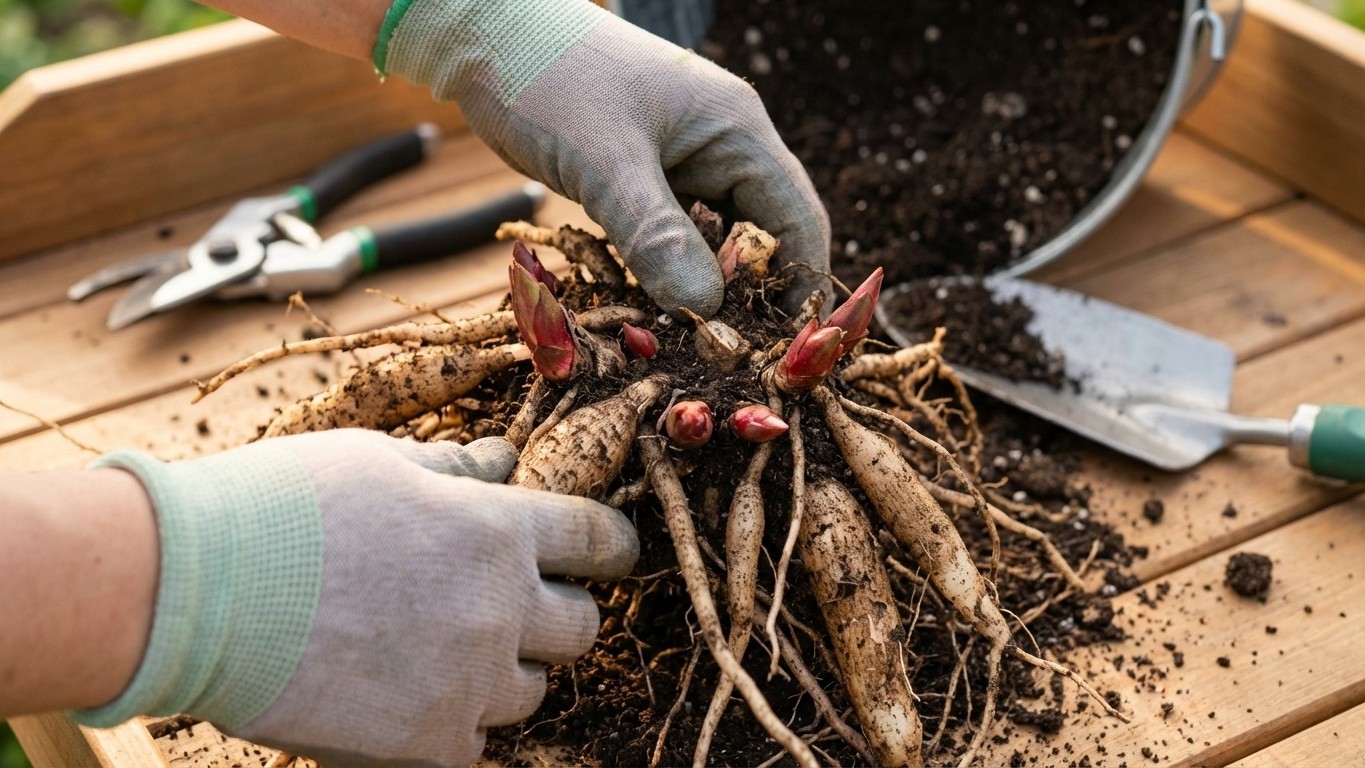
When lifting the clump, dig wide and deep, starting at least twelve inches from the base of the plant. Peony roots can extend surprisingly far, and preserving as much of the root system as possible improves division success. Once lifted, gently wash away excess soil with a garden hose, revealing the natural divisions in the root structure.
Each division should include three to five healthy buds along with a substantial root system. These buds, often called “eyes,” appear as reddish or pinkish pointed growths at the crown. Avoid creating divisions with fewer than three buds, as they may lack sufficient energy reserves to establish successfully. Clean cuts with a sharp knife heal better than torn separations, reducing the risk of rot.
Post-Division Care for Long-Term Success
Proper Planting depth makes the difference between Thriving divisions and perpetual disappointment. Position the buds exactly two inches below the soil surface—deeper planting often prevents blooming, while shallow planting leaves buds vulnerable to winter damage. In regions with harsh winters, a slightly deeper planting of two and a half inches provides additional protection without significantly impacting bloom potential.
Soil preparation deserves as much attention as timing. Peonies thrive in well-draining soil enriched with organic matter, but avoid fresh manure or high-nitrogen fertilizers that promote leaf growth at the expense of root development. A balanced, slow-release fertilizer applied at planting time supports steady establishment without overwhelming the recovering plant.
Water newly planted divisions consistently but not excessively through fall, maintaining soil moisture without creating waterlogged conditions that encourage root rot. A two-inch layer of mulch helps regulate soil temperature and moisture while preventing weeds, but keep mulch away from the plant crown to maintain air circulation.
Patience becomes your greatest asset after division. Even perfectly timed and executed divisions may produce minimal blooms the first year as they channel energy into root establishment. Full flowering potential typically returns by the second or third year, rewarding your careful timing with decades of spectacular spring displays.
The narrow window for successful peony division represents one of gardening’s clearest examples of working with natural cycles rather than imposing our preferred schedule. By honoring this timing, you Transform-these-3-vegetables-into-superstars”>Transform a frequently frustrating task into a reliable method for multiplying these cherished perennials, ensuring their beauty graces your garden for generations to come.