
The lawn under my old oak tree was a losing battle for years. Patchy, yellowing grass that refused to thrive no matter how much I watered, fertilized, or coaxed it back to life. Then a neighbor mentioned she hadn’t touched her shaded beds with a mower in three years. Three years. That single conversation changed how I think about ground cover entirely.
Grass simply wasn’t designed for deep shade. It needs roughly six hours of direct sunlight to perform at its best, and most traditional lawn varieties start sulking well before that threshold. What grows in its place, though, can be genuinely beautiful, low-maintenance, lush, and in many cases, evergreen through even the coldest months. The shift from fighting your landscape to working with it is one of those home decisions that feels almost embarrassingly obvious once you’ve made it.
Key takeaways
- Most lawns fail in deep shade because grass needs 6+ hours of direct sun—but certain plants actually thrive there
- Five tough, evergreen ground covers can fill shaded spots with zero mowing and minimal maintenance once established
- The transition is simpler than you think: cardboard, compost, and the right plants can replace a struggling lawn in one season
Why Shaded Lawns Keep Failing (And What to Do Instead)
Shade creates a perfect storm for grass. Reduced light weakens the blades, making them susceptible to fungal disease. Tree roots compete aggressively for moisture. Even foot traffic that a sunny lawn shrugs off can turn a shaded patch into a muddy scar within a season. Pouring effort into something structurally disadvantaged isn’t persistence, it’s just friction.
Ground-hugging plants solve this problem from the roots up, quite literally. They tend to have evolved in woodland understories, meaning they’re not just tolerating shade, they’re built for it. Many form dense, weed-suppressing mats that require almost no intervention once established. The mowing stops not because you gave up, but because there’s nothing left to mow.
The Ground Covers Worth Planting in Shaded Spots
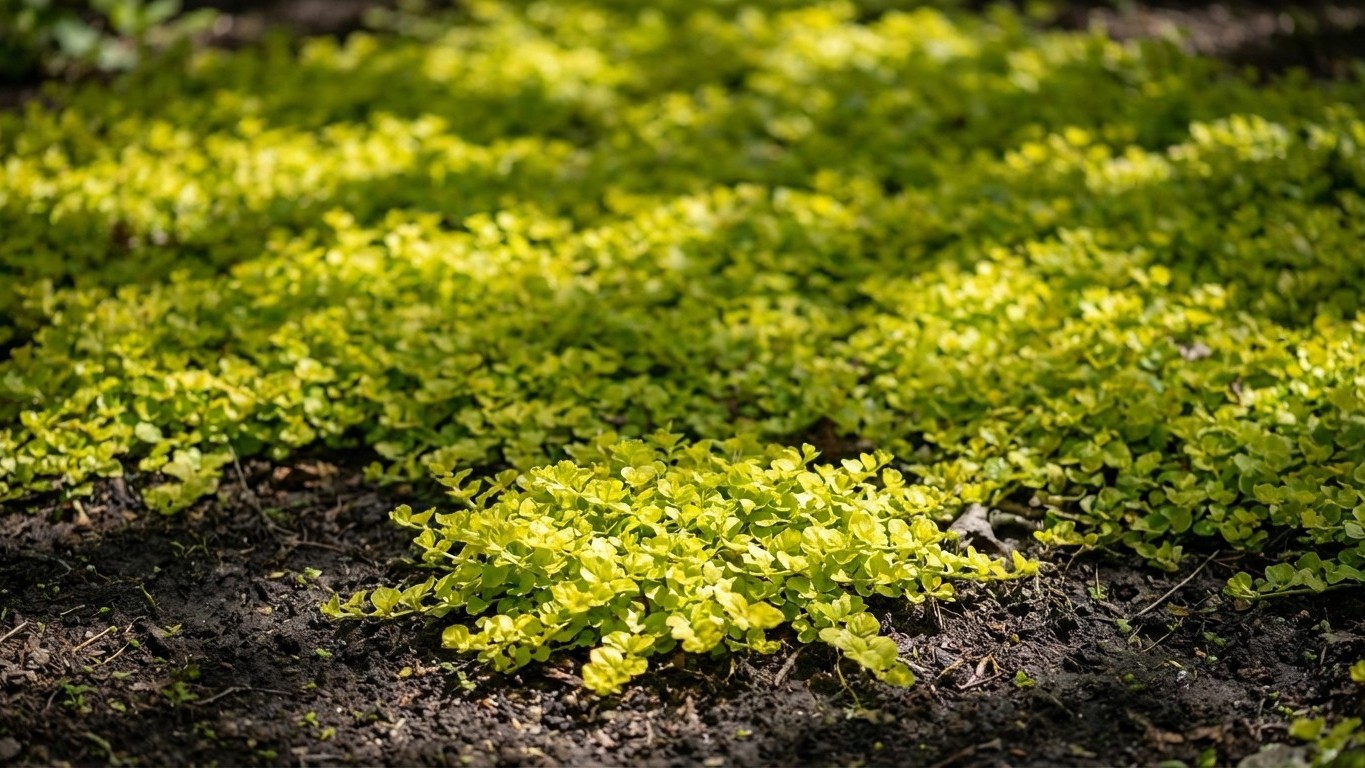
Creeping Jenny (Lysimachia nummularia) is one of the most rewarding discoveries for shady, slightly moist areas. Its chartreuse-gold foliage practically glows under a tree canopy, and it spreads quickly enough to fill a bare patch within a single growing season. The golden variety holds its color through winter in zones 3 to 9, which covers the majority of American gardens. It hugs the soil so closely that it never needs trimming, and it handles occasional foot traffic without complaint.
Ajuga reptans, commonly called bugleweed, earns its place in almost any shade garden. The low rosettes of dark, glossy leaves spread by runners, creating a tight carpet that crowds out weeds with almost competitive intensity. In spring, short spikes of vivid blue-purple flowers shoot up, a genuinely striking display that feels like a reward for doing so little. Varieties like ‘Chocolate Chip’ and ‘Black Scallop’ offer deeper, richer foliage tones that photograph beautifully and look even better in person.
Sweet woodruff (Galium odoratum) is the plant that makes shaded dry spots, the nemesis of most gardeners, finally feel manageable. It tolerates the dry shade under established trees where even hostas throw in the towel. The delicate, star-patterned leaves form an airy, fern-like mat, and the tiny white flowers in late spring have a hay-like fragrance that carries gently through the garden. A word of warning: sweet woodruff is enthusiastic. Plant it where you want coverage, because it will provide it.
Pachysandra terminalis is the workhorse of the group. Perhaps less glamorous than the others, but few plants match its reliability in deep, dry shade under conifers and mature deciduous trees. Its dark evergreen leaves stay sharp and tidy through winter, and once established, a pachysandra bed is essentially self-managing. It’s been a go-to in Japanese-inspired garden designs for generations, and its reputation for endurance is completely earned.
Epimedium, sometimes called barrenwort or fairy wings, deserves far more attention than it gets. The heart-shaped leaves emerge with bronze or red tints in spring, deepen to green through summer, and often take on warm copper and burgundy hues in fall. Many varieties are semi-evergreen to fully evergreen depending on your climate. More to the point, epimedium handles conditions most plants won’t tolerate: dry shade, root competition, neglect. It’s the plant equivalent of a houseguest who cleans up after themselves.
How to Make the Transition Without Starting Over
The practical part matters as much as the plant selection. You don’t need to strip out existing grass and start from scratch, though that’s certainly an option. A simpler approach is to mow the shaded area short one final time, then layer cardboard directly over the grass (overlapping the edges generously to block light) and cover it with three to four inches of quality compost. The cardboard smothers the existing turf without chemicals, and it breaks down within a season, enriching the soil underneath.
Plant your ground cover through the compost layer in fall or early spring, spacing according to how quickly you want coverage. Closer spacing means faster results and a higher initial plant cost. Wider spacing takes two to three seasons to fill in but is easier on the budget. Either way, water consistently through the first growing season, then largely step back. Most of these plants, once rooted into their environment, are genuinely drought-tolerant.
Mulching around new plants with wood chips helps suppress weeds in the gaps while the ground cover fills in. Keep the mulch a few inches away from plant crowns to prevent rot. That’s about as complicated as the maintenance gets.
What Changes When You Stop Fighting Your Garden
There’s a subtle but real shift that happens when your landscape stops being a chore and starts being something you actually enjoy looking at. A carpet of ajuga in full bloom, or the way creeping Jenny catches the afternoon light filtering through oak leaves, these aren’t backup plans. They’re genuinely good design choices.
The deeper question might be about how many other spots in our homes and gardens we’re maintaining out of habit rather than preference. The shaded lawn is just one example of a default setting that rarely gets questioned. Once you start looking for those defaults, they tend to show up in interesting places.