
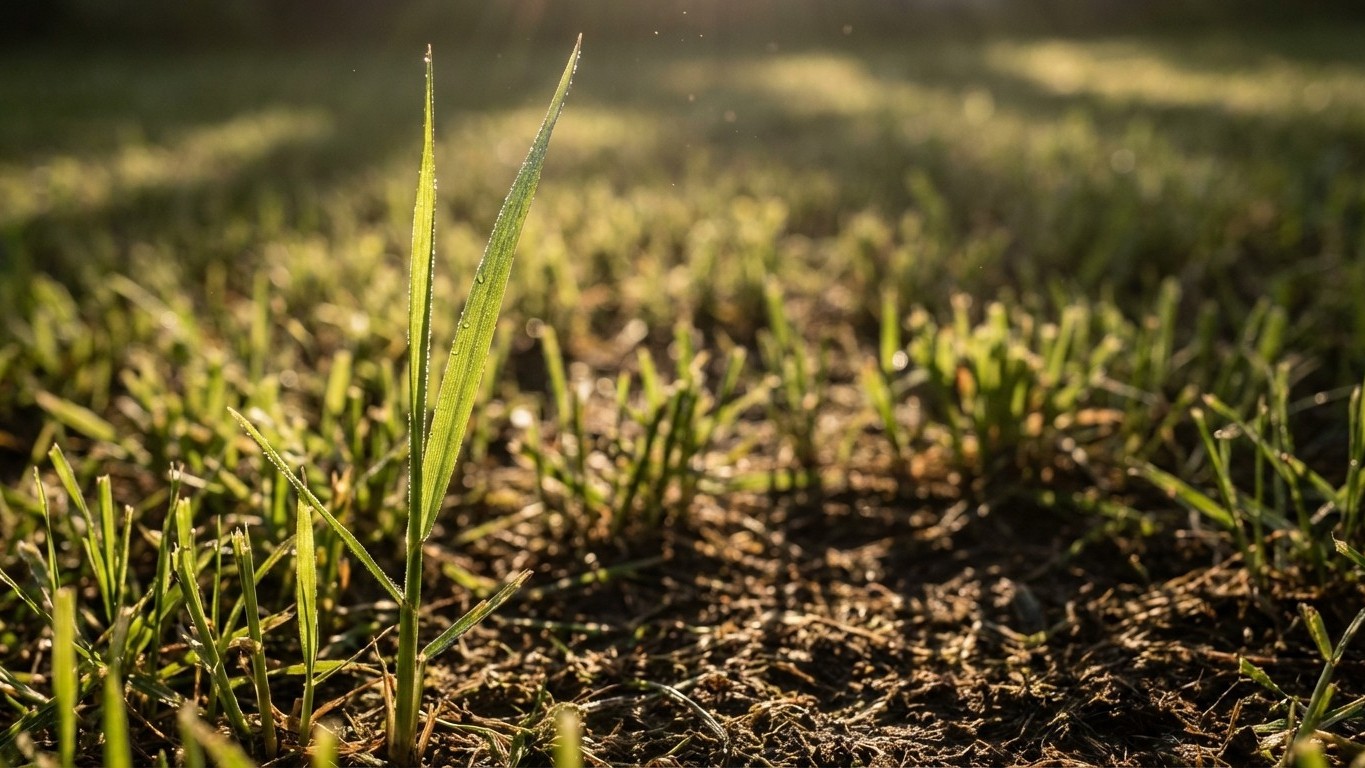
April looks so clean from the driveway. The lawn is waking up, the grass is that particular shade of bright green that only happens for about three weeks a year, and the mower is finally out of the garage. So you cut it short, tight, neat, the way you like it, and step back to admire the result. What you probably don’t notice is what’s already happening below the surface, between the blades, in the shadow of every clipped stem. A quiet competition is underway, and most homeowners are unknowingly picking the wrong side.
Key takeaways
- Cutting grass below 3 inches in April interrupts photosynthesis when roots need energy most
- Short-mowed lawns expose soil to direct light, triggering crabgrass germination and weed invasion
- One simple change—raising your mower deck—breaks the scalp-fertilize-reseed cycle most homeowners repeat
The Hidden Cost of Cutting Too Low in Spring
Grass height isn’t just an aesthetic choice. Each blade of grass is also a solar panel, it captures sunlight and converts it into energy that feeds the root system. Cut those blades too short in April, and you interrupt that process right when the plant needs it most. Spring is the lawn’s recovery season, the window when roots are pushing deeper and the grass is building reserves to survive summer heat. Scalp it now, and you weaken those roots before the hardest months begin.
The recommended cutting height for most cool-season grasses in spring is between 3 and 4 inches. Warm-season varieties like Bermuda or zoysia can tolerate shorter cuts, but even those benefit from a gentler start in early April. The general rule most agronomists agree on: never remove more than one-third of the blade length in a single mowing. Sounds simple. Almost no one follows it.
Short-cut grass also exposes more soil to direct sunlight, which does something that seems almost counterintuitive, it creates ideal germination conditions for weed seeds. Crabgrass, for example, needs soil temperatures above 55°F and direct light to sprout. A lawn mowed at 3.5 inches acts like a natural shade barrier. A lawn cut to 1.5 inches practically rolls out a welcome mat.
What’s Actually Spreading Between the Blades
Walk barefoot across your April lawn and pay attention. That lush texture you’re feeling isn’t all grass. In lawns mowed aggressively short, three plants tend to move in quickly: clover, creeping Charlie (also known as ground ivy), and crabgrass. Each one thrives in the conditions that short mowing creates, exposed soil, weakened grass competition, and abundant spring sunlight.
Creeping Charlie is particularly aggressive. It spreads by both seed and stem, meaning even if you pull it, any fragment left in the soil can regenerate. It loves low-mowed, moist conditions and once established, it forms dense mats that crowd out everything else. Gardeners in the Midwest know it well. It’s the plant that turns a lawn problem into a lawn crisis over the course of a single season.
Clover is a more complicated story. Ecologically, it’s a net positive, it fixes nitrogen in the soil, attracts pollinators, and stays green during dry spells that turn grass brown. The traditional war on clover in American lawns was largely driven by herbicide companies in the 1950s, who reformulated products that killed broadleaf plants (including clover) and then marketed clover-free lawns as the new standard. Before that shift, clover was routinely included in grass seed mixes. Opinion? The anti-clover instinct is worth questioning.
Crabgrass, though, is a different matter. It’s an annual weed that dies each fall but leaves thousands of seeds behind. One plant can produce up to 150,000 seeds in a single season, enough to colonize a significant portion of your lawn by the following spring. A dense, tall lawn in April directly suppresses its germination. A short-cut lawn gives it exactly the light exposure it needs to take hold.
The April Window Is the One That Matters
Lawn care professionals often say that spring is where a year of work either happens or doesn’t. What you do in April shapes what the lawn looks like in August. The soil is warming, rain is reliable in most regions, and grass is in an active growth phase, which means it can recover from stress if managed well, or spiral into weakness if pushed too hard.
Two habits that make an outsized difference: raising your mower deck by at least one notch before the first spring cut, and waiting until the grass actually needs cutting rather than sticking to a calendar schedule. Grass that’s still waking up from dormancy doesn’t need to be trimmed just because it’s the second Saturday of April. Let it grow to 4 inches before you cut it back to 3. That single-inch difference creates meaningful shade at the soil level and gives established grass a competitive edge over weeds trying to germinate.
Watering habits matter too, but that’s a longer conversation. What’s worth flagging here is that frequent shallow watering in spring encourages shallow root growth, which compounds the damage done by short mowing. Roots follow water. If water only penetrates an inch down, roots stay an inch deep, and a drought in June will wipe out a lawn that looked fine in April.
Working With the Lawn Instead of Against It
There’s a version of lawn care that requires significantly less effort than the scalp-fertilize-reseed cycle most homeowners repeat every few years. It starts with accepting that a healthy lawn is a biological system, not a carpet. It has its own logic. Grass grows in the way it does because those growth patterns make it competitive, tall enough to shade weeds, deep-rooted enough to survive heat, resilient enough to bounce back from foot traffic.
Some of the most low-maintenance lawns in the country are managed with high mow heights, infrequent cutting, and minimal chemical input. They look different from the putting-green aesthetic that suburban culture has long held as the ideal. A little less uniform, maybe. But they’re alive in a richer sense, home to ground beetles that eat weed seeds, microorganisms that build soil structure, and yes, the occasional clover flower that a bee will quietly visit while you’re inside having your morning coffee.
The question worth sitting with isn’t how to eliminate everything growing between the grass blades. It’s whether the lawn you’re working so hard to maintain is actually the one you want, or just the one you inherited as a default.