
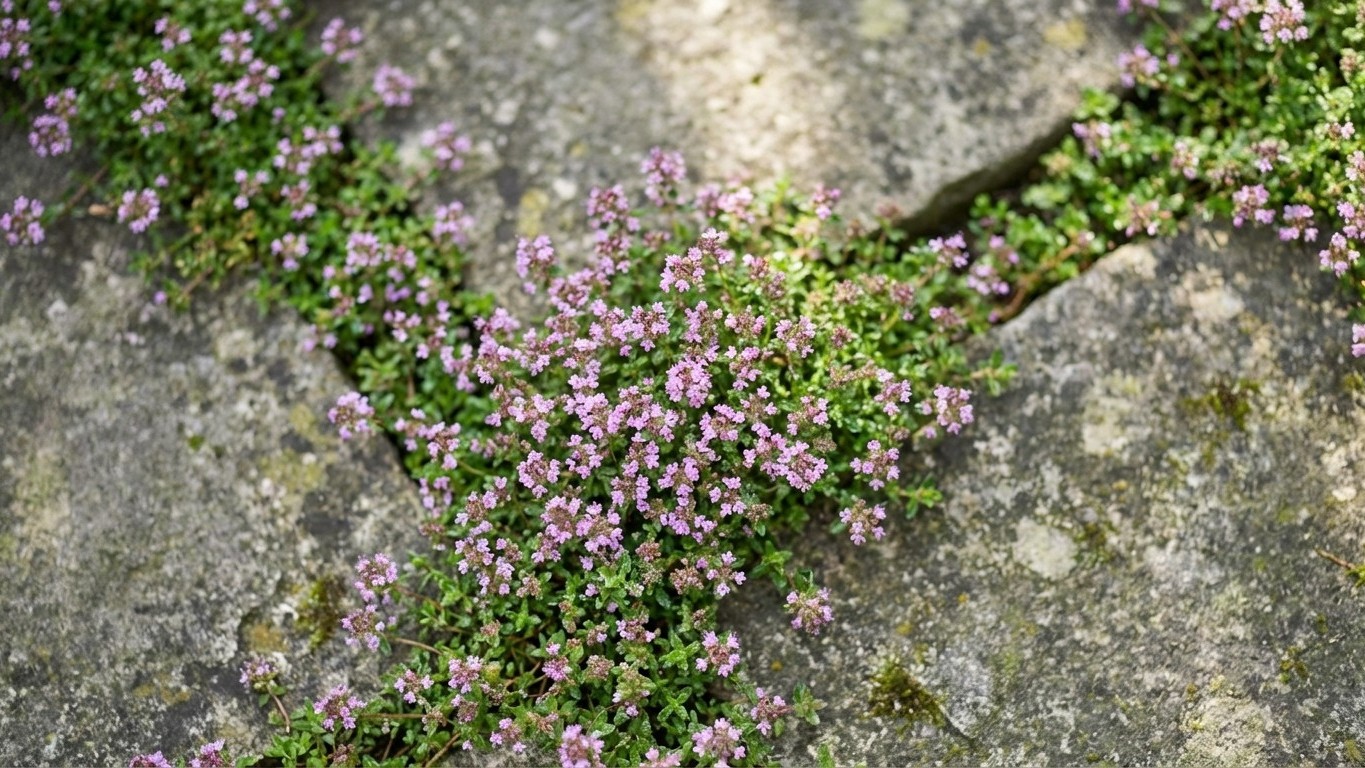
The weeding never ended. Every few weeks, the same ritual: kneeling on the driveway, fingers aching, pulling out dandelions and crabgrass from the gaps between paving stones, only to watch them return before the month was out. Then a neighbor mentioned she hadn’t touched her patio cracks in two years. Her secret? She let plants win. The right plants.
Ground cover plants that colonize the gaps between pavers aren’t just decorative. They outcompete weeds by occupying the exact space where weeds want to grow, blocking sunlight and stealing nutrients before anything unwanted gets a foothold. The logic is almost embarrassingly simple: nature abhors a vacuum, so fill it yourself, on your own terms. Once established, these low-growing plants form a living mat that does your weeding for you, permanently.
Key takeaways
- A neighbor’s patio remained weed-free for two years without intervention—here’s how
- These low-growing plants actively prevent weeds by occupying the space first
- Five proven species thrive in harsh paver gaps where most plants fail
Why Ground Covers Beat Gravel, Sand, and Chemicals
Polymeric sand is often sold as the Ultimate weed barrier. Seal the gaps, end the problem. In practice, it cracks within a season or two, and weeds find their way through anyway. Herbicides work short-term but leach into soil and groundwater, and repeated use kills the microbial life that keeps your garden healthy. Gravel fills gaps but doesn’t prevent seeds from germinating on top of it.
Plants work differently. A dense, low-growing ground cover creates a biological barrier that actively regenerates itself. When one patch thins, the surrounding growth fills in. There’s no reapplication, no crumbling, no chemical runoff. And honestly? A patio laced with soft green or flowering plants looks far more intentional than bare concrete joints or bleached-out sand.
The key is choosing species tough enough to handle foot traffic, drought, and the compressed, often poor soil found between paving stones. Most ornamental plants won’t survive that environment. These ones thrive in it.
The Ground Covers That Actually Deliver
Creeping thyme (Thymus serpyllum) is the one that converted me. It spreads slowly but relentlessly, forming a dense carpet that blooms in tiny pink-purple flowers each summer. It handles moderate foot traffic without complaint, releases a faint herbal scent when brushed underfoot, and asks for almost nothing beyond decent drainage. Plant plugs about six inches apart in spring, water them through the first season, and by year two they’ll be doing the weed-blocking work on their own.
Mazus reptans is less well known but equally effective in shadier or damper spots where thyme would struggle. It stays flat, we’re talking under an inch tall, and produces small violet flowers in late spring. Its aggressive lateral spread means it fills gaps faster than most alternatives, which is exactly what you want when you’re trying to crowd out opportunistic weeds.
Corsican mint (Mentha requienii) deserves more attention than it gets. The smallest of the mint family, it grows to about half an inch high and releases a strong peppermint scent when stepped on. It prefers some moisture and partial shade, making it a good candidate for north-facing patios or areas under tree canopies. One caveat: like all mints, it can spread beyond its intended zone, so keep it away from garden beds unless you want a peppermint takeover.
For full sun and genuinely neglected corners, Sedum acre (golden stonecrop) is almost unkillable. It’s a succulent that tolerates compacted soil, blazing heat, and weeks without rain. It produces cheerful yellow flowers in early summer and spreads steadily by self-seeding and creeping stems. Some gardeners consider it too aggressive, a badge of honor when your goal is weed suppression.
Brass buttons (Leptinella squalida) rounds out the list for those who want something unusual. Its ferny, bronze-green foliage looks almost architectural between stone pavers, giving the patio a textured, designed feel. It tolerates moderate traffic and spreads at a measured pace, which some gardeners prefer over faster-spreading species that can become a project of their own.
How to Plant Between Pavers Without Losing Your Mind
The process is straightforward, but a few details matter. Start by clearing existing weeds as thoroughly as possible, this is the last time you’ll want to do it. Pull roots rather than cutting, and if the gap soil is heavily compacted, loosen it slightly with a thin tool to give roots somewhere to go. Don’t add rich compost; most of these plants actually prefer lean soil and will get leggy and weak in overly fertile conditions.
Plant in early spring or early fall when temperatures are moderate and rainfall is more reliable. Press small plugs (nursery-grown starts work better than seeds here, since seeds struggle to germinate in such exposed conditions) into the gaps and firm the soil around them. Water consistently for the first six to eight weeks while roots establish. After that, most of these species are effectively on their own.
Spacing matters less than you’d think. Closer planting (four to six inches apart) means faster coverage but more plants and cost upfront. Wider spacing (eight to ten inches) saves money but requires patience through a first season that may still see some weed pressure. The trade-off depends on how much you hate weeding right now versus how much you want to spend this month.
One thing worth doing: avoid planting a single species across the entire surface. A mix of two or three ground covers creates redundancy. If one struggles in a particular microclimate, too shady, too dry, too trafficked, another picks up the slack. Diversity is your insurance policy.
There’s something quietly satisfying about watching these plants slowly take over, gap by gap, season by season. The patio doesn’t look abandoned; it looks alive. And the question worth sitting with: how many other garden problems could be solved not by fighting nature, but by redirecting it?