
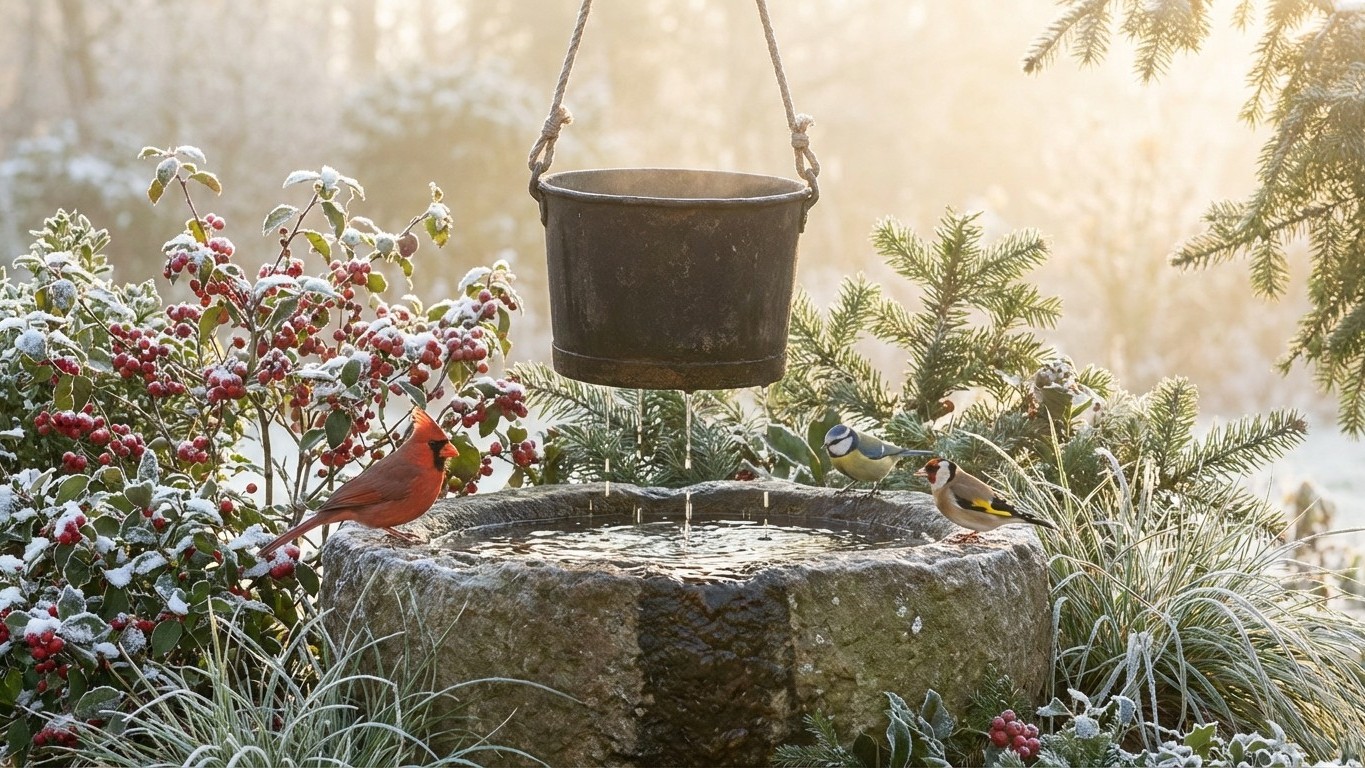
While modern homeowners spend hundreds on heated bird baths and electric de-icers, there’s an ingenious method that has kept bird water flowing for centuries. Long before electricity transformed our winters, our ancestors mastered a simple technique that prevents water from freezing solid, ensuring feathered friends had access to this vital resource even during the harshest months.
The secret lies in understanding a fundamental principle of physics that clever homesteaders discovered through generations of observation: moving water resists freezing far better than still water. This ancient wisdom, combined with strategic placement and natural materials, creates a reliable solution that costs virtually nothing to implement.
The Science Behind the Ancient Method
The traditional approach centers on creating gentle water movement through a drip system using nothing more than a Container with a small hole. When water drips consistently from an elevated source Into a shallow basin below, the constant motion disrupts ice crystal formation. Even in sub-freezing temperatures, this continuous movement can keep water liquid far longer than static pools.
Our ancestors typically suspended a large container – often a repurposed bucket or ceramic vessel – above a shallow drinking area. A tiny hole punched in the bottom allowed water to drip steadily throughout the day. The key was calibrating the hole size to maintain a consistent drip rate: too fast and the water would run out quickly, too slow and the movement wouldn’t be sufficient to prevent freezing.
The genius of this system extended beyond just movement. The elevated container captured and stored solar energy during sunny winter days, warming the water naturally. As this slightly warmed water dripped down, it helped maintain the temperature of the water below, creating a self-sustaining cycle that could keep water flowing even when overnight temperatures dropped well below freezing.
Materials and Natural Enhancements
Traditional winter water systems relied entirely on materials readily available to rural communities. Dark-colored containers absorbed more solar heat during daylight hours, while positioning the setup on the south side of buildings maximized sun exposure. Many homesteaders painted their water containers black or used naturally dark materials like iron pots to enhance heat absorption.
The choice of basin material proved equally important. Shallow, dark containers retained warmth better than deep vessels, while rough surfaces provided better footing for birds. Stone basins, popular in European farmyards, offered excellent thermal mass – absorbing heat during the day and releasing it slowly throughout the night.
Some communities enhanced the basic drip system by incorporating thermal mass elements. Large stones placed around or partially in the water basin absorbed daytime warmth and radiated it back during colder periods. Others used the principle of thermal layering, positioning the water source near south-facing walls or other structures that accumulated and reflected heat.
Modern Applications of Ancient Wisdom
Today’s homeowners can easily adapt this time-tested approach using contemporary materials while honoring the core principles. A Simple plastic bottle with a nail-hole suspended above a shallow dish recreates the traditional drip system. Food-grade buckets work excellently for larger installations, while repurposed containers add character to garden settings.
The positioning strategy remains unchanged: south-facing locations with morning sun exposure provide optimal conditions. Sheltering the setup from harsh winds while maintaining airflow prevents both freezing and stagnation. Modern practitioners often enhance the system with reflective surfaces positioned to bounce additional sunlight toward the water source.
Contemporary adaptations might include using black landscaping fabric around the base to absorb additional heat, or incorporating small rocks painted dark colors to create thermal mass. Some gardeners success fully combine multiple drip sources feeding into a single basin, ensuring continuous water movement even if one source fails.
Maximizing Effectiveness Through the Season
Successful implementation requires understanding seasonal adjustments that maximize the system’s effectiveness. Early winter installations benefit from gradual acclimatization – starting the drip system before hard freezes arrive allows local bird populations to discover and rely on the consistent water source.
Monitoring and maintaining the proper drip rate becomes crucial as temperatures fluctuate. During mild spells, a slower drip conserves water while still preventing stagnation. As severe cold approaches, increasing the flow rate helps maintain the anti-freeze effect. Regular cleaning prevents algae buildup and ensures the drip hole remains clear.
The most successful traditional systems incorporated backup elements for extreme weather. Multiple small holes instead of one large opening prevented complete blockage if ice formed. Positioning spare containers nearby allowed for quick replacement if the primary source froze solid during unprecedented cold snaps.
This ancient technique proves that effective solutions often emerge from careful observation of natural principles rather than complex technology. By understanding water movement, solar energy, and thermal dynamics, our predecessors created a sustainable system that modern homeowners can implement immediately. The method requires minimal investment, operates independently of power sources, and provides reliable results that both birds and budget-conscious homeowners can appreciate throughout the winter months.