
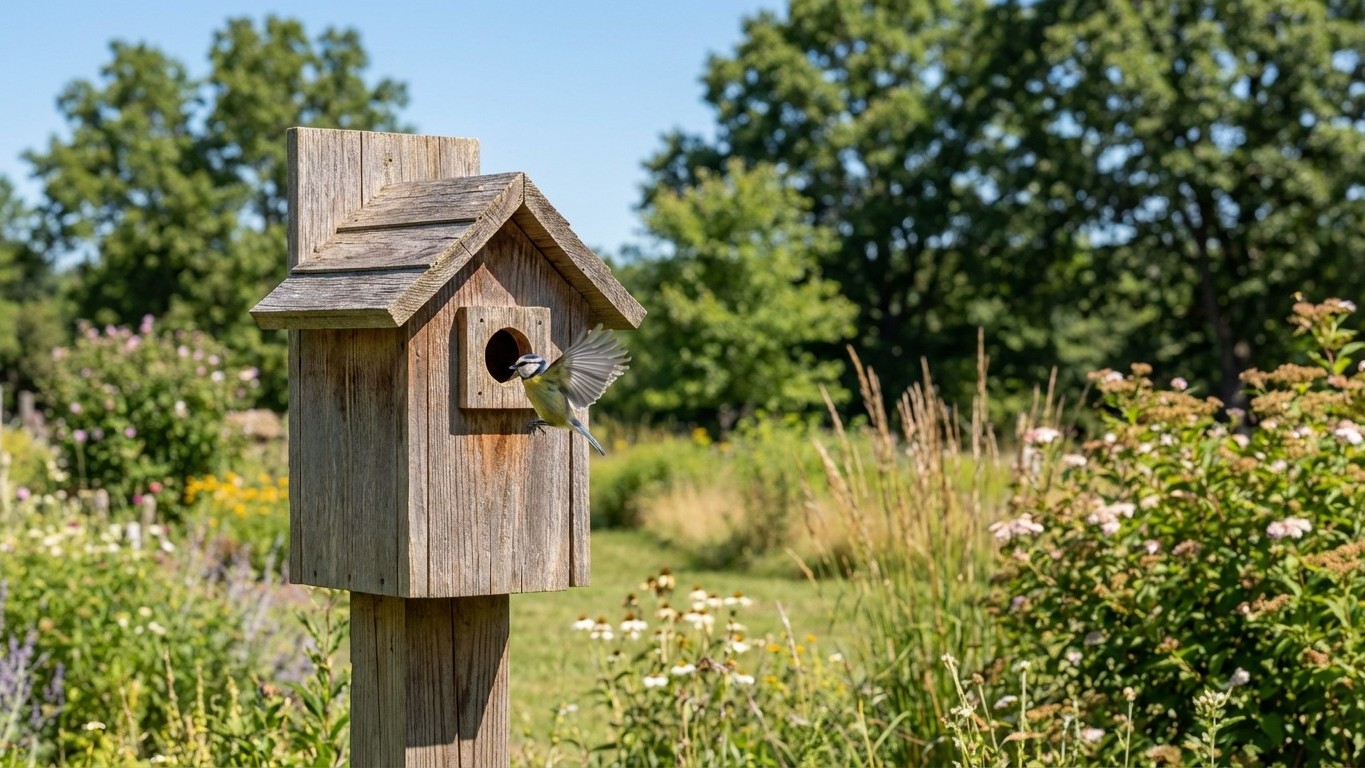
You’ve carefully selected the perfect birdhouse, painted it in charming colors, and hung it proudly in your yard—yet month after month, it remains embarrassingly empty. Meanwhile, your neighbor’s simple wooden box seems to be a bustling bird metropolis. The frustrating truth is that most well-intentioned bird lovers make the same fundamental Mistakes when positioning their birdhouses, turning what should be attractive real estate into avian ghost towns.
The Height Game: Why Location Trumps Everything
The most critical factor in birdhouse success isn’t the design or color—it’s the height and placement. Different bird species have evolved specific nesting preferences based on their natural behaviors and predator avoidance strategies. Wrens, for instance, prefer their homes positioned between 4 to 8 feet high, often in shrubs or small trees where they feel protected yet accessible. Bluebirds, on the other hand, need their houses mounted 4 to 6 feet high in open areas with clear flight paths, typically on poles in meadow-like settings.
The common Mistake-most-gardeners-make-that-ruins-the-entire-harvest”>Mistake is thinking higher is always better. Many homeowners mount birdhouses 10 to 15 feet up, believing this provides better protection. However, this height actually deters many desirable species while potentially attracting larger, more aggressive birds that smaller songbirds actively avoid. Tree swallows appreciate heights of 4 to 8 feet but need their houses positioned over open water or fields, not tucked into dense foliage where most people instinctively place them.
Entry Points: Size Matters More Than You Think
The diameter of your birdhouse entrance hole is perhaps the most overlooked aspect of bird attraction, yet it serves as the primary filter determining which species will even consider your offering. A hole that’s too large invites unwanted guests like starlings and house sparrows, which can be aggressive toward native species. Conversely, a hole that’s too small excludes the very birds you’re hoping to attract.
Chickadees and nuthatches require entrance holes of exactly 1⅛ inches in diameter. Even a small deviation can make the difference between success and failure. Bluebirds need 1½-inch openings, while house wrens are comfortable with 1⅛ to 1¼ inches. These measurements aren’t arbitrary—they’ve been refined through decades of research and observation. The precision required explains why generic birdhouses with oversized holes often attract only the most common and sometimes problematic species.
Interior dimensions matter equally. A house that’s too small will be rejected outright, while one that’s too spacious may feel insecure to nesting birds. The floor area should typically measure between 4×4 inches for smaller species up to 5×5 inches for slightly larger birds, with interior heights ranging from 6 to 8 inches depending on the target species.
Timing and Territory: The Seasonal Strategy
Even perfect birdhouse placement can fail if timing and territorial considerations are ignored. Most people hang their birdhouses in late spring when they notice increased bird activity, but the ideal installation time is actually late winter or early spring, well before nesting season begins. This gives birds time to discover and evaluate potential nesting sites during their territory-establishment phase.
Territory size is another crucial factor rarely considered by casual birders. Different species require different amounts of space between nesting sites. Bluebirds, for example, are territorial and typically need at least 100 yards between houses. Installing multiple bluebird houses closer together virtually guarantees that only one will be occupied, if any. Conversely, purple martins are colonial nesters that prefer apartment-style housing with multiple units in close proximity.
Understanding these territorial needs explains why some yards can successfully support multiple birdhouses while others cannot. A small suburban lot might accommodate one or two strategically placed houses for different species, but cramming in multiple houses for the same species often results in complete abandonment.
The Maintenance Factor: Why Clean Houses Win
The final piece of the puzzle involves ongoing maintenance that extends far beyond occasional cleaning. Successful birdhouse management requires understanding the complete nesting cycle and providing appropriate conditions throughout. Old nesting material should be removed after each brood, as most bird species prefer to build fresh nests rather than reuse existing ones. However, this cleaning should only occur after you’re certain the nesting season has completely ended for that species.
Drainage and ventilation are equally critical but often overlooked. Properly designed birdhouses include small drainage holes in the floor and ventilation gaps near the roof line. Without these features, houses can become death traps during heavy rains or extreme heat. The angle of installation also matters—a slight forward tilt helps rain run off while preventing the entrance hole from collecting water.
Success with birdhouses requires patience, precision, and understanding that you’re providing real estate in a competitive market. When you match the right house design with proper placement, appropriate timing, and ongoing maintenance, you create irresistible nesting opportunities that birds simply cannot ignore. The reward—watching a family of birds successfully raise their young in your thoughtfully positioned home—makes every carefully considered detail worthwhile.